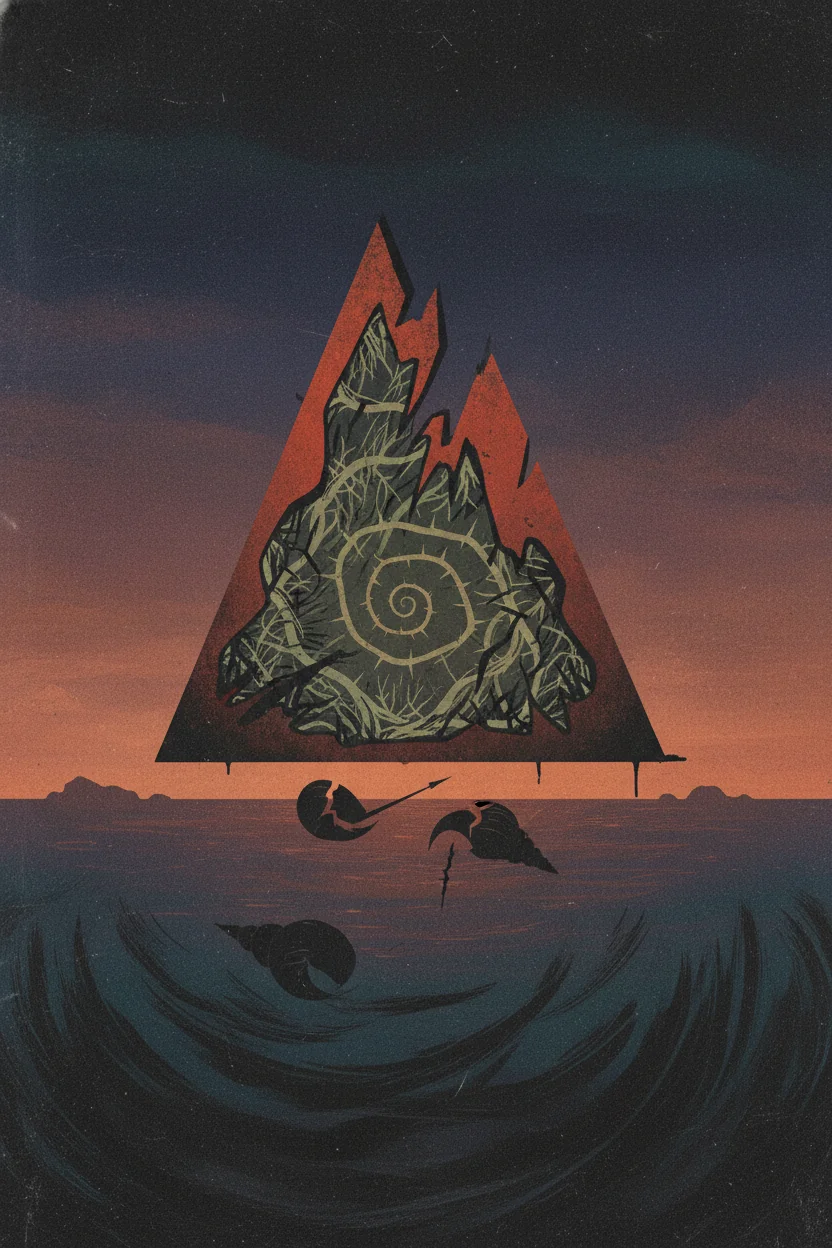
Lord of the Flies by William Golding
by William Golding
A group of British schoolboys are stranded on a deserted island and attempt to govern themselves. Their struggle for power leads to a violent split between a democratic order and a primal dictatorship, ending in tragedy.
The Big Idea
"Human nature possesses an inherent capacity for evil and savagery that emerges when the constraints of civilization are removed."
Key Insights
The Symbolism of the Conch
The conch represents the rule of law, free speech, and the fragile structure of democratic society.
At first, only the person holding the conch is allowed to speak during assemblies, ensuring a semblance of order.
The Internal Beast
The 'beast' is not a physical monster but a psychological manifestation of the boys' own primal instincts.
Simon realizes that the beast is 'only us,' yet the other boys continue to fear an external monster.
The Corruption of Power
Power often shifts from those who seek the collective good to those who use fear and violence to dominate.
Jack transitions from a choir leader to a tribal chief by offering meat and protection from the beast.
The Fragility of Civility
Civilization is a thin veneer that can be easily stripped away by isolation and the absence of authority.
The boys quickly abandon their school clothes and rules in favor of face paint and hunting.
The Role of Intellectualism
Reason and science (represented by Piggy) are often dismissed or destroyed by irrationality and brute force.
Piggy's glasses, used to start the signal fire, become a prize of war and a symbol of his vulnerability.
Chapter Breakdown
The Descent into Chaos: Background and Context
Published in 1954, Lord of the Flies serves as a chilling response to the optimistic adventure stories of the early 20th century, such as The Coral Island. While those stories suggested that British boys would maintain their civility and govern themselves rationally if stranded, William Golding sought to prove the opposite. Writing in the aftermath of World War II, Golding was deeply scarred by the atrocities he witnessed during his naval service. He concluded that the capacity for evil is not an external force or a result of poor upbringing, but an innate part of human nature. The novel is set against the backdrop of an unnamed global war, which justifies the presence of schoolboys on a plane that crashes on a deserted tropical island, leaving them without adult supervision.
Plot Overview: From Order to Anarchy
The story begins with Ralph, a charismatic boy, and Piggy, an intellectual outcast, discovering each other on the beach. They find a conch shell, which Ralph uses to summon other survivors. Initially, the boys attempt to replicate the structures of the society they left behind. Ralph is elected leader, and he establishes a system where the holder of the conch has the right to speak. His primary goals are maintaining a signal fire on the mountain to alert passing ships and building shelters. However, friction quickly arises between Ralph and Jack, the leader of the choir boys. While Ralph focuses on long-term survival and rescue, Jack becomes obsessed with hunting pigs, transitioning from a reluctant killer to a bloodthirsty predator.
As the boys' fear of a mythical 'beast' grows, Jack uses this terror to manipulate the group, offering 'protection' in exchange for loyalty. The societal fracture culminates when Jack forms his own tribe of 'savages' at Castle Rock, abandoning the signal fire and the rule of law. The descent into madness reaches a breaking point with the brutal murder of Simon, who had discovered that the 'beast' was merely a dead parachutist. The tragedy peaks with the death of Piggy, who is killed by a boulder pushed by Roger, a sadistic boy. The novel ends in a frantic manhunt for Ralph, which is only halted when a British Naval officer arrives on the beach, ironically rescuing the boys just as they had turned the island into a hellscape of fire and violence.
Major Themes: The Human Psyche
- Civilization vs. Savagery: The central conflict is the struggle between the instinct to live by rules and the instinct to gratify immediate desires. The conch symbolizes order and democracy, while the 'Lord of the Flies' (the pig's head on a stick) symbolizes the primal urge for chaos.
- The Loss of Innocence: The boys transition from school-aged children to killers. This 'fall' is mirrored in the biblical sense, as the idyllic island becomes a place of sin and death.
- The Nature of Evil: Golding argues that evil is internal. The 'beast' is not a creature lurking in the jungle, but the darkness within every human heart that emerges when social constraints are removed.
- Power and Leadership: The contrast between Ralph's democratic leadership (based on consensus and the common good) and Jack's autocratic leadership (based on fear and dominance) highlights the fragility of democratic institutions.
Key Scenes and Pivotal Moments
One of the most haunting scenes is Simon's 'conversation' with the Lord of the Flies. The severed pig's head speaks to him, confirming that the beast is not something you can hunt or kill, but a part of the boys themselves. This moment serves as the philosophical core of the novel. Another critical scene is the destruction of the conch shell. As Piggy is killed, the shell shatters into a thousand white fragments, signifying the total collapse of reason and the definitive end of the boys' attempt at a civilized society.
The final chase sequence is equally telling. Ralph, the last bastion of sanity, is hunted like an animal through the jungle. When he finally collapses at the feet of the Naval officer, he does not cheer for rescue; instead, he weeps for 'the end of innocence, the darkness of man's heart, and the fall through the air of a true, harmless friend.'
Legacy and Enduring Relevance
Lord of the Flies remains a staple of English literature because it poses an uncomfortable question: Are we civilized by nature, or are we merely conditioned to be so? The novel's exploration of tribalism and the ease with which humans can be manipulated by fear remains strikingly relevant in the modern era of political polarization. By stripping away the veneers of clothing, school rules, and parental guidance, Golding exposes the raw, terrifying potential of the human spirit. It serves as a cautionary tale about the necessity of law and the danger of allowing primal instincts to override moral judgment.
Take Action
Practical steps you can implement today:
-
Recognize that fear is a powerful tool for manipulation and resist leaders who govern through intimidation.
-
Understand that laws and social norms are essential protections against our own worst impulses.
-
Value intellectualism and reason, but recognize that they must be paired with social diplomacy to be effective.
-
Foster empathy and critical thinking to prevent the formation of 'us vs. them' tribal mentalities.
-
Acknowledge your own capacity for selfishness or anger to better manage and control those impulses.
Notable Quotes
"Fancy thinking the Beast was something you could hunt and kill!"
— William Golding
"The conch exploded into a thousand white fragments and ceased to exist."
— William Golding
"Which is better—to be a pack of painted savages allowing everything, or to be sensible like Ralph is,"
— William Golding
"Ralph wept for the end of innocence, the darkness of man's heart, and the fall through the air of a true, harmless friend"
— William Golding
Who Should Read This
This book is essential for anyone interested in psychology, sociology, or political science. It is a must-read for students and adults who want to explore the darker side of human nature and the precarious balance between order and anarchy. If you enjoy allegorical stories that challenge your perception of morality and society, this classic is for you.
Summary Written By

Software Engineer & Writer
Software engineer with a passion for distilling complex ideas into actionable insights. Writes about finance, investment, entrepreneurship, and technology.
View all summaries →Reviews
No reviews yet. Be the first to share your thoughts!