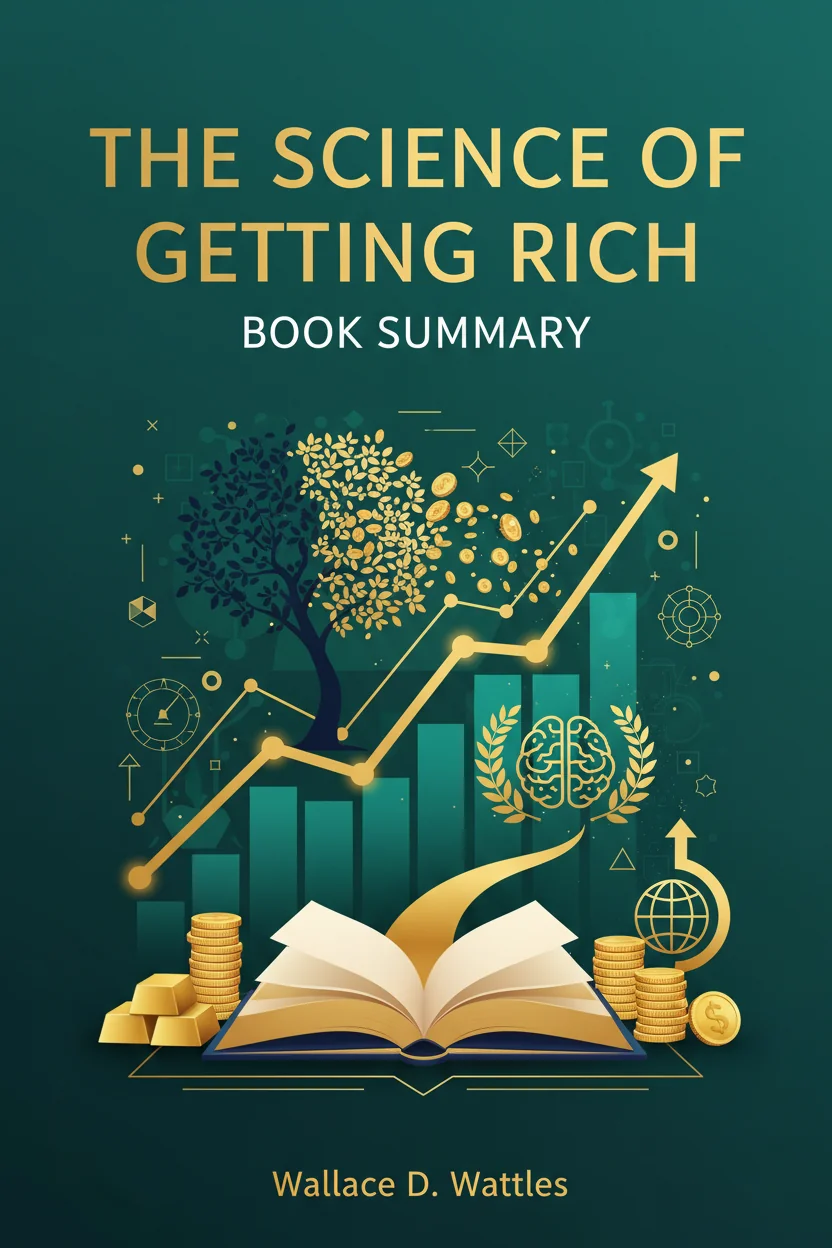
サイエンス・オブ・ゲッティング・リッチ(富を築く科学)
による Alex Ng
ウォレス・D・ワトルズが説く、思考と行動の「正しい方法」によって繁栄を実現するための不朽の原則。
核心的なアイデア
"富を築くことは、精神的な法則に基づいた「精密な科学」である。特定の思考法を身につけ、確信を持って富を視覚化し、効率的な行動を積み重ねることで、誰もが豊かさに必要なリソースを引き寄せることができる。"
重要な洞察
Thinking in the Certain Way
Wealth creation begins with adopting a specific mental attitude. You must form a clear mental image of what you want, hold that image with unwavering faith, and maintain gratitude for its eventual manifestation. This 'Certain Way' of thinking attracts opportunities.
Wattles argues that two people with identical skills in identical circumstances will have different outcomes based purely on their thinking. The one who thinks clearly, believes firmly, and acts purposefully will prosper while the doubter struggles.
The Creative Mind vs. The Competitive Mind
The world is not a fixed pie where your gain is someone's loss. Thinking competitively—trying to take from others—leads to scarcity thinking. Thinking creatively—adding value and creating new wealth—leads to abundance. You get rich by creation, not competition.
Instead of trying to outsmart competitors for existing customers, create something new that adds so much value that customers seek you out. Edison didn't compete for candle sales; he created electric light.
Gratitude as a Wealth Multiplier
Gratitude connects your mind to the source of all abundance. The grateful mind continually expects good things and creates the mental conditions for receiving them. Complaining and focusing on lack blocks the flow of wealth.
Wattles recommends spending time each day in deep gratitude for what you have and what's coming. This isn't just positive thinking—it's supposedly aligning with universal creative forces that respond to grateful expectation.
Action Must Be Efficient
Thought without action produces nothing. You must act now, in your present position, doing your current work as efficiently as possible. But action must be efficient—not just busy. Every act should be effective, moving you toward your goal.
Do not wait for the perfect opportunity or circumstances. The person who excels at their current job, however humble, will be offered better positions. Success comes from making each present moment successful.
Getting Rich Is a Right and Responsibility
Wanting to be rich is not selfish—it's the desire for fuller life. You cannot develop your potential or help others effectively from a position of poverty. Having resources allows you to contribute more fully to life.
Wattles argues that staying poor when you could be rich actually harms others, because you have less to give. The parent who becomes wealthy can provide better for their children and contribute more to society.
章ごとの解説
The Right to Be Rich
Wattles opens by asserting that wanting wealth is natural and good. The desire for riches is the desire for a richer, fuller life—for development, self-expression, and the ability to help others. Poverty is not virtuous; it limits what you can become and contribute.
Getting rich is not about luck, talent, or circumstance. It's an exact science with precise laws. Anyone who learns these laws and applies them will become rich with mathematical certainty.
The Certain Way of Thinking
Wealth begins in thought. You must form a clear, definite mental picture of what you want. This isn't vague wishing—it's precise visualization held with absolute faith. You must believe your vision is already on its way to you.
The universe responds to mental patterns. When you think in the "Certain Way"—clearly, faithfully, gratefully—you set in motion forces that bring opportunities and resources to you. Doubt and fear block these forces.
Creation vs. Competition
Most people think of getting rich as a competitive process: outmaneuvering others for limited resources. This is the competitive mind, and it leads to scarcity, fear, and cutthroat behavior.
The creative mind sees unlimited abundance. Instead of fighting for existing wealth, it creates new wealth by adding value. This approach attracts cooperation rather than competition and leads to sustainable prosperity.
The Power of Gratitude
Gratitude is the essential connecting link between your mind and abundance. When you're grateful, you're aligned with receiving. When you complain or focus on lack, you repel what you want.
Practice gratitude for what you have, for what you're learning, and for the wealth that's coming. This isn't passive waiting—it's active mental preparation that makes you ready to receive and act.
Efficient Action
Thought without action is powerless. You must act—and act efficiently. Don't scatter your energy on busywork. Every action should be purposeful, successful, and move you closer to your goal.
Act now, where you are, with what you have. Don't wait for perfect conditions. The person who makes their current situation successful will be given greater opportunities. Success builds on success.
Historical Context
Written in 1910, "The Science of Getting Rich" was a major influence on the New Thought movement and later works like "Think and Grow Rich" and "The Secret." While its metaphysical claims about universal laws are unprovable, its psychological insights about visualization, gratitude, and action remain influential in personal development literature.
アクション
今日から実践できるステップ:
-
Create a clear mental image of the wealth and life you want—be specific about what it looks like
-
Practice daily gratitude for what you have and for the wealth that's coming to you
-
Shift from competitive thinking (taking from others) to creative thinking (adding value to the world)
-
Take action now in your current position—do today's work excellently rather than waiting for better circumstances
-
Believe firmly that you can and will become wealthy; eliminate doubt and fear from your thinking
要約作成者
Software Engineer & Writer
Software engineer with a passion for distilling complex ideas into actionable insights. Writes about finance, investment, entrepreneurship, and technology.
すべての要約を見る →レビュー
レビューはまだありません。最初のレビューを書きましょう!