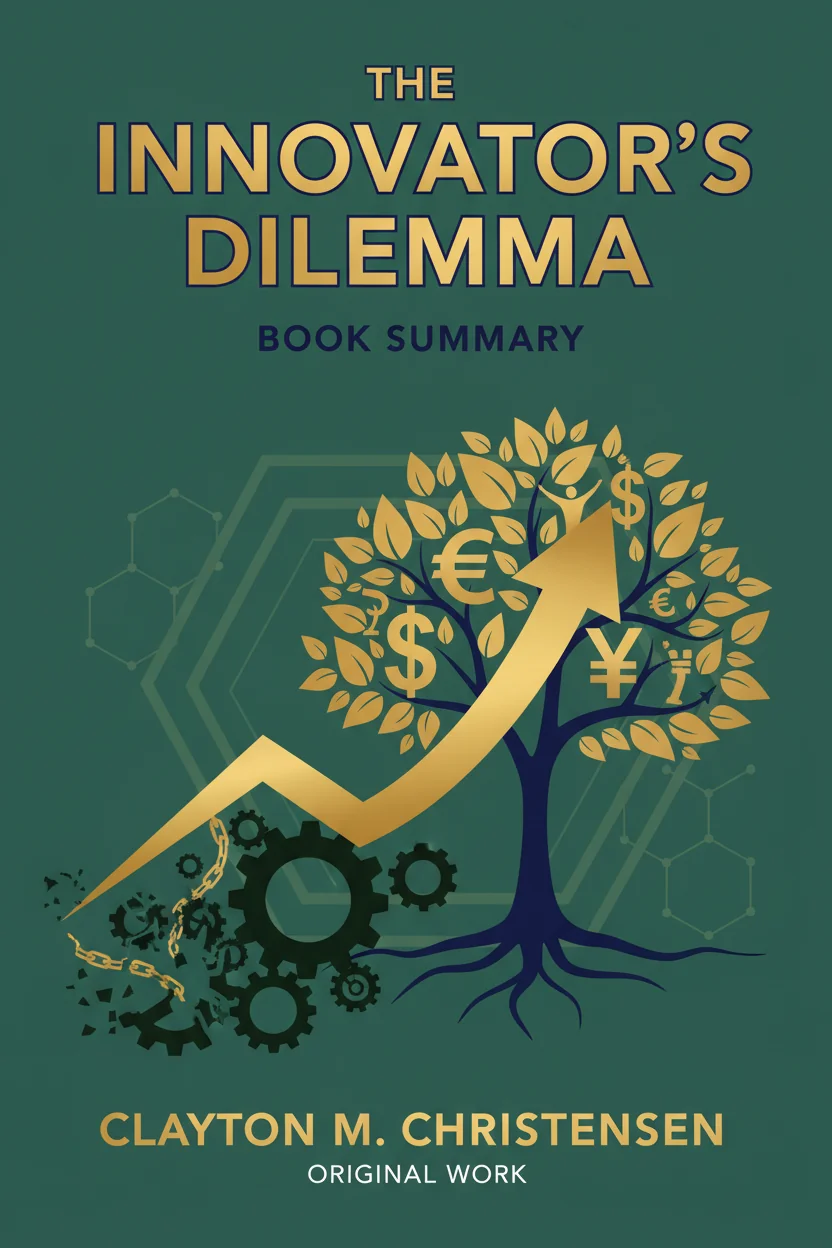
イノベーションのジレンマ
による Alex Ng
破壊的技術に直面した際、なぜ成功企業が陥るのか。クレイトン・クリステンセンによる画期的な分析をまとめた一冊。
核心的なアイデア
"優良企業が失敗するのは、すべてを正しく行わなかったからではなく、むしろ「正しく行いすぎた」からである。破壊的技術が登場した際、既存顧客への対応と利益の最大化を優先させるあまり、結果として自社を追い詰めることになる革新的な技術を軽視してしまう。"
重要な洞察
Sustaining vs. Disruptive Innovation
Sustaining innovations improve existing products for existing customers. Disruptive innovations initially seem worse but open new markets or serve underserved customers. Incumbents excel at sustaining innovation but fail at disruptive innovation.
Digital photography was initially inferior to film - worse quality, fewer features. But it was good enough for casual users who valued convenience. By the time quality improved, Kodak was obsolete.
The Rational Path to Failure
When a disruptive technology emerges, the rational response is to ignore it. It serves customers you don't have, in markets too small to matter, at margins too low to sustain.
Disk drive companies repeatedly failed to adopt new, smaller formats. Each time, the analysis showed: new format has lower margins, existing customers don't want it, the market is tiny. Each time, that analysis was correct - and fatal.
Resource Dependence
Companies depend on customers and investors for resources. This dependence makes them powerless to invest in technologies their best customers don't want.
Even when disk drive executives understood the disruption, they couldn't redirect resources. Engineers wanted to work on challenging problems. Salespeople wanted to serve big customers.
Small Markets Problem
Large companies need large markets to grow. A $50 million opportunity excites a startup but is irrelevant to a $5 billion company needing $500 million in new revenue.
Steel minimills were ignored by integrated steel companies because they could only produce low-quality rebar. That market was too small - until minimills moved upmarket.
章ごとの解説
The Failure of Great Companies
Christensen studied the disk drive industry and discovered a surprising pattern: industry leaders repeatedly failed to adopt new technologies, despite having the resources and capabilities.
Sustaining vs. Disruptive Technologies
Sustaining technologies improve performance along dimensions that mainstream customers value. Disruptive technologies initially underperform but offer different attributes - simplicity, convenience, lower cost.
Why Good Management Leads to Failure
Good managers listen to customers, invest in what produces profit, and avoid small, uncertain markets. But when facing disruption, these practices are fatal.
The Solution
Companies that succeed with disruptive technologies create separate organizations with different cost structures, different customers, and different success metrics.
アクション
今日から実践できるステップ:
-
Watch for technologies that seem 'worse' but serve different needs
-
Create separate organizations to explore disruptive opportunities
-
Listen to non-customers: what would make them buy?
-
Recognize when your best instincts are leading you astray
要約作成者
Software Engineer & Writer
Software engineer with a passion for distilling complex ideas into actionable insights. Writes about finance, investment, entrepreneurship, and technology.
すべての要約を見る →レビュー
レビューはまだありません。最初のレビューを書きましょう!