核心的なアイデア
"真の成功とは、時代を超えて不変の「原則」に基づいて生きることで得られるものです。単なるテクニックや効率化による一時的な成果は脆く、持続的な変化をもたらすには、人格そのものを磨き、物事の見方(パラダイム)を根本から変える必要があります。"
重要な洞察
Be Proactive
Between stimulus and response, there is a space. In that space lies your power to choose your response. Proactive people don't blame circumstances - they take responsibility for their lives and focus on what they can control.
Viktor Frankl survived Nazi concentration camps by finding meaning and choosing his response to horrific circumstances. His famous insight: 'Everything can be taken from a man but... the last of the human freedoms - to choose one's attitude.'
Begin With the End in Mind
All things are created twice - first mentally, then physically. Highly effective people create a clear vision of what they want their life to be, then work backward to identify what they must do today.
Covey asks readers to imagine their own funeral. What would you want people to say about you? This eulogy-exercise clarifies your true priorities versus your stated ones.
Put First Things First
Most people spend time on what's urgent rather than what's important. Effective people focus on Quadrant II - activities that are important but not urgent (relationships, planning, prevention, learning). This prevents crises and builds long-term success.
Exercise isn't urgent - until you have a heart attack. Relationship maintenance isn't urgent - until your marriage fails. The most important things rarely scream for attention.
Think Win-Win
Most people see life as zero-sum: for someone to win, someone must lose. But abundance thinking recognizes there's usually enough for everyone. The best agreements make all parties better off.
Negotiators who seek win-win solutions find creative options that benefit everyone. Those who insist on winning often destroy relationships and miss opportunities for mutual gain.
章ごとの解説
Part One: Private Victory (Habits 1-3)
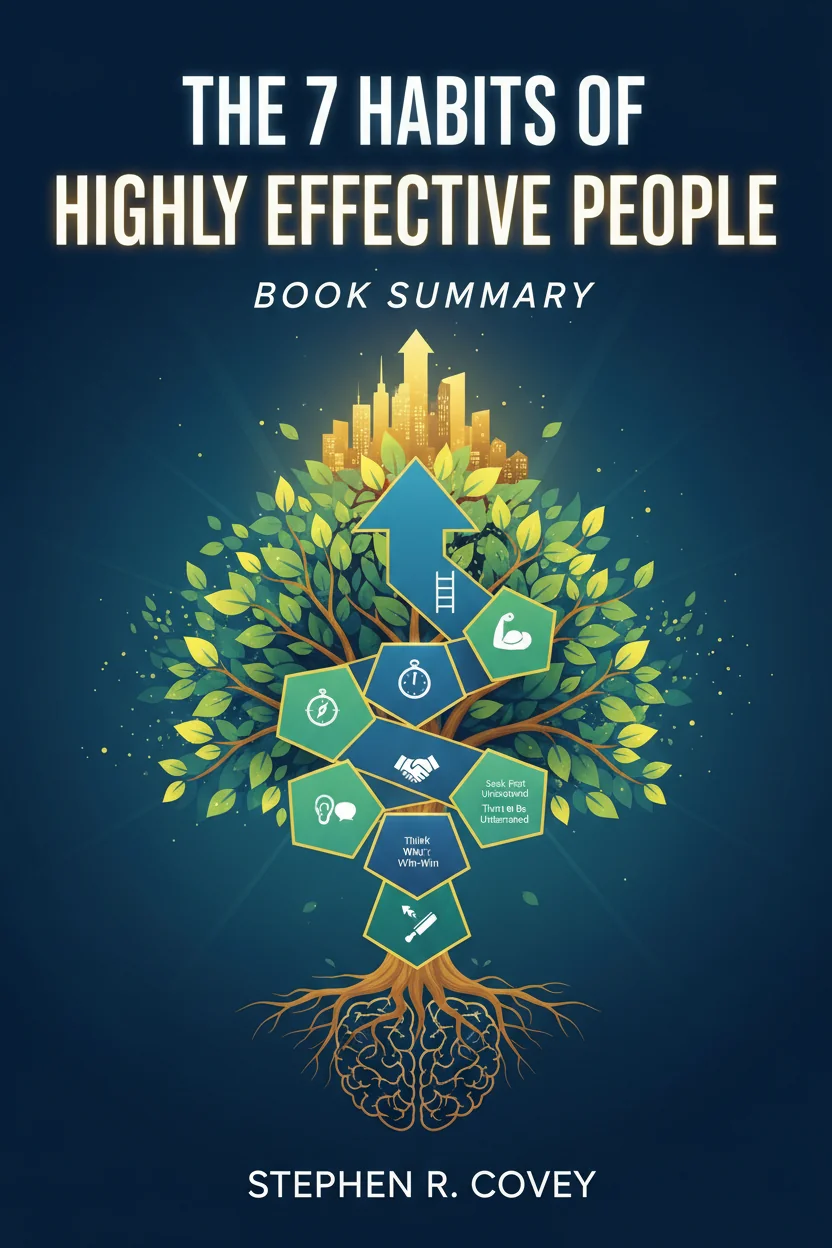
Habit 1: Be Proactive. Take responsibility for your life. Focus on your Circle of Influence (what you can control) rather than your Circle of Concern (what you can't).
Habit 2: Begin with the End in Mind. Define your values and vision. Create a personal mission statement. All things are created twice - first in imagination, then in reality.
Habit 3: Put First Things First. Spend time on important but not urgent activities (Quadrant II). This includes planning, relationship-building, and prevention - the things that prevent crises.
Part Two: Public Victory (Habits 4-6)
Habit 4: Think Win-Win. Seek agreements and solutions that benefit all parties. This requires abundance mentality - believing there's enough for everyone.
Habit 5: Seek First to Understand, Then to Be Understood. Most people listen with the intent to reply, not to understand. Empathic listening - truly understanding the other person's perspective - transforms communication.
Habit 6: Synergize. The whole is greater than the sum of its parts. By valuing differences and working creatively with others, you can achieve results impossible alone.
Part Three: Renewal (Habit 7)
Habit 7: Sharpen the Saw. Regularly renew yourself in four dimensions: physical (exercise, nutrition), mental (learning, reading), social/emotional (relationships, service), and spiritual (meditation, values). This preserves and enhances your greatest asset - yourself.
アクション
今日から実践できるステップ:
-
Write a personal mission statement - who do you want to be and what do you want to accomplish?
-
Track your time for a week, then categorize activities by importance vs. urgency - how much time are you spending on what truly matters?
-
In your next negotiation or conflict, explicitly seek a win-win solution before pushing for your preferred outcome
-
Before reacting to difficult situations, pause and consciously choose your response
要約作成者
Software Engineer & Writer
Software engineer with a passion for distilling complex ideas into actionable insights. Writes about finance, investment, entrepreneurship, and technology.
すべての要約を見る →レビュー
レビューはまだありません。最初のレビューを書きましょう!