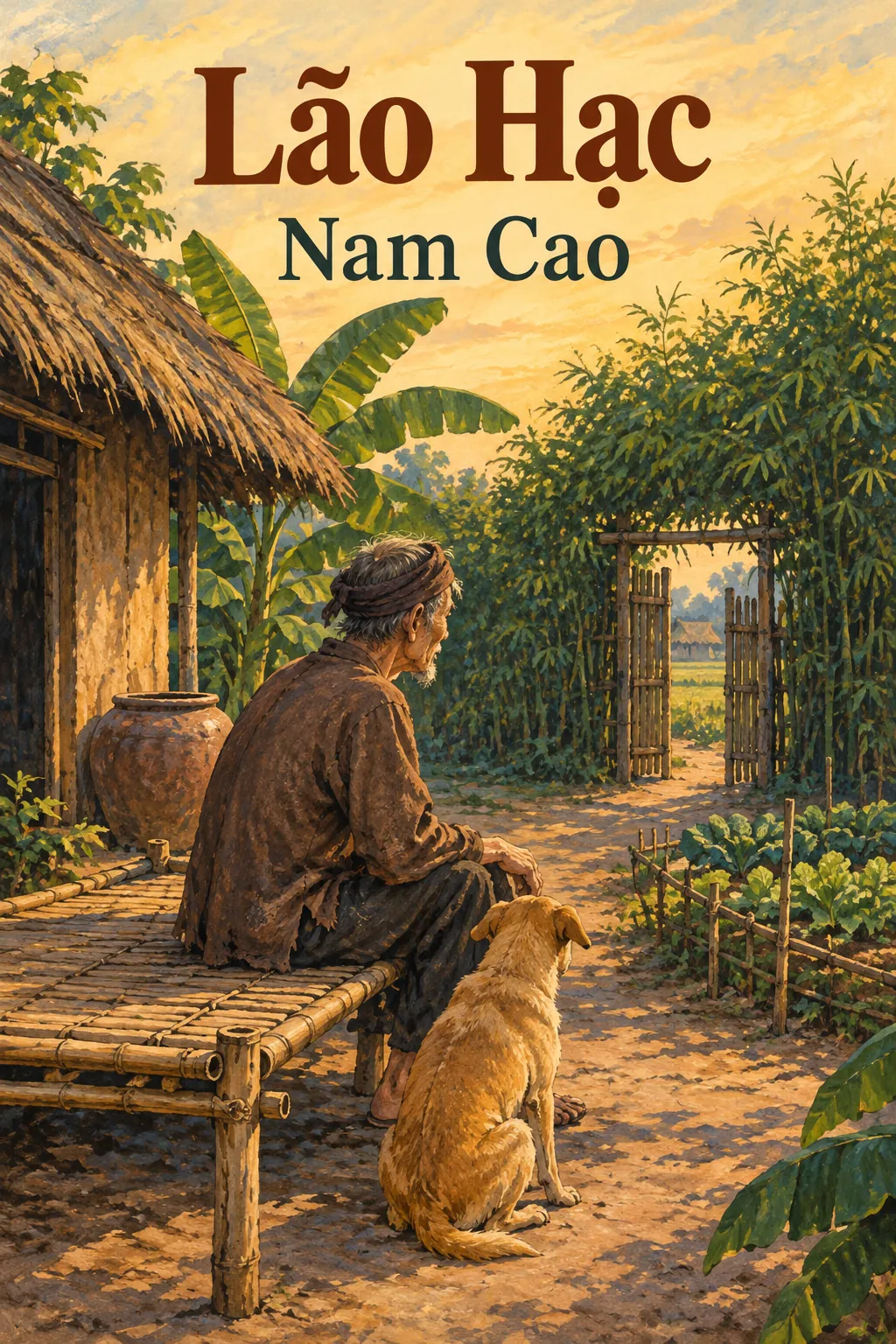
Lão Hạc
par Nam Cao
Lão Hạc is a 1943 short story by Nam Cao about a poor old farmer in a Vietnamese village under colonial rule. His wife is dead, and his only son has left to work on a rubber plantation because the family cannot afford a wedding. Lão Hạc lives alone with the dog his son left behind. Told by a village teacher, the story follows how hunger and old age push him toward a terrible decision.
L'idée principale
"A poor old farmer holds on to love for his son, tenderness for his dog and his own pride to the end. Nam Cao asks readers to understand poor people before they judge them."
Aperçus clés
Dignity can survive poverty
Lão Hạc is hungry enough to eat wild roots, yet he turns down help. For him, being poor does not mean giving up his pride. Nam Cao shows self-respect as the last thing a person owns, and he shows how high a price it can cost. The story asks us to see that pride is not vanity here but a way of staying a person when everything else is gone.
Lão leaves funeral money with the teacher so that no neighbour has to pay for his burial.
Fatherly love speaks through actions
Lão rarely says how much he loves his son. He shows it by guarding the garden, keeping the dog and putting his son's future above his own life. The love is quiet, practical and costly. Nam Cao lets the reader work this out from small choices, which makes the feeling more believable than any speech.
He will not sell the garden, even though that would feed him, because it belongs to his son's future.
Poverty pushes honest people to the edge
The story is set under colonial rule, when many peasants lost land and work. Nam Cao does not blame Lão for his tragedy. He makes us see how social conditions can crush a good person, and how little room such conditions leave for choice.
Lão sells the dog he loves only because he can no longer feed it or himself.
Understand people before you judge them
The narrator thinks badly of Lão after hearing about the poison, then sees he was wrong. His thought that we only see people's faults if we do not try to understand them is the moral centre of the story. It reaches beyond the village, to any reader who has judged someone too quickly.
The teacher first calls life sadder every day, then admits life is not simply sad after Lão dies.
Détail des chapitres
Chapter-by-chapter summary
Spoiler warning: this section covers the whole plot, including the ending.
The story has no numbered chapters, so we follow it in six natural parts.
Part 1: A father, a dog and an empty house
The narrator, a village teacher called ông giáo, introduces his neighbour Lão Hạc. Lão is a poor farmer whose wife died long ago and whose only son left for a rubber plantation, because Lão refused to sell the family garden to pay for a wedding.
Lão keeps the dog Vàng, his son's keepsake, and treats it like a grandchild. Why it matters: Nam Cao sets up poverty, loneliness and fatherly love at once, so we feel the dog's weight in the later scenes.
The setting is a village in northern Vietnam before 1945, when many peasants were losing land and work. Lão's small garden is therefore all the wealth he has to pass on.
Part 2: The decision to sell Vàng
Lão falls ill, work dries up, and food gets expensive. He tells the teacher he must sell the dog because he cannot feed it, and he refuses to spend the money he is saving for his son.
The teacher's wife is unsympathetic to Lão's stubbornness. Why it matters: we see that Lão is cornered by hunger, not by carelessness.
Lão also admits that he is old and weak. Every day he lives eats into the little he has set aside for his son.
Part 3: Lão cries
Soon afterwards Lão comes to say the dog is gone. His face crumples, tears run down his wrinkles and he sobs like a child as he describes how he tricked Vàng and let it be seized.
The teacher tries to comfort him. Why it matters: the scene shows a conscience so tender that betraying a dog feels like a crime to him.
The teacher notices that Lão first tries to laugh, but the laugh turns into something close to a sob. The detail shows how hard the old man is trying to hold himself together.
Part 4: Entrusting the garden and the funeral money
Lão asks the teacher to keep the garden's papers for his son and to hold money for his funeral. He then lives on wild roots, taro and whatever he can find, and he turns down food and help.
The teacher's wife thinks he is proud to the point of being foolish. Why it matters: Lão is quietly preparing for his death while protecting his son's inheritance.
He leaves the garden in the teacher's care so that his son will not return to nothing. He also sets aside burial money so that no neighbour has to carry the cost.
Part 5: Binh Tư and the poison
Binh Tư, a neighbour known for petty theft, tells the teacher that Lão asked him for dog poison, saying he wanted to catch a dog. The teacher is deeply disappointed and decides that even honest people are corrupted by poverty.
Why it matters: the narrator, like the reader, jumps to a wrong conclusion.
The teacher is a man of books and of sympathy, so his disappointment is sharp. He had believed that Lão was the one honest man poverty could not spoil.
Part 6: Lão Hạc's death
Lão dies of the poison after a terrible struggle that lasts about two hours. Only then does the teacher understand that Lão wanted to die rather than spend his son's money or become a burden.
The teacher concludes that life is not simply sad, or at least sad in a different way. Why it matters: the ending turns a story about poverty into a lesson about understanding other people.
The neighbours are horrified by the manner of his death. Only the teacher grasps that it was chosen with a clear purpose.
Characters
- Lão Hạc: a poor, widowed old farmer. He is tender, proud and honest, and he sacrifices himself for his son.
- Ông giáo: the village teacher and narrator. He is educated and kind, but he has to learn not to judge too fast.
- Cậu Vàng: the dog, Lão's last link with his son. For Lão, it is almost a family member.
- The son: a young man who leaves because he cannot afford to marry. He is absent through the whole story but drives Lão's choices.
- Binh Tư: a neighbour who steals small things. His report about the poison misleads the narrator.
- The teacher's wife: a practical woman who is hard-pressed herself. She sees Lão as obstinate.
Context, themes and style
Nam Cao wrote in the realist tradition of Vietnamese literature before 1945. His stories look closely at ordinary people whom society had pushed to the margins.
The central theme is human dignity under poverty. Lão has almost nothing, yet he guards his honour and his son's future more carefully than his own life.
A second theme is the gap between how people look and who they are. The teacher first reads Lão's request for poison as a fall from honesty, and only the death shows the truth.
The story is told in the first person by a narrator who is both a witness and a thinker. His comments turn simple events into reflections on how we should treat each other.
Nam Cao's style is plain and exact. He uses short physical details, such as a crumpled face, tears in the wrinkles and a mouth that trembles, to show feelings that the characters never explain.
The language stays close to village speech, which makes the pain feel real and unforced. Notice how the sentences are never loud, yet the scenes stay in the mind.
Writing about this book
Most school questions ask you to analyse Lão Hạc or to respond to a passage, usually in about 600 words. Plan three points for a character essay: his love for his son, his tenderness for Vàng, and his self-respect.
Use one short piece of evidence for each point, such as the crying scene, the refusal of help, or the poison. Then say what each detail shows about him and about the society that pressed him.
For a stronger essay, add the narrator. Show how the teacher's mistaken judgement of Lão in Part 5 sets up the final lesson about understanding others.
Link to the wider topic if you are asked: poverty, peasants before 1945, and human dignity. Always use your own words, and keep any quotation under about twenty words.
The model essays below are learning examples. Compare them with your own draft and write your own answer.
Passer à l'action
Étapes pratiques à mettre en œuvre dès aujourd'hui :
-
Look at the reasons behind a person's behaviour before you judge it.
-
When you help someone in need, protect their dignity as well as their stomach.
-
Notice quiet love: a parent's sacrifice is often unspoken.
-
In an essay, support each point with one specific scene and say what it reveals.
Citations notables
"“Cậu Vàng đi đời rồi, ông giáo ạ!” (Part 3: Lão tells the teacher the dog has been sold)"
— Nam Cao
"“Chao ôi! Đối với những người ở quanh ta, nếu ta không cố tìm mà hiểu họ…” (Part 5: the teacher's reflection)"
— Nam Cao
"“Không! Cuộc đời chưa hẳn đã đáng buồn…” (Part 6: the teacher's final thought)"
— Nam Cao
À qui s'adresse ce texte
Students in Grade 8 and above who study Vietnamese literature, and anyone who wants a short, moving story about poverty and dignity. It takes about twenty minutes to read. The guide is useful for homework, tests and exam revision.
À propos de Nam Cao
Nam Cao (1915-1951), real name Trần Hữu Tri, was a Vietnamese short-story writer and novelist from Hà Nam. He is known for realist stories about poor peasants and struggling intellectuals under colonial rule, such as Chí Phèo and Lão Hạc. He died in 1951 during the war of resistance.
Résumé écrit par

Software Engineer & Writer
Software engineer with a passion for distilling complex ideas into actionable insights. Writes about finance, investment, entrepreneurship, and technology.
Voir tous les résumés →Avis
Pas encore d'avis. Soyez le premier à partager vos impressions !
Écrire un avis
Continuer la lecture
Explorer le thème: Guides d’étudeRésumés
outsiders (S.E. Hinton)
S.E. Hinton
L'histoire suit Ponyboy Curtis et son gang, les Greasers, dans leur conflit violent avec les Socs, les jeunes riches de…
Ne tuez pas le geai moqueur par Harper Lee
Harper Lee
À travers les yeux de la jeune Scout Finch, le roman suit la lutte de son père, Atticus, un avocat…
Rashômon
Ryunosuke Akutagawa
Rashômon est une nouvelle de Ryūnosuke Akutagawa, publiée en 1915 et située à Kyoto en pleine époque de famine et…

Sangetsuki (La Lune sur la montagne) d'Atsushi Nakajima
Atsushi Nakajima
Sangetsuki (La Lune sur la montagne) est une nouvelle de l'écrivain japonais Atsushi Nakajima, située dans la Chine des Tang.…
Articles
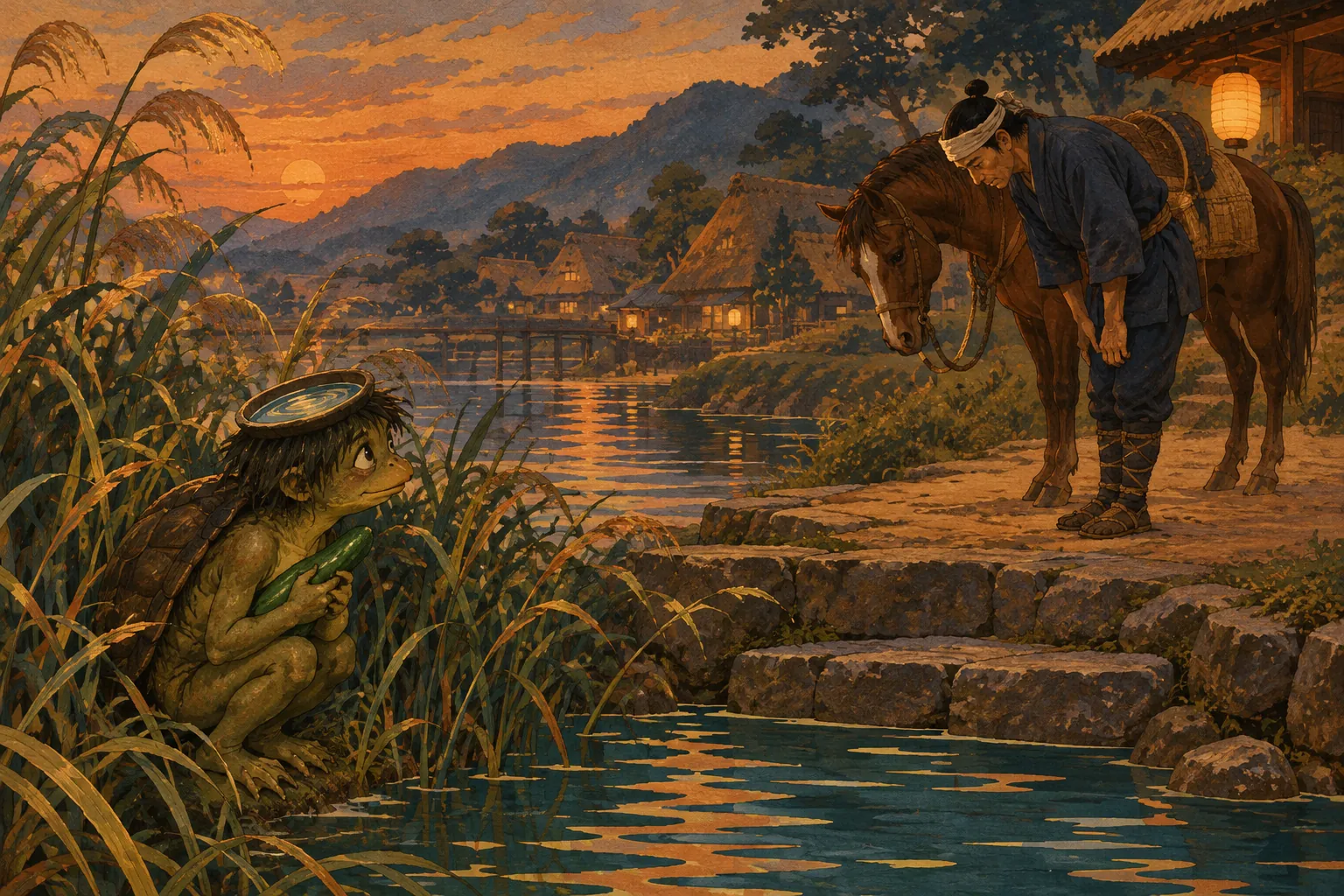
Le kappa : le lutin des rivières
Le kappa est une créature fluviale du folklore japonais : de la taille d'un enfant, verte ou rougeâtre, avec une…

Ray Bradbury
Ray Bradbury (1920-2012) était un écrivain américain qui a fait de la science-fiction une poésie des êtres humains. Il est…

Yggdrasil et les neuf mondes
Yggdrasil est le frêne gigantesque de la mythologie nordique, qui porte les neuf mondes des dieux, des géants, des humains…