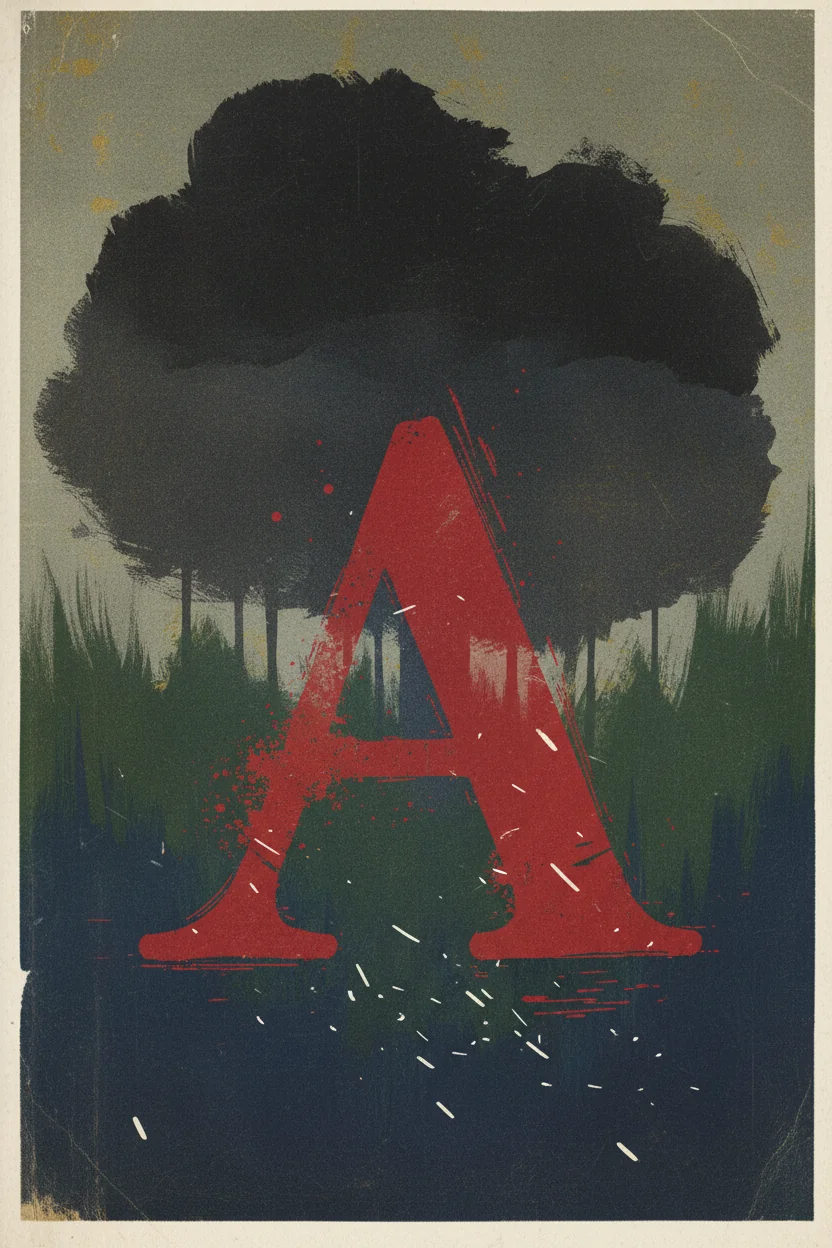
The Scarlet Letter by Nathaniel Hawthorne
by Nathaniel Hawthorne
A woman is forced to wear a scarlet letter as a mark of adultery in a strict Puritan colony. While she endures public shame with strength, her secret lover—the town's minister—is destroyed by his own hidden guilt and the vengeful pursuit of her husband.
The Big Idea
"The destructive power of hidden guilt and the liberating potential of public truth and authenticity."
Key Insights
The Burden of Secrecy
Hidden sin is more psychologically damaging than public shame.
Dimmesdale's physical health declines and he suffers mental breakdowns because he cannot confess his sin publicly.
Identity Transformation
Symbols can be redefined through an individual's actions and character.
Hester's consistent charity and strength lead the townspeople to eventually associate the 'A' with 'Able' rather than 'Adultery'.
The Nature of Revenge
Seeking vengeance on others often destroys the avenger more than the victim.
Roger Chillingworth becomes a deformed, demonic figure as his obsession with Dimmesdale consumes his humanity.
Nature vs. Society
The wilderness represents a space of truth and freedom, while the town represents restriction and hypocrisy.
Hester and Dimmesdale only feel a sense of peace and honest communication when they are deep in the forest.
The Fallacy of Legalism
Strict adherence to law without mercy leads to a cold and inhumane society.
The Puritan leaders prioritize the public shaming of Hester over the actual spiritual well-being of the community.
Chapter Breakdown
The Rigid Moral Landscape of Puritan Boston
Set in the 17th century Massachusetts Bay Colony, The Scarlet Letter unfolds in a society where law and religion are inextricably linked. The Puritans of Boston sought to build a utopian community based on strict adherence to biblical law, where any deviation from moral purity was viewed not just as a personal failing, but as a crime against the state and God. In this claustrophobic atmosphere, public shaming served as the primary tool for social control. The community is characterized by a stark, gray austerity, where the architecture and the social hierarchy are designed to remind every individual of their insignificance in the face of divine judgment. This background is crucial because it transforms a private act of passion into a public spectacle of sin, setting the stage for a psychological study of guilt, secrecy, and redemption.
A Tale of Sin and Secret Agony
The narrative begins with Hester Prynne, a young woman who has been cast out of her husband's grace and has given birth to a daughter, Pearl, while living alone in the colony. Because she has committed adultery, the magistrates sentence her to wear a scarlet letter 'A' on her chest for the rest of her life as a symbol of her shame. While Hester stands on the scaffold in public humiliation, she refuses to name the father of her child. However, among the crowd is her long-lost husband, Reverend Arthur Dimmesdale, who has returned from Europe. Unlike Hester, Dimmesdale is revered as a saintly leader of the community. He becomes the secret partner in Hester's agony, trapped by his own cowardice and the prestigious position he holds. While Hester finds a strange kind of freedom in her public shame, Dimmesdale is consumed by a hidden guilt that manifests as physical illness and psychological torture. The plot follows the slow erosion of Dimmesdale's spirit and the persistence of Roger Chillingworth, Hester's husband, who returns not to reclaim his wife, but to systematically destroy Dimmesdale through psychological manipulation.
The Interplay of Guilt, Shame, and Identity
At the heart of the novel are three distinct responses to sin. Hester represents public penance; by wearing the letter, she transforms her shame into a shield and eventually into a symbol of strength and service to others. Dimmesdale represents hidden guilt; his internal conflict illustrates the destructive power of hypocrisy, showing that a secret sin is far more corrosive than a public one. Chillingworth represents vengeful obsession; his quest to uncover and punish Dimmesdale turns him into a 'leech,' sucking the life out of both the victim and himself. Hawthorne explores the theme of nature versus society, contrasting the rigid, judgmental laws of the town with the wild, honest freedom of the forest. The forest is the only place where Hester and Dimmesdale can speak truthfully, suggesting that true human connection can only exist outside the constraints of oppressive social morality.
Pivotal Moments and Moral Confrontations
One of the most critical scenes is the forest meeting between Hester and Dimmesdale, where they contemplate fleeing to Europe. Here, the tension between their desire for happiness and their perceived moral obligations reaches a peak. Another haunting image is the midnight scaffold scene, where Dimmesdale stands in the darkness, attempting a private confession that fails to bring him peace. The climax occurs during Dimmesdale's final public sermon, where he finally chooses truth over reputation. He ascends the scaffold and reveals his own 'mark' to the crowd, declaring that he is a sinner. This act of honesty is his only path to salvation. The quote, "Be true! Be true! Be true!" serves as the novel's moral imperative, suggesting that authenticity is the only cure for the psychological torment caused by societal expectations.
The Enduring Legacy of the Scarlet Letter
Nathaniel Hawthorne's masterpiece remains relevant because it critiques the danger of legalism and the cruelty of social shaming. It is an early exploration of the human psyche, predating the formal study of psychology by examining how internalized guilt can physically destroy a person. The novel challenges the reader to consider the difference between 'sin' (a moral transgression) and 'crime' (a violation of law). By the end of the story, the scarlet letter is no longer seen as a mark of adultery, but as a symbol of 'Able' or 'Angel,' proving that an individual can redefine their identity through resilience and empathy. It stands as a timeless warning against hypocrisy and a testament to the strength of the human spirit in the face of systemic oppression.
Take Action
Practical steps you can implement today:
-
Prioritize authenticity over the desire to maintain a perfect public image.
-
Understand that shame can be transformed into a source of strength through service to others.
-
Recognize that harboring resentment or seeking revenge often leads to personal emotional decay.
-
Differentiate between societal expectations and your own internal moral compass.
-
Practice vulnerability as a means of healing from guilt and psychological distress.
Notable Quotes
"Be true! Be true! Be true!"
— Nathaniel Hawthorne
"The scarlet letter had ceased to be a stigma"
— Nathaniel Hawthorne
"To the earnest question, 'Who art thou?'"
— Nathaniel Hawthorne
"Had george steadied his heart, he would have found the truth"
— Nathaniel Hawthorne
Who Should Read This
Anyone interested in classic American literature, psychological studies of guilt and shame, or those who enjoy stories that critique societal hypocrisy and explore the complexities of human morality and redemption.
Summary Written By
Software Engineer & Writer
Software engineer with a passion for distilling complex ideas into actionable insights. Writes about finance, investment, entrepreneurship, and technology.
View all summaries →Reviews
No reviews yet. Be the first to share your thoughts!