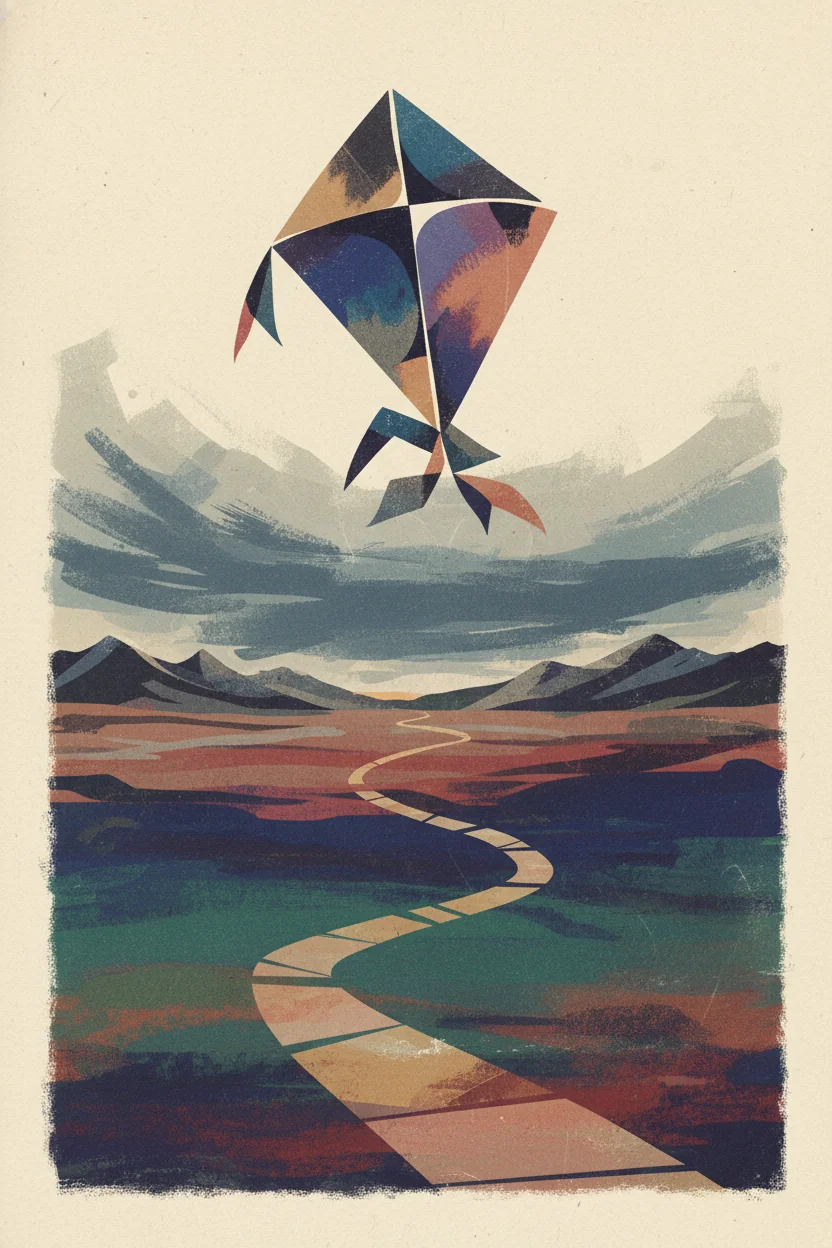
The Kite Runner by Khaled Hosseini
by Khaled Hosseini
A haunting story of a boy from Kabul who betrays his loyal friend and spends his adult life seeking atonement. It follows his journey from Afghanistan to America and back again to rescue a lost generation.
The Big Idea
"True redemption is only possible when one has the courage to confront their past transgressions and actively work to right the wrongs they have committed."
Key Insights
The Weight of Silence
Unspoken guilt can be more destructive than the original act of betrayal.
Amir's lifelong psychological torment stems not just from the assault on Hassan, but from his silence during the event.
The Cycle of Fatherhood
Children often inherit the emotional burdens and secrets of their parents.
Baba's hidden shame regarding Hassan's paternity mirrors Amir's secret guilt, linking them in a cycle of hidden sin.
Loyalty vs. Social Hierarchy
True loyalty often transcends social and ethnic boundaries, even when the society enforces them.
Hassan's unwavering devotion to Amir despite knowing he is a Pashtun and Hassan is a Hazara.
The Nature of Redemption
Redemption is not a destination but an active process of making amends.
Amir's decision to travel back into a war zone to save Sohrab is the physical manifestation of his need for atonement.
The Impact of War
Political instability destroys not only infrastructure but the moral and social fabric of a community.
The transformation of Kabul from a city of kites and gardens to a wasteland under the Taliban.
Chapter Breakdown
The Backdrop of a Changing Afghanistan
Khaled Hosseini's The Kite Runner is set against the turbulent backdrop of Afghanistan from the 1970s through the early 2000s. The story begins in Kabul, a city that, in the memories of the protagonist Amir, was once a place of peace and tradition. The social structure of the city is defined by a rigid ethnic and religious divide: the Pashtuns, specifically the Sunni Muslims, hold the power, while the Hazaras, predominantly Shia Muslims, are marginalized and oppressed. Amir, a wealthy Pashtun boy, grows up in a comfortable home with his father, Baba, a towering figure of strength and morality. However, this privilege is contrasted by the life of Hassan, the son of Ali, Baba's servant. Despite their deep bond and childhood friendship, the systemic inequality of their society creates an invisible wall between them—one that Amir is painfully aware of, even as a child.
A Tale of Betrayal and Flight
The plot centers on a pivotal moment of childhood betrayal. During a kite-fighting tournament in Kabul, Amir wins the competition, but his victory is overshadowed by a horrific act of violence. Hassan, ever loyal, retrieves the fallen kite for Amir, only to be cornered and raped by a neighborhood bully named Assef. Amir witnesses the attack from a distance but, paralyzed by fear and a desperate need for his father's approval, does nothing to intervene. This moment of cowardice becomes the defining trauma of Amir's life. Unable to bear the guilt and the sight of Hassan's unwavering forgiveness, Amir eventually frames Hassan for theft, leading to Hassan and Ali's departure from the household. As the Soviet invasion of Afghanistan begins, Amir and Baba flee to the United States, settling in Fremont, California. In America, Amir attempts to reinvent himself, marrying Soraya and starting a career as a writer, but the ghosts of his past in Kabul continue to haunt him, manifesting as a persistent sense of inadequacy and unearned redemption.
Major Themes: Guilt, Redemption, and Fatherhood
At its core, The Kite Runner is an exploration of guilt and the lifelong pursuit of redemption. Amir's journey is not merely a geographical one from Kabul to San Francisco and back, but a spiritual one. He spends decades trying to outrun the memory of his betrayal, only to realize that peace can only be achieved by confronting the past. Another central theme is the complex relationship between fathers and sons. Amir spends his youth striving for the approval of Baba, a man who values masculinity and strength—traits Amir feels he lacks. The irony is revealed later in the story: Baba's own secret (his biological fathering of Hassan) mirrors Amir's own hidden shame, suggesting that the sins of the father are often visited upon the children. Finally, the novel examines social class and ethnic prejudice, illustrating how systemic hatred can tear apart the most intimate of bonds and destroy the fabric of a nation.
Key Scenes and Pivotal Moments
One of the most heartbreaking scenes is the 'kite running' sequence, where the purity of the sport is shattered by Assef's cruelty. This scene serves as the catalyst for the entire narrative. Another critical moment occurs when Amir returns to a Taliban-controlled Kabul years later, discovering that Hassan's son, Sohrab, is an orphan in need of rescue. The climax of the novel is the physical and emotional confrontation between Amir and Assef. Unlike the first encounter in their youth, Amir chooses to stand and fight, symbolically purging his cowardice. The final image of the book—Amir flying a kite for Sohrab—is a powerful reversal of the original trauma. It represents a fragile but genuine hope for healing and the possibility of a new beginning, signifying that while the past cannot be erased, it can be acknowledged and transcended.
Legacy and Lasting Impact
The Kite Runner has left a lasting legacy as a bridge between Western readers and the complex reality of Afghan history. By weaving a personal story of familial betrayal into the larger narrative of war and political upheaval, Hosseini humanized a region often seen only through the lens of news reports. The book's enduring popularity stems from its universal themes of forgiveness and the human capacity for change. It serves as a reminder that the path to redemption is often arduous and requires immense courage, but it is the only way to truly find peace. The novel remains a staple of contemporary literature, praised for its emotional depth and its ability to illustrate how individual choices ripple through generations, shaping the destinies of those we love and those we have wronged.
Take Action
Practical steps you can implement today:
-
Acknowledge past mistakes honestly rather than suppressing them, as avoidance only fuels long-term guilt.
-
Understand that the desire for parental approval should not override one's personal moral compass.
-
Practice active empathy by recognizing the systemic inequalities that others may face based on their background.
-
Recognize that forgiveness is a gift given to the self as much as it is to the offender.
-
Take concrete, courageous actions to rectify wrongs whenever the opportunity arises.
Notable Quotes
"For you, a thousand times over."
— Khaled Hosseini
"There is a way to be good again."
— Khaled Hosseini
"I became a kaleidoscope of guilt and longing."
— Khaled Hosseini
"The past cuts into the future."
— Khaled Hosseini
Who Should Read This
This book is ideal for readers who enjoy emotionally driven literary fiction that explores themes of family, forgiveness, and historical trauma. It is a must-read for anyone interested in a poignant look at Afghan culture and the enduring human struggle to find redemption after a moral failure.
Summary Written By
Software Engineer & Writer
Software engineer with a passion for distilling complex ideas into actionable insights. Writes about finance, investment, entrepreneurship, and technology.
View all summaries →Reviews
No reviews yet. Be the first to share your thoughts!