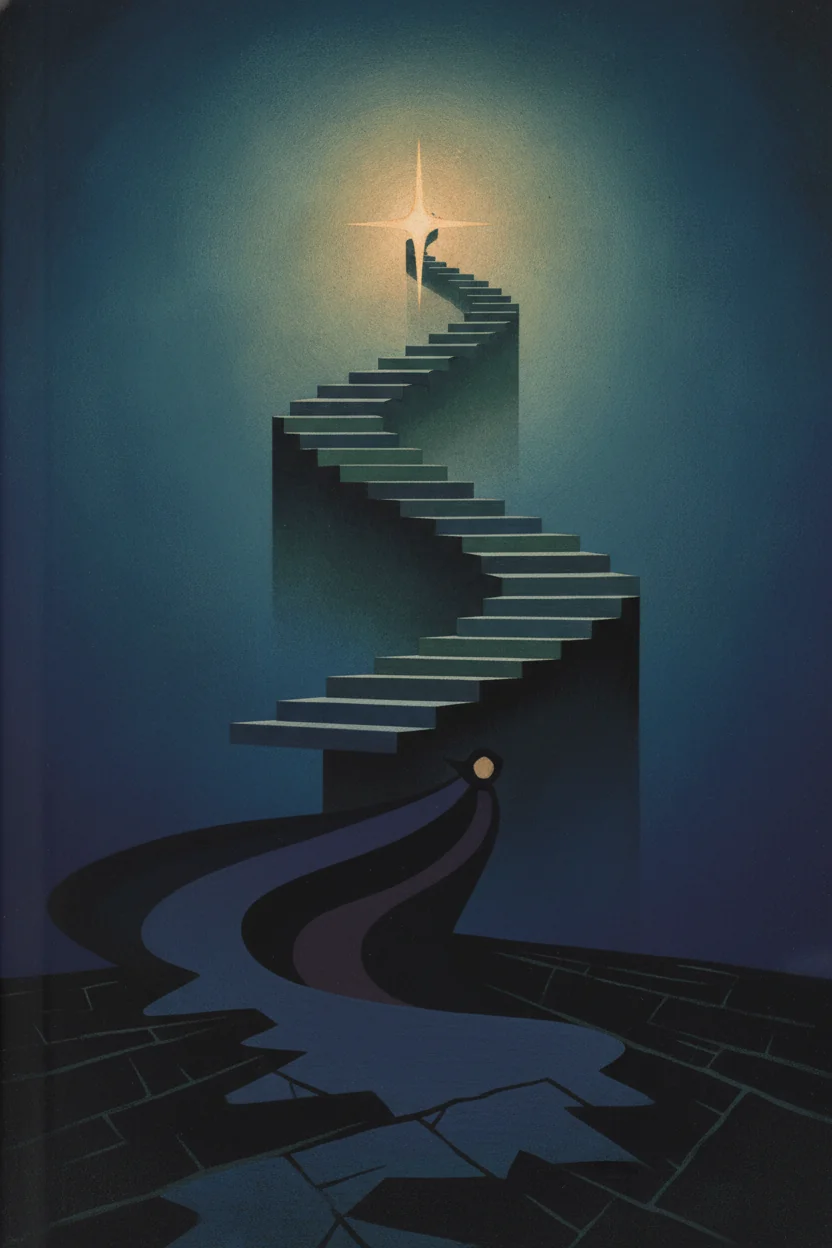
The Catcher in the Rye by J.D. Salinger
by J.D. Salinger
Holden Caulfield, a disillusioned teenager expelled from school, wanders New York City in a state of mental crisis. He grapples with the loss of his brother and the 'phoniness' of adult society, ultimately seeking a way to protect the innocence of children.
The Big Idea
"The struggle to preserve childhood innocence and authenticity in a world perceived as superficial and hypocritical."
Key Insights
The Concept of 'Phoniness'
Holden uses the term to describe the performative nature of social interactions.
His disdain for people who act a certain way just to impress others or fit into social hierarchies.
The Symbolism of the Red Hunting Hat
The hat represents Holden's desire for individuality and a sense of security.
He wears it as a shield and a marker of his non-conformity while wandering the city.
Grief and Stunted Growth
Unresolved trauma can freeze a person's emotional development.
Holden's inability to move past Allie's death prevents him from successfully transitioning into adulthood.
The 'Catcher' Fantasy
The desire to protect others from the pain of experience is a projection of one's own fragility.
Holden's dream of catching children in the rye to stop them from falling off the cliff of maturity.
The Necessity of Change
Acceptance of growth is the only cure for chronic alienation.
Phoebe's observation that you have to catch the gold ring, implying that taking risks and growing up is necessary.
Chapter Breakdown
Context and Background: The Post-War Adolescent Crisis
Published in 1951, The Catcher in the Rye emerged during a period of intense social conformity in post-World War II America. J.D. Salinger crafted a narrative that spoke directly to the growing divide between the rigid expectations of adult society and the internal chaos of adolescence. The novel is written as a stream-of-consciousness monologue, delivered by the protagonist, Holden Caulfield, from a psychiatric facility in California. This framing device establishes the story not just as a series of events, but as a therapeutic confession. Holden represents the archetypal rebellious teenager, struggling with the transition from the innocence of childhood to the perceived hypocrisy and 'phoniness' of the adult world.
Plot Overview: Three Days of Alienation
The story follows sixteen-year-old Holden Caulfield over the course of a few days in December. After being expelled from Pencey Prep—his fourth school—Holden leaves the campus early to avoid his parents' immediate reaction. He wanders through New York City, spending his time in hotels, jazz clubs, and Central Park, attempting to find a genuine human connection in a city that feels cold and indifferent. Throughout his journey, Holden encounters various figures: a former teacher, a prostitute named Sunny, and an old girlfriend, Sally Hayes. Each interaction reinforces his sense of isolation, as he finds most people to be superficial or insincere.
The emotional core of the plot centers on Holden's relationship with his younger sister, Phoebe, and the memory of his deceased brother, Allie. His desperate need to protect Phoebe from the 'dirt' of the world mirrors his own inability to cope with his grief and trauma. The climax occurs when Holden visits Phoebe, and she challenges his cynicism, forcing him to realize that he cannot stop children from growing up. The novel concludes with Holden attending a rainy baseball game with Phoebe, where he experiences a moment of pure, unadulterated joy and acceptance before returning to the facility for treatment.
Major Themes: Phoniness, Innocence, and Isolation
The central theme of the novel is the conflict between innocence and experience. Holden views childhood as a state of purity and adulthood as a state of corruption. He uses the word 'phony' to describe anyone who performs a social role for the sake of status or acceptance. To Holden, the adult world is a theater of lies where sincerity is sacrificed for social climbing.
- Isolation as a Shield: Holden uses his cynicism and alienation as a defense mechanism. By deciding that everyone is phony, he justifies his own loneliness and avoids the risk of being hurt by others.
- The Pain of Grief: The death of Allie is the catalyst for Holden's mental instability. His inability to process this loss leads to his fixation on preserving innocence, as Allie represents the eternal child who never had to face the corruption of adulthood.
- The Search for Authenticity: Despite his claims of hatred for society, Holden is desperately searching for a 'real' connection, evidenced by his attempts to call old acquaintances and his deep bond with Phoebe.
Key Scenes and Symbolic Moments
One of the most pivotal scenes is Holden's discussion about the poem 'The Catcher in the Rye' by Robert Burns. He misinterprets the poem, imagining himself as a guardian standing in a field of rye, catching children before they fall off a cliff. This cliff symbolizes the fall from innocence into adulthood. Holden's desire to be the 'catcher' is a manifestation of his desire to save children—including himself—from the inevitable pain of growing up.
Another critical moment is Holden's visit to the Museum of Natural History. He admires the displays because they never change. In a world where everything is in flux and people evolve into 'phonies,' the museum represents a frozen, unchanging reality where things remain exactly as they are. This mirrors his internal desire to stop time and prevent the decay of the human spirit.
Legacy: Why the Novel Still Matters
The Catcher in the Rye remains a cornerstone of American literature because it captured the universal feeling of adolescent alienation. Before Salinger, teenagers were often portrayed as miniature adults or simplistic rebels. Holden Caulfield introduced the world to the 'angsty teen'—a character defined by internal contradiction, vulnerability, and a deep-seated longing for truth. The novel's influence can be seen in countless films and books that explore the struggle to find one's identity against the pressure of societal norms. It serves as a timeless reminder that the transition to adulthood is often a painful process of reconciling one's ideals with the messy reality of human nature.
Take Action
Practical steps you can implement today:
-
Recognize that cynicism is often a defense mechanism against vulnerability.
-
Acknowledge that grief must be processed to avoid emotional stagnation.
-
Strive for authenticity while accepting that not everyone will meet your standards of sincerity.
-
Understand that growth involves an inevitable loss of childhood innocence.
-
Value the importance of supportive, non-judgmental relationships during transitional life phases.
Notable Quotes
"I keep picturing all these little kids playing some game in this big field of rye and all."
— J.D. Salinger
"The thing is, I don't even like any of the people that go to Pencey."
— J.D. Salinger
"I'm the most depressing person in the world."
— J.D. Salinger
"Anyway, I keep picturing all these little kids playing some game in this big field of rye and all."
— J.D. Salinger
Who Should Read This
This book is essential for anyone who has ever felt like an outsider or struggled with the pressures of conforming to societal expectations. It is particularly resonant for adolescents and young adults navigating the complexities of identity, as well as adults reflecting on the loss of their own childhood idealism.
Summary Written By
Software Engineer & Writer
Software engineer with a passion for distilling complex ideas into actionable insights. Writes about finance, investment, entrepreneurship, and technology.
View all summaries →Reviews
No reviews yet. Be the first to share your thoughts!