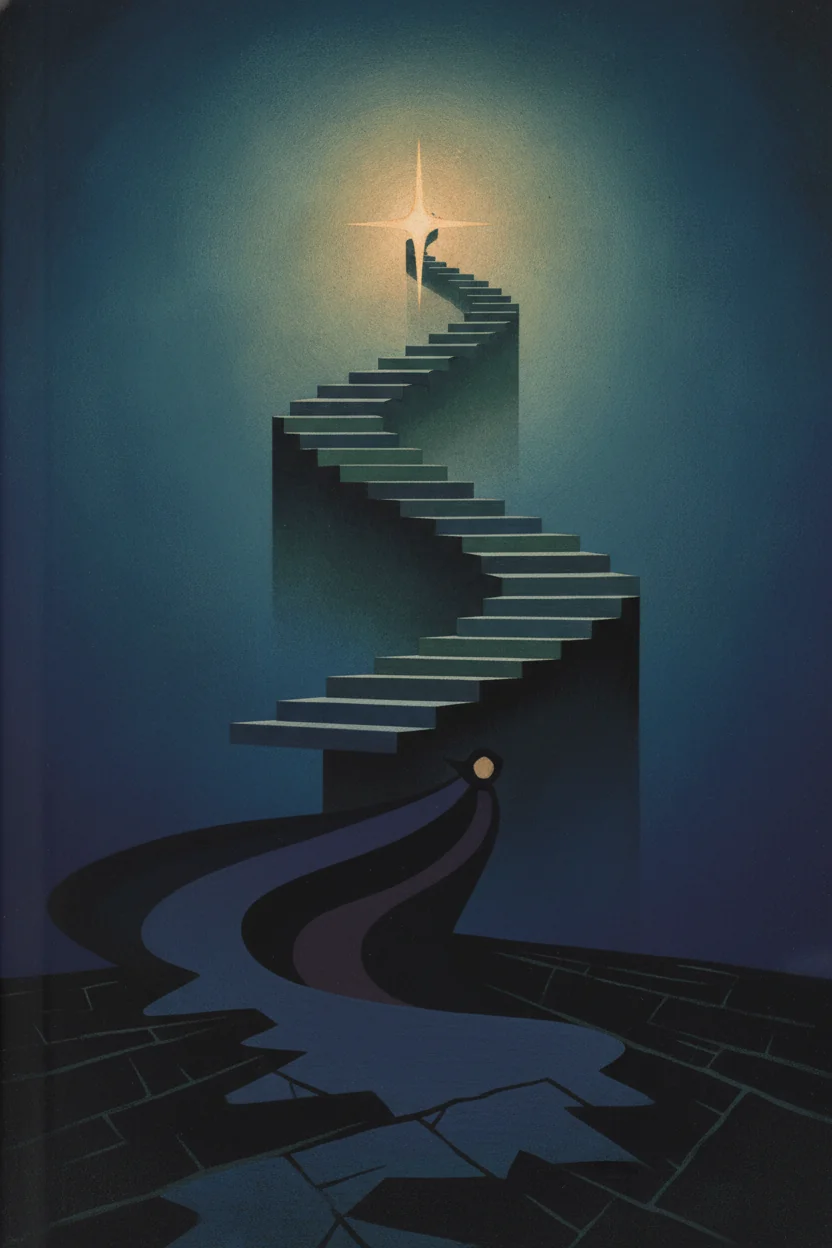
Night by Elie Wiesel
by Elie Wiesel
A poignant memoir of Elie Wiesel's survival in Auschwitz and Buchenwald. It chronicles the devastating loss of his family and his struggle to maintain faith in a world consumed by hatred.
The Big Idea
"The Holocaust is not only a physical genocide but a spiritual one that strips individuals of their faith, identity, and humanity."
Key Insights
The Death of Innocence
Extreme trauma can lead to a complete rupture in one's relationship with the divine.
Eliezer's transition from a devout student of the Talmud to someone who views God as an accomplice to the killers.
The Primal Instinct
Under conditions of absolute scarcity, basic survival instincts often override moral and familial bonds.
The scene where sons turn against fathers for a piece of bread during the transport to Buchenwald.
The Power of Identity
Dehumanization begins with the removal of a person's name and individuality.
The replacement of names with tattooed numbers, turning humans into mere inventory for the state.
The Danger of Indifference
The silence of the international community allows atrocities to escalate unchecked.
The slow realization in Sighet that the world would not come to their rescue despite the warnings.
The Burden of Survival
Survivors often carry a heavy burden of guilt for those they could not save.
Eliezer's internal conflict and eventual relief upon his father's death, followed by immediate shame.
Chapter Breakdown
The Historical Context of Night
Written by Elie Wiesel and published in 1960, Night is a harrowing memoir that serves as a witness account of the Holocaust. The story begins in 1941 in Sighet, a small town in Transylvania, where the Jewish community initially ignores the warning signs of the impending Nazi genocide. The narrative captures the transition from a life of religious devotion and communal stability to the systematic dehumanization of the concentration camp system. Wiesel’s account is not just a historical record but a deeply personal exploration of the loss of faith and the shattering of familial bonds under the pressure of extreme cruelty.
A Descent into Darkness: Plot Overview
The memoir follows Eliezer, a deeply religious teenager, and his father as they are deported from Sighet to Auschwitz-Birkenau. Upon arrival, the family is split; Eliezer is separated from his mother and sisters, whom he never sees again. The narrative tracks their survival through multiple camps, including Buna and Buchenwald. The plot is characterized by a relentless cycle of starvation, brutal labor, and the constant threat of death. Eliezer describes the 'selection' process, where prisoners are judged based on their physical utility to the Nazi regime. As the months pass, the bond between Eliezer and his father becomes his sole reason for existence. However, as the psychological toll of the camps increases, Eliezer struggles with the guilt of his own survival instincts, eventually witnessing his father's slow decline and death under the weight of abuse and disease.
Major Themes: Faith, Silence, and Dehumanization
The central theme of Night is the crisis of faith. At the start, Eliezer is a mystic, dedicated to the study of the Talmud. However, the sight of children being burned alive leads him to question how a just God could allow such atrocities. This spiritual void is mirrored by the theme of silence—the silence of the world that ignored the genocide and the silence of God in the face of suffering. Furthermore, the book examines dehumanization. The Nazis stripped prisoners of their names, replacing them with tattooed numbers, and reduced their existence to a primal struggle for a crust of bread. This process transforms the victims, forcing them to choose between compassion for others and the raw instinct for self-preservation.
Key Scenes and Pivotal Moments
One of the most haunting scenes is the first night at Birkenau, where the smell of burning flesh fills the air, and Eliezer realizes that the world he once knew has vanished. Another critical moment occurs during the transport to Buchenwald in an open cattle car, where prisoners fight each other for scraps of bread, illustrating the total collapse of human morality. The emotional climax of the book is the death of Eliezer's father. After months of clinging to each other for support, the father dies in the night, and Eliezer admits to a devastating feeling of relief, a confession that highlights the psychological trauma of the camps. The memoir ends with Eliezer looking into a mirror for the first time in years, seeing only a corpse gazing back at him.
The Legacy: Why Night Matters Today
Night remains a cornerstone of Holocaust literature because it refuses to sanitize the experience of the survivor. By focusing on the internal psychological struggle rather than just the external horrors, Wiesel provides a roadmap of how the human spirit can be broken and yet persist. The book serves as a permanent warning against the dangers of indifference. It reminds readers that silence in the face of injustice is a form of complicity. By documenting the erasure of identity and the destruction of the family unit, Wiesel ensures that the millions who perished are not forgotten, transforming his individual suffering into a universal plea for human rights and dignity.
Take Action
Practical steps you can implement today:
-
Practice active empathy to prevent the dehumanization of others in society.
-
Recognize that silence in the face of injustice is a form of consent.
-
Study history to identify the early warning signs of systemic hate and prejudice.
-
Understand that trauma alters a person's worldview and requires deep patience and support for healing.
-
Value the power of storytelling and testimony in preserving truth against historical revisionism.
Notable Quotes
"Never shall I forget that night, the first night in camp, which has turned my life into one long night."
— Elie Wiesel
"Where is God? this is the question that haunts me."
— Elie Wiesel
"I was a reluctant child."
— Elie Wiesel
"I looked back at myself in the mirror. I saw a corpse."
— Elie Wiesel
Who Should Read This
This book is essential for anyone interested in history, human rights, and the psychology of survival. It is a must-read for students of the Holocaust and those seeking to understand the profound impact of systemic hatred and the resilience of the human spirit.
Summary Written By
Software Engineer & Writer
Software engineer with a passion for distilling complex ideas into actionable insights. Writes about finance, investment, entrepreneurship, and technology.
View all summaries →Reviews
No reviews yet. Be the first to share your thoughts!