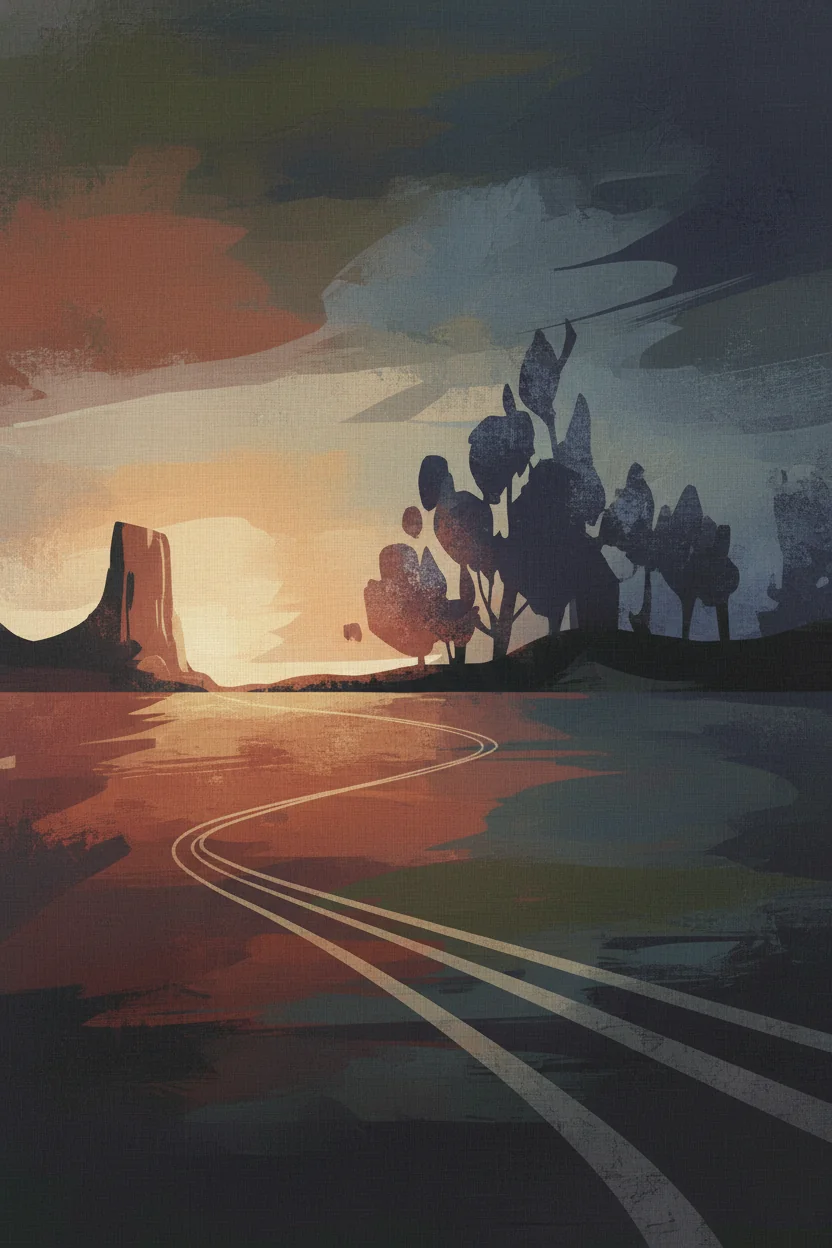
East of Eden by John Steinbeck
by John Steinbeck
A multi-generational saga set in California's Salinas Valley that mirrors the biblical story of Cain and Abel. It follows the Trask family's struggle with inheritance, betrayal, and the quest for redemption through the power of free will.
The Big Idea
"Human beings are not predestined by blood or fate to be evil, but possess the sovereign choice—Timshel—to overcome sin and define their own moral character."
Key Insights
Timshel
The Hebrew word 'timshel' implies that humans have the choice to conquer sin, rather than being commanded to or destined to.
The intellectual debate between the characters regarding the translation of Genesis.
The Cycle of Paternal Love
The desperate need for a father's approval can drive individuals to extremes of both virtue and vice.
Caleb's exhaustive efforts to please Adam, which are consistently ignored in favor of Aron.
Inherited Evil
While traits and temperaments can be inherited, moral responsibility remains an individual choice.
Caleb's fear that he is 'bad' because of his mother, Cathy, and his eventual realization that he can choose otherwise.
The Danger of Idealization
Placing someone on a pedestal of purity makes them fragile and unable to cope with the reality of human imperfection.
Aron's psychological collapse when he realizes his mother is not the saintly figure he imagined.
Nature vs. Nurture
The environment and family history shape a person, but the internal will is the final arbiter of character.
The contrast between the repressed Trask home and the vibrant, chaotic Hamilton household.
Chapter Breakdown
The Setting and Generational Context
John Steinbeck's East of Eden is a sprawling multi-generational epic set primarily in the fertile Salinas Valley of California. The narrative serves as a profound exploration of human nature, morality, and the struggle between good and evil. Steinbeck meticulously builds the atmosphere of the valley, treating the landscape not just as a backdrop, but as a character that influences the psychological state of those who inhabit it. The story is anchored by the arrival of Adam Trask, a man haunted by a traumatic childhood and seeking a fresh start in the American West. Through the Trask and Hamilton families, Steinbeck mirrors the biblical story of Cain and Abel, framing the American experience within the timeless struggle of brotherhood, jealousy, and the quest for paternal approval.
Plot Overview: The Cycle of Conflict
The core of the plot follows Adam Trask, who marries Cathy Ames, a woman of chilling sociopathy and ambition. Cathy's manipulation of Adam leads to a devastating betrayal; she abandons him and their two sons, Caleb and Aron, after draining his finances and leaving him emotionally shattered. As the boys grow, they embody the duality of their parents: Aron is the idealized version of purity and love, while Caleb is the misunderstood outcast, grappling with the darkness inherited from his mother. This tension culminates in a tragic rift when Caleb's attempts to earn his father's love are met with indifference, while Aron's fragile innocence is shattered by the truth of their mother's nature. Parallel to this is the story of the Hamiltons, a boisterous and earthy family who provide a stark contrast to the sterile, repressed environment of the Trask household. The climax of the novel focuses on the internal struggle of Caleb, who must decide if he is destined to be 'evil' or if he possesses the power to choose his own path.
Major Themes: Timshel and Free Will
The central philosophical pillar of the novel is the concept of Timshel. Derived from the Hebrew translation of Genesis, the word means 'Thou mayest.' Steinbeck argues that humans are not predestined to be good or evil, nor are they doomed by their ancestry. Instead, the essence of humanity lies in the choice to overcome sin. This theme of free will is contrasted with the deterministic views of the era, suggesting that while we may inherit tendencies, we are not slaves to them. Another dominant theme is the search for a father's love. Both Caleb Trask and the Hamilton children navigate the complex dynamics of parental expectation and the desperation for validation. Finally, the novel explores the duality of man—the capacity for extreme cruelty and profound tenderness existing within the same soul.
Key Scenes and Pivotal Moments
One of the most poignant sequences is the interaction between Adam and his sons, where Adam's inability to see Caleb for who he truly is creates a void that Caleb tries to fill with desperation. The scene where Aron discovers the truth about Cathy is a turning point; his world of idealized purity collapses, leading to a spiritual death that mirrors the physical death of others in the story. Another critical moment is the final conversation between Adam and Caleb. In a heartbreaking yet redemptive conclusion, Adam utters a single word—'Thou mayest'—which serves as a blessing and a release for Caleb. This moment validates Caleb's struggle and confirms that he is not a monster, but a man capable of choosing his own moral destiny, effectively breaking the cycle of violence and hatred that has plagued the family for generations.
Legacy and Enduring Significance
East of Eden remains one of Steinbeck's most ambitious works because it transcends the regionalism of his earlier novels to tackle universal metaphysical questions. It is a masterclass in character development and thematic layering. By blending the biblical allegory with the grit of early 20th-century California, Steinbeck created a timeless study of the human condition. The book's legacy lies in its optimistic assertion that morality is a choice. It challenges the reader to look past the 'labels' of good and bad and recognize the complexity of the human heart. Its influence can be seen in modern literature that explores generational trauma and the psychological weight of legacy, reminding us that we are not defined by where we come from, but by where we choose to go.
Take Action
Practical steps you can implement today:
-
Recognize that your past or your family history does not dictate your future moral choices.
-
Avoid projecting idealized versions of people onto others, as this prevents genuine connection and leads to disappointment.
-
Understand that the act of choosing to be 'good' is more meaningful when it is a conscious decision against one's inclinations.
-
Practice empathy toward those who feel alienated or 'unlovable,' as their behavior is often a cry for validation.
-
Embrace the philosophy of 'Thou Mayest' to empower yourself to break negative behavioral cycles.
Notable Quotes
"Thou mayest."
— John Steinbeck
"I believe that strongest motive of all human beings is to actually actually be loved."
— John Steinbeck
"And the first thing that the children learn is that they are not loved."
— John Steinbeck
"It is a sin to cling to a mistake just because you spent a long time making it."
— John Steinbeck
Who Should Read This
This book is ideal for readers who enjoy epic family sagas, philosophical inquiries into morality, and deep character studies. It is particularly suited for those interested in the intersection of psychology and literature, or anyone grappling with themes of forgiveness, generational trauma, and the struggle to define oneself apart from one's parents.
Summary Written By
Software Engineer & Writer
Software engineer with a passion for distilling complex ideas into actionable insights. Writes about finance, investment, entrepreneurship, and technology.
View all summaries →Reviews
No reviews yet. Be the first to share your thoughts!