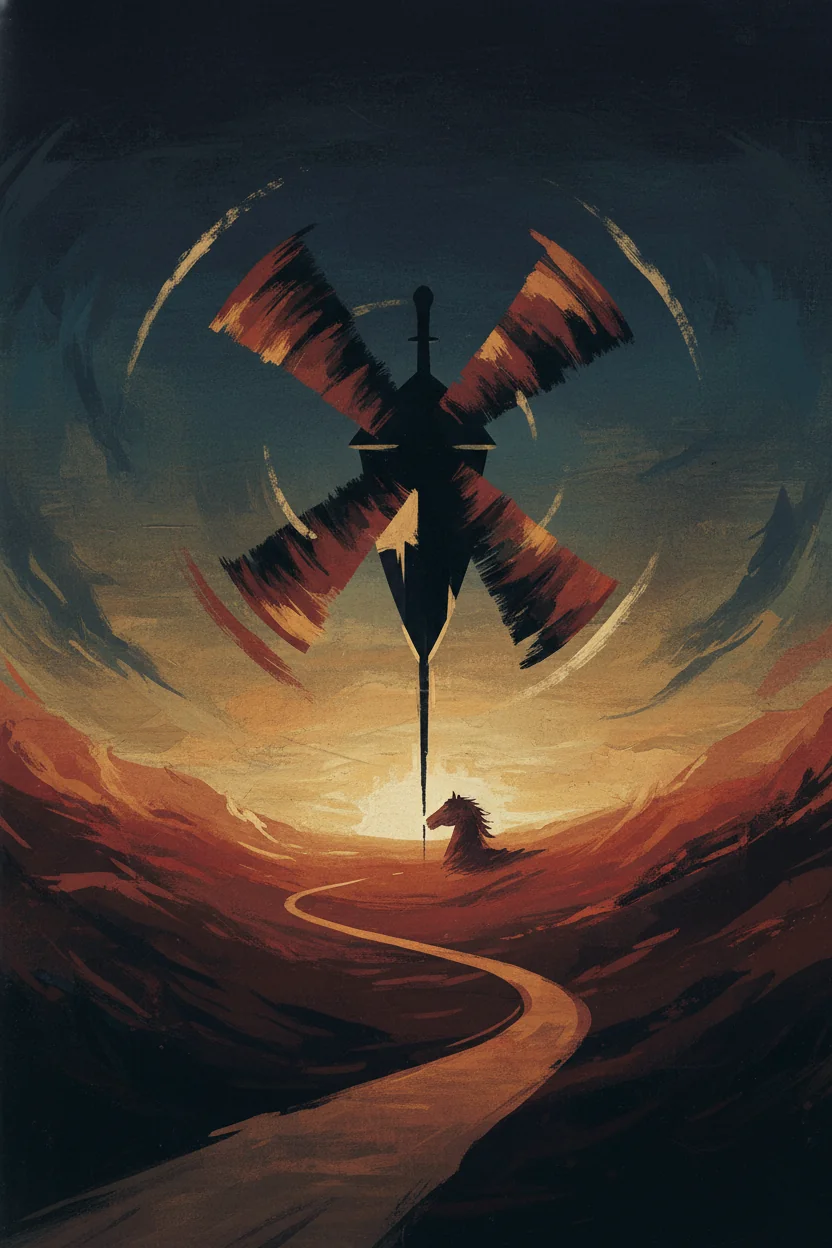
Don Quixote by Miguel de Cervantes
by Miguel de Cervantes
A delusional Spanish nobleman renames himself Don Quixote and sets out to revive chivalry in a world that no longer believes in it. Accompanied by his pragmatic squire Sancho Panza, he mistakes windmills for giants and inns for castles in a satirical exploration of madness and nobility.
The Big Idea
"The eternal struggle between the romanticized ideals of the human spirit and the uncompromising reality of the physical world."
Key Insights
The Duality of Man
The pairing of Quixote and Sancho represents the internal conflict between the dreamer and the realist.
Quixote sees a castle where Sancho clearly sees a dilapidated inn.
The Subjectivity of Truth
Reality is often shaped by the beliefs of the observer rather than objective facts.
Quixote convinces himself that his failures are caused by sorcerers rather than his own delusions.
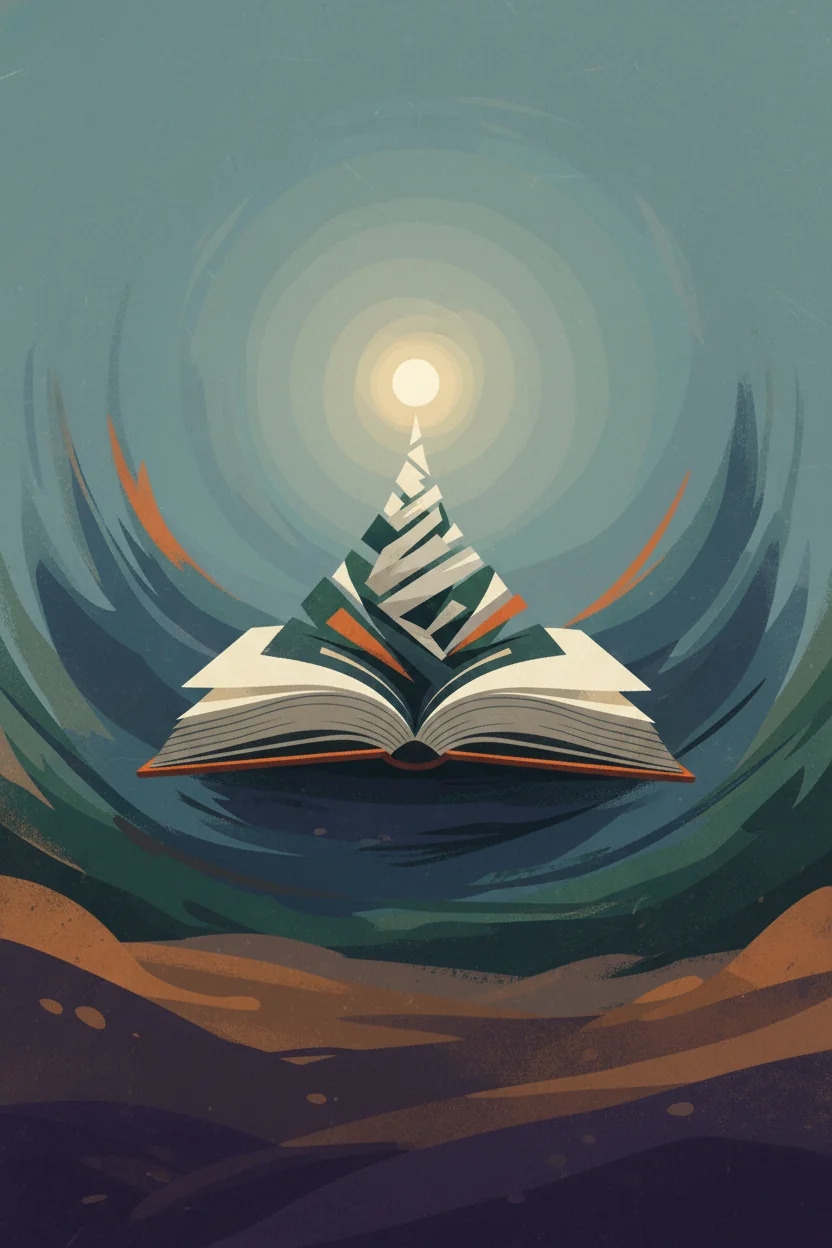
The Power of Literature
Books can shape a person's identity and worldview, sometimes to a dangerous degree.
Quixote's entire personality is constructed from the chivalric romances he read.
Critique of Social Hierarchy
True nobility is found in one's actions and heart, not in social rank.
Sancho, despite being a peasant, shows immense loyalty and wisdom.
Meta-Narrative Innovation
Cervantes breaks the fourth wall, making the characters aware of their own fame as literary figures.
In Part II, characters discuss the published version of Part I.
Chapter Breakdown
The Delusional World of Alonso Quijano
Written by Miguel de Cervantes in the early 17th century, Don Quixote is widely regarded as the first modern novel. The story begins with Alonso Quijano, a middle-aged hidalgo from La Mancha, whose obsession with chivalric romances leads him to lose his grip on reality. He spends his days and nights reading tales of knights-errant, magic, and damsels in distress, eventually concluding that the world desperately needs a return to the age of chivalry. To remedy this, he renames himself Don Quixote de la Mancha, dons a rusty suit of armor, and sets out on his lean horse, Rocinante, to right the wrongs of the world. His journey is not merely a physical trek across the Spanish countryside, but a psychological exploration of the tension between idealism and the harshness of reality.
A Tale of Two Contrasting Spirits
The plot follows Quixote's various 'sallies' into the world. Initially alone, he soon recruits a reluctant peasant neighbor, Sancho Panza, to serve as his squire. Sancho is the antithesis of Quixote: while the knight is driven by lofty, imaginary ideals and poetic delusions, Sancho is grounded in materialism, common sense, and a love for food and sleep. Despite his skepticism, Sancho is lured by the promise of governing an island, creating a dynamic where the master's madness is tempered by the servant's pragmatism. Together, they encounter a series of mishaps where Quixote perceives mundane objects as magical entities. He sees inns as castles, flocks of sheep as opposing armies, and windmills as menacing giants. Each failure to achieve knightly glory is dismissed by Quixote as the work of malevolent enchanters who wish to prevent him from achieving his noble goals.
Major Themes: Idealism vs. Realism
At its core, the novel examines the conflict between idealism and realism. Quixote represents the human desire to transcend a boring, cruel world through the power of imagination and moral conviction. However, Cervantes uses satire to show the danger of living entirely within a fantasy. The narrative also delves into the theme of social class and perspective. Through the interactions between the noble-born (though impoverished) Quixote and the peasant Sancho, the book suggests that nobility is a matter of spirit and action rather than birthright. Furthermore, the concept of metafiction is central; in the second part of the novel, the characters are aware that a book has been written about them, blurring the line between the author, the narrator, and the characters themselves, which challenges the reader's perception of truth.
Key Scenes and the Power of Illusion
One of the most iconic scenes is the battle with the windmills, where Quixote charges headlong into the sails, believing them to be giants. This scene perfectly encapsulates the tragedy and comedy of his character: his courage is genuine, but his target is imaginary. Another pivotal sequence is the encounter with the galley slaves, where Quixote frees prisoners in the name of justice, only for the prisoners to turn on him and pelt him with stones. This highlights the disconnect between Quixote's romanticized version of justice and the chaotic reality of human nature. The relationship between Quixote and Sancho evolves throughout these scenes; Sancho begins to be 'quixotized,' adopting some of his master's imaginative flair, while Quixote occasionally acknowledges the physical limitations of his world.
The Legacy of the Man from La Mancha
Don Quixote remains a cornerstone of Western literature because it captures the universal human struggle to find meaning in a world that often lacks it. By mocking the outdated tropes of chivalry, Cervantes paved the way for the psychological novel, focusing on character development over plot. The term 'quixotic' has entered the English language to describe someone who pursues unrealistic goals with noble intentions. The novel's ending—where Quixote regains his sanity on his deathbed—is bittersweet, suggesting that while reason may be necessary for survival, the madness of idealism is what gives life its color. It serves as a timeless reminder that the pursuit of a higher ideal, however futile, is a fundamentally human endeavor.
Take Action
Practical steps you can implement today:
-
Balance your idealism with a grounded understanding of reality to avoid costly mistakes.
-
Understand that different perspectives can coexist, even when one seems clearly wrong.
-
Cultivate a sense of nobility and honor in your daily actions, regardless of your social status.
-
Be mindful of how the media and stories you consume shape your perception of the world.
-
Value loyalty and companionship, as seen in the evolving bond between Quixote and Sancho.
Notable Quotes
"To be pleased with Flatterers is the farthest thing from man's prudence."
— Miguel de Cervantes
"Fortune favors the brave."
— Miguel de Cervantes
"Too much light dazzles the eyes, as too much safety makes the heart idle."
— Miguel de Cervantes
"I know who I am; and who I may be, if I choose."
— Miguel de Cervantes
Who Should Read This
This book is essential for anyone interested in the origins of the modern novel, students of philosophy and psychology, and readers who enjoy satire that balances deep tragedy with absurd comedy. It is particularly rewarding for those who feel caught between their highest aspirations and the mundane requirements of daily life.
Summary Written By
Software Engineer & Writer
Software engineer with a passion for distilling complex ideas into actionable insights. Writes about finance, investment, entrepreneurship, and technology.
View all summaries →Reviews
No reviews yet. Be the first to share your thoughts!