A Thousand Years of Power
Imagine a world where one single city—Rome—is the undisputed center of the universe. At its absolute peak, the Roman Empire was an entity of staggering proportions. It governed roughly 70 million people, stretching its grip from the sun-drenched coasts of North Africa to the rainy forests of Britain. For centuries, the Roman eagle was the only symbol that mattered; their roads were the arteries of civilization, their legions were an unstoppable wall of iron, and their law was the gold standard for governance.
To the people living within those borders, the empire didn't just feel permanent—it felt inevitable. It was the "Eternal City." So, how does something that vast, that sophisticated, and that powerful simply stop existing? The fall of the Roman Empire wasn't a sudden cliff-edge event, but rather a slow-motion car crash that took centuries to unfold. It is one of history's greatest paradoxes: the very things that made Rome great—its scale, its military might, and its appetite for expansion—eventually became the weights that dragged it under.
Political Chaos: Too Many Emperors, Too Little Stability
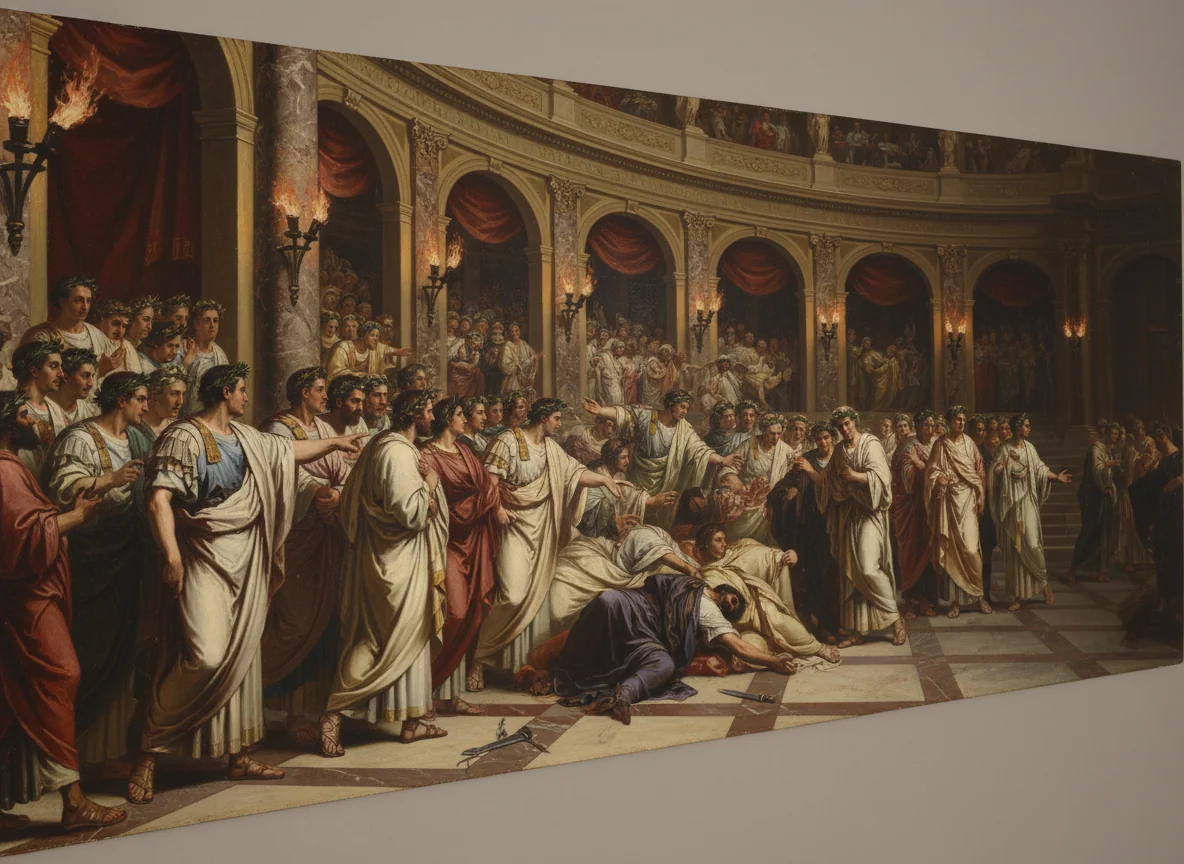
If you think modern politics is messy, the Roman Empire during the Crisis of the Third Century (235–284 AD) would make you blush. This era was a masterclass in instability. For roughly 50 years, Rome suffered through a dizzying cycle of military coups, betrayals, and assassinations. In a staggering display of volatility, there were over 50 claimants to the throne in just 50 years.
The problem was that the empire had become too large for one person to manage from a single desk in Rome. Power shifted from the Senate to the military. The Praetorian Guard—the emperor's own bodyguards—effectively became kingmakers, often selling the throne to the highest bidder or murdering an emperor the moment he stopped paying the soldiers enough bonuses.
This "musical chairs" approach to leadership meant that long-term planning vanished. When your primary goal is simply surviving the week without being stabbed in the back, you don't invest in infrastructure, you don't reform the law, and you certainly don't worry about the borders. The roman empire collapse didn't start with an invading army; it started with a leadership vacuum that left the state hollowed out from the inside.
An Economy in Freefall
While the emperors were fighting for their lives, the Roman economy was fighting for its soul. To fund their massive armies and keep the restless populace fed and entertained, the emperors needed money. But they had a problem: they had run out of new territories to loot for gold.
Their solution was a classic economic blunder: currency debasement. The government began mixing cheap metals like copper into the silver denarius. On the surface, this allowed them to mint more coins, but in reality, it stripped the currency of its value. The result was hyperinflation. Prices skyrocketed, and the money in people's pockets became virtually worthless overnight.
To make matters worse, the state imposed crushing taxation to keep the military machine running. This hit the middle class and small farmers the hardest. Many farmers, unable to pay their taxes or compete with massive slave-run estates, gave up their land and became serfs—essentially tying themselves to wealthy landowners for protection. Trade collapsed, cities shrank, and the once-vibrant Roman marketplace became a ghost of its former self. By the time the "barbarians" arrived, the empire was already bankrupt.
The Barbarians: Symptom, Not Cause
Popular history often paints the fall of the western roman empire as a story of "civilization vs. savages." But the truth is more nuanced. The Germanic tribes—the Goths, Vandals, and Franks—weren't just mindless hordes; many had lived on Rome's borders for generations and actually admired Roman culture.
The real catalyst was Attila the Hun. The Huns, a fierce nomadic people from Central Asia, pushed westward, creating a domino effect. As Attila drove the Huns' terror across the plains, the Germanic tribes were forced to flee their homes and push into Roman territory for survival. Rome, weakened by its own internal chaos, couldn't integrate these refugees or defend its borders.
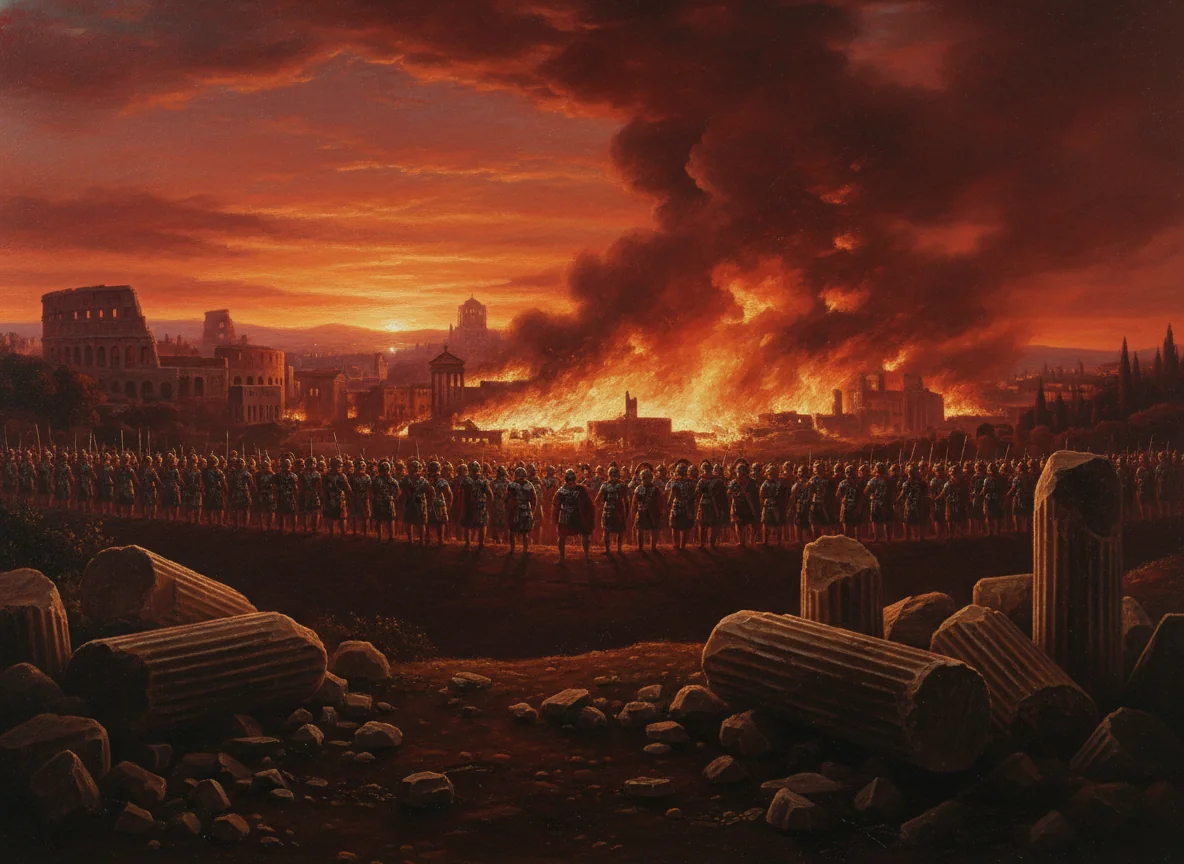
The psychological breaking point came in 410 AD, when the Visigoths managed to sack the city of Rome. It was the first time in 800 years that the city had fallen to a foreign enemy. The shockwave was felt across the world; it was a signal that the "Eternal City" was, in fact, mortal.
The final curtain call arrived in 476 AD. A Germanic chieftain named Odoacer deposed the teenage emperor Romulus Augustulus. Odoacer didn't even bother to name a successor; he simply sent the imperial regalia back to Constantinople. The Western Roman Empire had officially ceased to exist.
Did Rome Really Fall?
If we only look at 476 AD, it seems like a tragedy. But did Rome actually disappear? Not exactly. While the West crumbled, the Eastern (Byzantine) Empire survived and thrived. Based in Constantinople, this half of the empire preserved Roman law and Greek culture for another millennium, continuing until 1453 AD when Constantinople finally fell to the Ottomans.
More importantly, Rome's DNA is woven into the very fabric of the modern world. We didn't lose Rome; we just absorbed it. Consider the following legacies:
- Law and Governance: The concept of a written legal code and the principle of "innocent until proven guilty" are direct descendants of Roman law.
- Language: Latin evolved into the Romance languages—Spanish, French, Italian, Portuguese, and Romanian.
- Architecture: Every time you see a dome or a concrete arch in a government building, you are looking at Roman engineering.
- Institutional Power: The administrative structure of the Catholic Church was modeled directly after the Roman imperial bureaucracy.
"The fall of Rome is a warning and a lesson: no power is too big to fail if it neglects internal stability, destroys its own economy, and fails to adapt to a changing world."
The causes of rome's fall teach us that empires rarely collapse because of one single enemy. Instead, they erode from within. Rome didn't vanish; it transformed. It shifted from a political entity into a cultural foundation, proving that while empires may fall, their ideas can live forever.