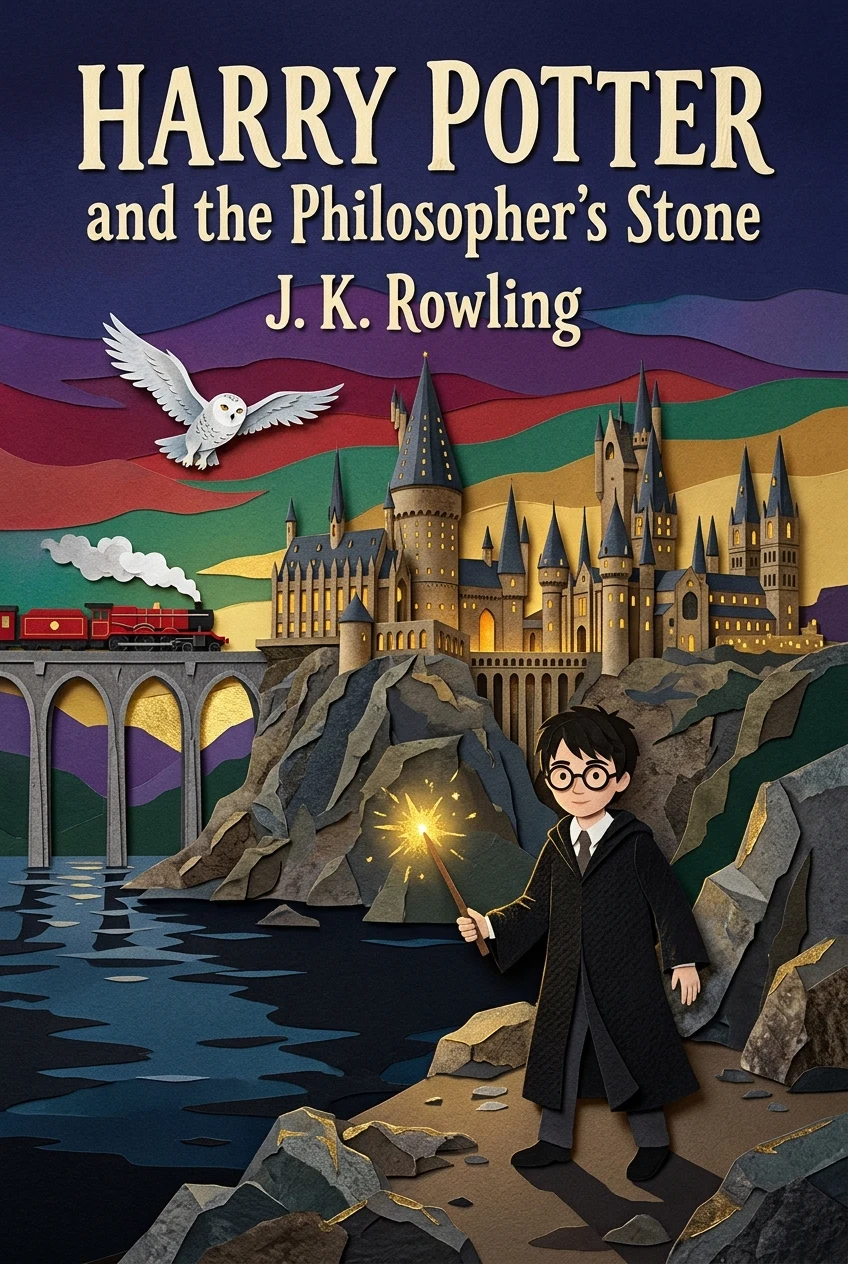
Harry Potter and the Philosopher's Stone
oleh J. K. Rowling
Harry Potter and the Philosopher's Stone is the first novel in J. K. Rowling's series about a boy who grows up unloved with his aunt and uncle, then learns on his eleventh birthday that he is a famous wizard. At Hogwarts School of Witchcraft and Wizardry he makes his first real friends, Ron and Hermione, and discovers that something valuable is hidden in the castle. Someone wants it, and the three friends decide to find out who.
Ide Utama
"A neglected boy learns on his eleventh birthday that he is a wizard, and finds at Hogwarts that courage, loyalty and friendship matter more than fame or the family you were born into."
Wawasan Utama
Friendship is stronger than fame
Harry is famous before he arrives, but fame never solves a single problem for him. What carries him through the year is Ron's loyalty and Hermione's mind. The book places strength in a group of people who bring different skills and tell each other the truth, not in one gifted hero. Even Harry's bravest moments begin with a friend beside him.
In the chambers under the trapdoor, Hermione's knowledge, Ron's chess strategy and Harry's flying each unlock a different obstacle. None of the three could finish the journey alone.
Courage means acting while afraid
Courage in this story is not the absence of fear. It is choosing what is right while afraid. Dumbledore says it takes a great deal of bravery to stand up to enemies but just as much to stand up to friends, and the book gives both kinds of courage equal weight.
Shy Neville tries to stop his own friends from sneaking out at night. It costs him their goodwill, yet his stand earns the last points that decide the House Cup.
Wanting something needs wisdom
The Mirror of Erised shows only a person's deepest desire. Harry finds himself with his lost family and keeps returning, until Dumbledore warns him that dreams can crowd out real life. Desire can drive a person, but only if it doesn't swallow them.
The same idea guards the Stone. It can be taken only by someone who wants to find it, not use it, so greed is the one thing the trap cannot be fooled by.
Rincian Bab
Chapter-by-chapter summary
Spoiler warning: this section covers the whole plot, including the ending.
Chapter 1: The Boy Who Lived
On Privet Drive, the Dursleys notice strange signs: a cat reading a map, owls flying in daylight, cloaked people celebrating. Dumbledore, Professor McGonagall and Hagrid meet outside number four. The dark wizard Voldemort has vanished after attacking the Potters, and their baby son Harry has survived with a lightning-shaped scar. They leave him on the doorstep with a letter. Why it matters: Harry is famous before he knows it, and Dumbledore is shown to plan carefully.
Chapter 2: The Vanishing Glass
Ten years later Harry lives in the cupboard under the stairs, overlooked while his cousin Dudley is spoiled. On Dudley's birthday trip to the zoo, Harry finds he can talk to a boa constrictor, and the glass of its enclosure suddenly disappears. Harry is punished, though he has no idea what he did. Why it matters: it is the first sign of his power, and it makes the Dursleys' cold home painfully clear.
Chapter 3: The Letters from No One
Letters addressed to Harry, even to the cupboard, begin to arrive, then pour through the fireplace and fill the house. Uncle Vernon refuses to let Harry read them and drags the family from place to place, ending in a ramshackle hut on a rock at sea. Why it matters: the Dursleys' panic shows they know far more than they admit, and the magical world will not stop looking for Harry.
Chapter 4: The Keeper of the Keys
At midnight on Harry's eleventh birthday, Hagrid breaks down the door of the hut. He tells Harry the truth: he is a wizard, his parents were murdered by Voldemort, and his scar comes from the curse that failed to kill him. Hagrid gives Harry a birthday cake and gives Dudley a pig's tail. Why it matters: Harry's life splits into before and after, and he learns he has a place where he belongs.
Chapter 5: Diagon Alley
Hagrid takes Harry to London and into Diagon Alley, where Harry finds that his parents left him gold in a vault at Gringotts bank. Hagrid collects a small package from another vault and asks Harry not to wonder about it. Harry buys books, a cauldron, an owl named Hedwig and a wand. The wand-maker Ollivander says the wand chose Harry, and that its core is a twin of the one in Voldemort's wand. Why it matters: it plants the secret package and the wand link.
Chapter 6: The Journey from Platform Nine and Three-Quarters
Harry cannot find the platform until he follows the Weasley family and watches them walk through a barrier. On the train he meets Ron Weasley and shares sweets, then meets Hermione Granger, who already knows about him from books. Draco Malfoy sneers at Ron and offers Harry his friendship; Harry refuses. Why it matters: this one ride sets up the friendships and the first rivalry that drive the book.
Chapter 7: The Sorting Hat
The new students are sorted into houses by a talking hat. Harry quietly hopes not to be put in Slytherin, and the hat places him in Gryffindor, as it does Ron, Hermione and Neville Longbottom; Draco goes to Slytherin. During the feast Harry's scar hurts when Professor Snape looks at him. Dumbledore warns everyone to avoid the Forbidden Forest and the third-floor corridor. Why it matters: it shows that Harry's choices count as much as his gifts.
Chapter 8: The Potions Master
Harry learns his way around the castle and its moving staircases and finds lessons both thrilling and hard. In his first Potions class, Snape fires difficult questions at him and takes points from Gryffindor. Hermione keeps raising her hand but is ignored. Harry realises Snape dislikes him for no reason he can see. Why it matters: Snape's open hostility becomes the book's main false clue, and readers are led to suspect him.
Chapter 9: The Midnight Duel
In flying class Neville falls off his broom and breaks his wrist, and Draco grabs the glass ball sent by Neville's grandmother and flies off with it. Harry dives after it and catches it. Instead of punishing him, Professor McGonagall makes him Gryffindor's Seeker, the youngest in a century. That night, a duel challenge from Draco leads Harry, Ron, Hermione and Neville to a forbidden corridor, where a giant three-headed dog stands on a trapdoor. Why it matters: Harry's talent and the central mystery arrive together.
Chapter 10: Hallowe'en
On Hallowe'en, Ron mocks Hermione after a Charms lesson and she hides crying in a bathroom. When Professor Quirrell runs into the Great Hall to announce a troll in the dungeons, Harry and Ron realise Hermione doesn't know and rush to warn her. They knock out the troll, and Hermione lies to the teachers to protect them. Harry also notices that Snape is limping. Why it matters: shared danger makes the three friends, and it deepens the suspicion of Snape.
Chapter 11: Quidditch
Harry plays his first Quidditch match, against Slytherin. His broom begins to buck wildly. Hermione sets fire to Snape's robes to break what she thinks is his jinx, Harry regains control and catches the Snitch to win. The trio are sure Snape cursed the broom. Later, Hagrid lets slip that the dog is named Fluffy and that it guards something shared between Dumbledore and Nicolas Flamel. Why it matters: it gives the friends their first suspect and their first name to track down.
Chapter 12: The Mirror of Erised
At Christmas, Harry receives an invisibility cloak with an unsigned note. Exploring the castle under it at night, he finds the Mirror of Erised, which shows him his family. Ron sees himself as a school leader. Harry returns again and again until Dumbledore finds him on the third night and explains that the mirror shows only the deepest desire of the heart, and that it is unwise to dwell on dreams and forget to live. Why it matters: it reveals how lonely Harry is, and how kindly Dumbledore watches over him.
Chapter 13: Nicolas Flamel
Harry and his friends keep hunting for Flamel's identity. Harry remembers seeing the name on a chocolate frog card, and Hermione realises the answer is in a thick book she borrowed weeks earlier. Flamel is a famous alchemist who made the Philosopher's Stone, which produces the elixir of life and turns metal into gold. The three conclude that Snape is trying to steal it. Why it matters: the title object is finally explained, and the stakes become clear.
Chapter 14: Norbert the Norwegian Ridgeback
Hagrid has won a dragon egg from a stranger in a pub, and it hatches in his hut. He names the baby dragon Norbert and adores it, though dragons are illegal pets. After Draco spots it, the trio arrange for Ron's brother Charlie, who works with dragons, to take Norbert. Harry and Hermione smuggle it up the tower under the cloak but are caught by Filch, and Gryffindor loses 150 points. Why it matters: it shows Hagrid's kindness and weakness, and the friends' recklessness.
Chapter 15: The Forbidden Forest
As punishment, Harry, Hermione, Neville and Draco go into the Forbidden Forest with Hagrid to search for a wounded unicorn. Harry sees a hooded figure drinking the blood of a dead unicorn, and is rescued by a centaur called Firenze. Firenze explains that unicorn blood can keep someone alive on the brink of death, but at a terrible price. Harry begins to fear that Voldemort is behind the plot. Why it matters: the real enemy starts to come into focus.
Chapter 16: Through the Trapdoor
With Dumbledore away, the trio fear the Stone will be stolen that night and go through the trapdoor. They get past Fluffy, who sleeps to music; Hermione frees them from the Devil's Snare plant; Harry catches a flying key; and Ron wins a life-sized chess game by sacrificing himself. They pass a troll already beaten, and Hermione solves Snape's logic riddle. Only one can go forward, so Harry goes on alone. Why it matters: each obstacle tests a different friend's strength.
Chapter 17: The Man with Two Faces
Harry finds Professor Quirrell, not Snape, waiting in the last chamber. Voldemort lives on the back of Quirrell's head. The Stone is hidden in the Mirror of Erised and comes into Harry's pocket because he wants to find it, not use it. Quirrell burns wherever he touches Harry. In the hospital wing, Dumbledore explains that Harry's mother's love protected him, and that the Flamels will destroy the Stone. Dumbledore awards late points for courage, and Gryffindor wins the House Cup. Why it matters: the answer is that love and courage, not power, win.
Characters
Spoiler warning: some descriptions below reveal who the villain is.
Harry Potter
The orphaned hero. Raised by relatives who ignore him, he is brave, kind and quick to act, sometimes without thinking. His lightning scar and his survival of Voldemort's curse make him famous, which he finds more confusing than flattering.
Ron Weasley
Harry's first friend, from a big, loving and not very rich wizarding family. He is funny, loyal and sometimes jealous of his older brothers, yet he shows great courage in the chess game.
Hermione Granger
A Muggle-born student who has read every book before term begins. She seems bossy at first, but her logic saves the trio again and again, and she learns that a rule is sometimes worth bending for friends.
Neville Longbottom
A shy, clumsy Gryffindor who forgets things and gets laughed at. He stands up to his own friends at a critical moment, and that earns him the last points that decide the House Cup.
Hagrid
Hogwarts' gamekeeper, huge, soft-hearted and bad at keeping secrets. He rescues Harry from the Dursleys and introduces him to the wizarding world, and his love of dangerous creatures causes plenty of trouble.
Albus Dumbledore
Headmaster of Hogwarts. He seems calm and amused, but he plans carefully and trusts students to face their own problems. He gives Harry the cloak and the truth, though only when he thinks Harry is ready.
Severus Snape
The Potions master, cold and unfair to Harry. Readers suspect him of everything, which is the book's main misdirection. His true role is more complicated, and the later books reveal it.
Draco Malfoy
A proud, wealthy Slytherin who boasts about his family and looks down on Muggle-born students. He is Harry's school rival and always ready to get others into trouble, though he is more bully than villain.
Professor Quirrell
The nervous Defence Against the Dark Arts teacher who stammers and wears a turban. His timid manner hides the truth about him, which shows how appearances can fool everyone in the castle.
Voldemort
The dark wizard who killed Harry's parents and lost his body when his curse failed on baby Harry. Most wizards are afraid even to say his name. He wants the Stone to gain a body again.
Writing about this book
A good book report gives your own view, not just the plot. Treat these as starting points, not an answer to copy.
- Pick one scene that stayed with you, such as the troll in the bathroom or the Mirror of Erised, and ask what the character chooses and why.
- Imagine standing in front of the Sorting Hat. Which qualities would you ask for, and what does that say about you?
- Compare Harry and Draco. Do they differ because of how they were raised, or because of what they choose to do?
- What would you see in the Mirror of Erised, and would you want to look every night?
Open with a single moment from the book, then explain why it matters to you. Give two or three examples from the story, link them to your own experience, and end with how your view changed after reading. Keep the plot summary short; teachers want your thinking.
If you are reading for a class, ask a question of your own, such as "Is courage the same as not being afraid?", and let the book help you answer it.
Ambil Tindakan
Langkah praktis yang bisa Anda terapkan hari ini:
-
Judge people by what they do, not by their reputation or how they treat you at first.
-
Share hard tasks with others, because each friend's skill matters more than one hero.
-
Remember that courage includes telling a friend when they are wrong.
-
When you want something badly, ask what you would do with it before you chase it.
Kutipan Menarik
"“It does not do to dwell on dreams and forget to live.” (Chapter 12)"
— J. K. Rowling
"“It takes a great deal of bravery to stand up to our enemies, but just as much to stand up to our friends.” (Chapter 17)"
— J. K. Rowling
"“To the well-organized mind, death is but the next great adventure.” (Chapter 17)"
— J. K. Rowling
Siapa yang Harus Membaca Ini
Readers from about nine years old who like magic, school stories and mysteries, and students looking for a book-report topic. It is also a good place for adults to start the series, or to revisit the world and its rules before the longer books.
Tentang J. K. Rowling
J. K. Rowling is a British author born in 1965. Harry Potter and the Philosopher's Stone, her first novel, was published by Bloomsbury in 1997 and began a seven-book series. The books have sold hundreds of millions of copies worldwide and have been translated into dozens of languages.
Ringkasan Ditulis Oleh

Software Engineer & Writer
Software engineer with a passion for distilling complex ideas into actionable insights. Writes about finance, investment, entrepreneurship, and technology.
Lihat semua ringkasan →Ulasan
Belum ada ulasan. Jadilah yang pertama berbagi pemikiran Anda!
Tulis Ulasan
Lanjut membaca
Jelajahi topik: FiksiRingkasan

Out of My Mind
Sharon M. Draper
“Out of My Mind” karya Sharon M. Draper adalah kisah menyentuh tentang kehidupan Melody Brooks, seorang gadis muda penderita cerebral…

Ender’s Game
Orson Scott Card
“Ender’s Game” karya Orson Scott Card adalah novel fiksi ilmiah memikat yang membawa pembaca ke masa depan saat umat manusia…

Pachinko
Min Jin Lee
“Pachinko”, sebuah saga sejarah lintas generasi yang memikat karya Min Jin Lee, mengisahkan perjuangan sebuah keluarga Korea dalam mengarungi gejolak…

The Perks of Being a Wallflower
Stephen Chbosky
The Perks of Being a Wallflower karya Stephen Chbosky adalah novel coming-of-age yang mendalam, dikisahkan melalui surat-surat pribadi Charlie, seorang…
Artikel
Zaman Pencerahan Dijelaskan: Gagasan, Tokoh, dan Warisannya
Zaman Pencerahan adalah gerakan abad ke-18 di Eropa yang menempatkan akal dan bukti di atas tradisi serta otoritas. Para pemikir…

Sejarah Dunia 1700–1918: Revolusi, Industri, Kekaisaran dan Perang
Antara 1700 dan 1918, revolusi, pabrik, kekaisaran, dan perang dunia membentuk ulang masyarakat di Eropa, Amerika, Asia, dan Afrika. Panduan…

Tema A Christmas Carol: kemurahan hati, isolasi dan tanggung jawab
Novela Dickens biasanya dibaca sebagai kisah seorang pria yang mengubah pikirannya. Tema-temanya lebih tajam dari itu: kemurahan hati sebagai praktik,…