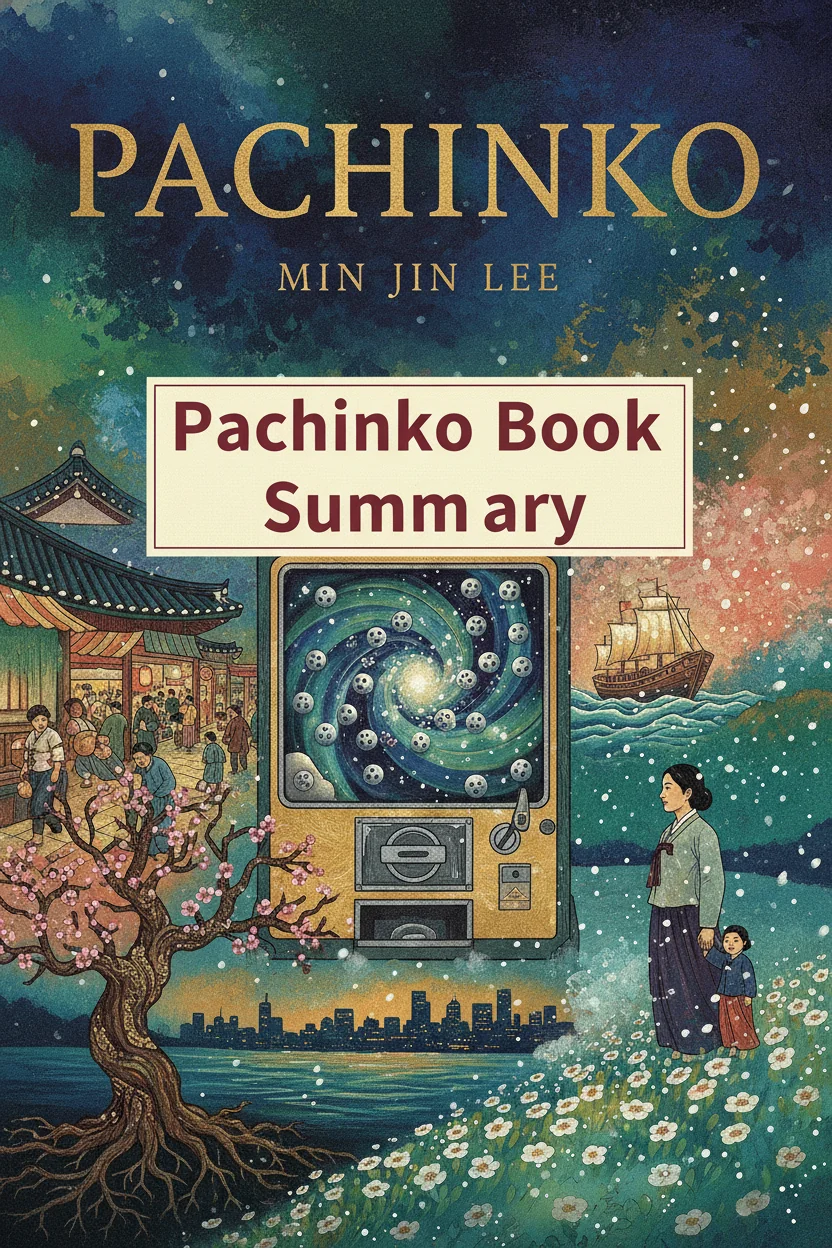
Pachinko
oleh Alex Ng
“Pachinko”, sebuah saga sejarah lintas generasi yang memikat karya Min Jin Lee, mengisahkan perjuangan sebuah keluarga Korea dalam mengarungi gejolak sejarah, cinta, takdir, pengorbanan, dan upaya bertahan hidup. Novel ini memberikan gambaran mendalam tentang kompleksitas imigrasi, pencarian jati diri, dan tekad pantang menyerah demi kehidupan yang lebih baik. Dalam ringkasan buku Pachinko ini, kami mengulas mengapa buku ini wajib masuk dalam daftar bacaan Anda.
Ide Utama
"Identitas adalah warisan yang tak terelakkan sekaligus benteng yang kita bangun saat dunia menolak menerima kita. Rumah bukanlah sebuah tempat, melainkan orang-orang yang menerima kita apa adanya."
Wawasan Utama
The Persistence of Discrimination
Across four generations, ethnic Koreans in Japan face the same discrimination - required to register as foreigners, denied citizenship, excluded from professions. Progress is illusory; each generation must fight the same battles.
Solomon, fourth-generation and educated at Columbia, loses his dream job because a scandal reveals his Korean heritage. A century of assimilation buys nothing.
The Price of Survival
Survival in a hostile world requires moral compromises. The novel asks whether maintaining integrity is possible when society gives you only dishonorable paths to success.
Mozasu builds wealth through pachinko parlors - a legal business but one associated with gambling and looked down upon. He creates prosperity for his family through an industry that respectable Japan scorns.
Women as Foundation
The novel centers on women who sacrifice, endure, and hold families together while receiving little recognition. Sunja's quiet strength enables everything that follows.
Sunja works brutal labor, makes kimchi to sell, and never complains. Her sacrifice enables her sons' opportunities, but she remains invisible to history.
Faith as Anchor and Prison
Religion provides meaning and community for some characters (Isak, Noa) while trapping others. The church offers belonging but also rigid expectations that some cannot meet.
Isak's faith sustains him through imprisonment and death. His son Noa eventually takes his life, partly because he cannot reconcile his faith with his shameful origins.
Rincian Bab
Book One: Gohyang (Homeland) 1910-1933
In a Korean fishing village under Japanese occupation, Sunja, the daughter of a crippled fisherman, falls in love with a wealthy older man, Hansu. When she becomes pregnant, she discovers he's already married. A gentle Christian minister, Isak, offers to marry her and take her to Japan, where his brother lives.
Book Two: Motherland 1939-1962
In Osaka, the family struggles through World War II and its aftermath. Isak is imprisoned and dies for refusing to bow at Shinto shrines. Sunja and her sister-in-law Kyunghee survive through back-breaking labor, selling kimchi at markets.
Sunja's sons grow up: Noa, brilliant and driven, earns admission to Waseda University - an almost impossible achievement for a Korean. Mozasu, less academic but street-smart, finds work in the pachinko industry.
Book Three: Pachinko 1962-1989
Noa discovers his biological father is Hansu, a yakuza boss who has secretly been supporting the family. Unable to bear this shameful truth, Noa vanishes, creating a new identity as a Japanese man. He lives this lie for decades until Sunja finds him - and he takes his life.
Mozasu thrives in pachinko, becoming wealthy through an industry that respectable Japan scorns. He marries a Japanese woman who dies young. His son Solomon grows up privileged, educated in America, seemingly assimilated.
Book Four: 1989
Solomon returns to Japan for a prestigious banking job, engaged to a Japanese woman. When a scandal reveals his Korean heritage, he loses everything - the job, the fiancée, his place in Japanese society. Four generations later, the discrimination remains unchanged.
The novel ends with Solomon returning to work for his father in pachinko. Sunja, now elderly, visits Isak's grave. The cycle continues, but the family endures.
Ambil Tindakan
Langkah praktis yang bisa Anda terapkan hari ini:
-
Recognize that discrimination often persists across generations despite appearances of progress
-
Consider the moral compromises required for survival and whether you would judge others for them
-
Acknowledge the invisible labor of those (often women) who enable others' success
-
Examine how your own identity is shaped by forces beyond your control
Ringkasan Ditulis Oleh
Software Engineer & Writer
Software engineer with a passion for distilling complex ideas into actionable insights. Writes about finance, investment, entrepreneurship, and technology.
Lihat semua ringkasan →Ulasan
Belum ada ulasan. Jadilah yang pertama berbagi pemikiran Anda!