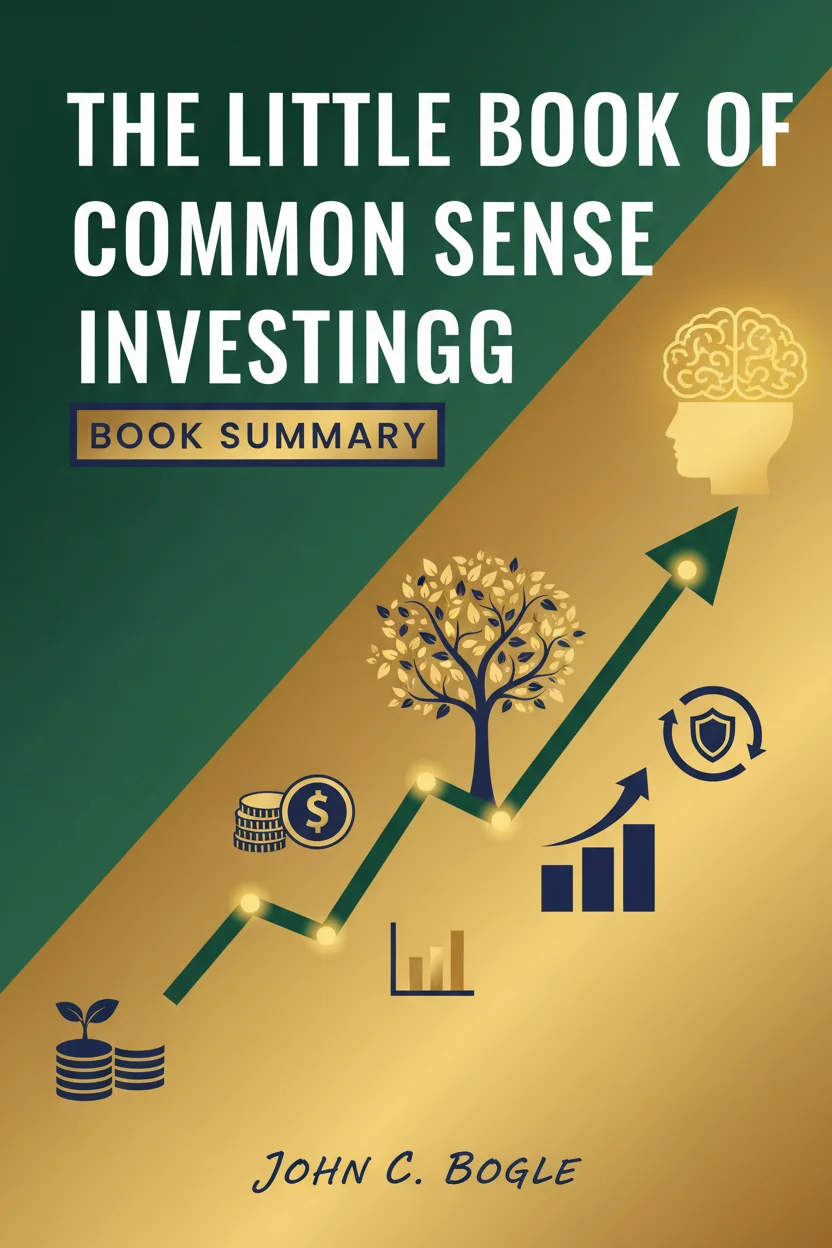
インデックス投資の決定版:常識的な投資術
による Alex Ng
投資で成功する秘訣は、次に急騰する銘柄を探したり、絶妙なタイミングで売買したりすることではなく、単に市場全体を最低コストで買い付け、保有し続けることにあるとしたらどうでしょうか。バンガード社の創業者であり、世界初のインデックス・ミューチュアル・ファンドを開発したジョン・C・ボーグルは、本書『インデックス投資の決定版』の中で、その強力な根拠を提示しています。本書は、アクティブな銘柄選びやマーケットタイミングを狙う手法に対し、インデックス投資という「究極のシンプルさ」を提唱しています。数十年のデータと経験に裏打ちされたボーグルのアプローチは、なぜ市場を打ち負かそうとするよりも、市場全体を所有する方が多くの投資家にとって有益であるかを証明しています。この5分要約では、低コストで分散されたインデックスファンドを通じて資産を築くという、世界中の何百万人もの個人投資家に革命をもたらした知恵を凝縮してお届けします。
核心的なアイデア
"投資で勝ち抜くための最適戦略は、低コストのインデックスファンドを通じて市場全体を保有し、それを永遠に持ち続けることです。市場に打ち勝とうとするのではなく、市場平均のリターンを確実に得ることで、結果的に個別株で運用する大多数の投資家を上回ることができます。"
重要な洞察
The Cost Matters Hypothesis
Investors as a group must earn the market return minus costs. Every dollar paid in fees is a dollar lost from returns. Over time, these costs compound devastatingly. The lowest-cost funds have a structural advantage.
The average actively managed fund charges 1%+ annually. Over 50 years, that fee difference can consume 40% of your wealth. You're paying fund managers to underperform the index.
Reversion to the Mean
Funds that beat the market in one period typically underperform in the next. Past performance doesn't predict future returns. The winners change constantly - but the losers are predictable: high-cost funds.
Of funds in the top quartile over five years, only about 25% stay there in the next five years. Picking past winners is no better than random selection - and costs more.
The Relentless Rules of Humble Arithmetic
Before costs, the stock market's return is divided among all investors. After costs, the stock market's return minus costs is divided among all investors. Costs must be subtracted from returns, not created from nowhere.
If the market returns 8% and you pay 2% in fees, you get 6%. If the market returns 8% and you pay 0.1%, you get 7.9%. The difference compounds over decades into enormous sums.
The Index Fund
The index fund is a simple, elegant solution. By owning the whole market, you guarantee the market return. No stock selection, no market timing, no manager risk. The only variables are your savings rate and costs.
Bogle founded the first index fund in 1976. Skeptics called it 'un-American.' Forty years later, index funds hold over $10 trillion. The idea won because the math was irrefutable.
章ごとの解説
The Central Problem
The stock market's returns belong to all investors as a group. But costs reduce those returns. Higher costs mean lower returns. This is arithmetic, not opinion. The fund industry wants you to believe that paying more gets you more. The evidence says the opposite.
The Evidence
Over 15 years, more than 90% of actively managed funds underperform their benchmark index. The winners change each period, making them impossible to identify in advance. The only consistent predictor of returns is cost: low-cost funds outperform high-cost funds.
The Solution
Buy a total market index fund and hold it forever. You'll own everything: large and small companies, growth and value stocks, every sector. You're not betting on which part of the market will win - you own it all.
Stay the Course
The hardest part isn't buying the right fund - it's holding through market crashes. When markets drop 40%, you'll want to sell. Don't. The market has always recovered. Time in the market beats timing the market.
The Bogle Legacy
Bogle didn't invent this wisdom - he just had the courage to act on it. By founding Vanguard and the first index fund, he gave ordinary investors access to a strategy previously available only to the largest institutions. His impact on investor wealth is measured in hundreds of billions of dollars.
アクション
今日から実践できるステップ:
-
Move your portfolio to low-cost index funds - total stock market and total bond market
-
Check the expense ratio of every fund you own - anything above 0.20% should be questioned
-
Stop trying to pick winning funds or time the market - the evidence shows it doesn't work
-
Focus on what you can control: savings rate, asset allocation, costs, and staying the course
要約作成者
Software Engineer & Writer
Software engineer with a passion for distilling complex ideas into actionable insights. Writes about finance, investment, entrepreneurship, and technology.
すべての要約を見る →レビュー
レビューはまだありません。最初のレビューを書きましょう!