Le Petit Livre de l'Investissement Sensé
par Alex Ng
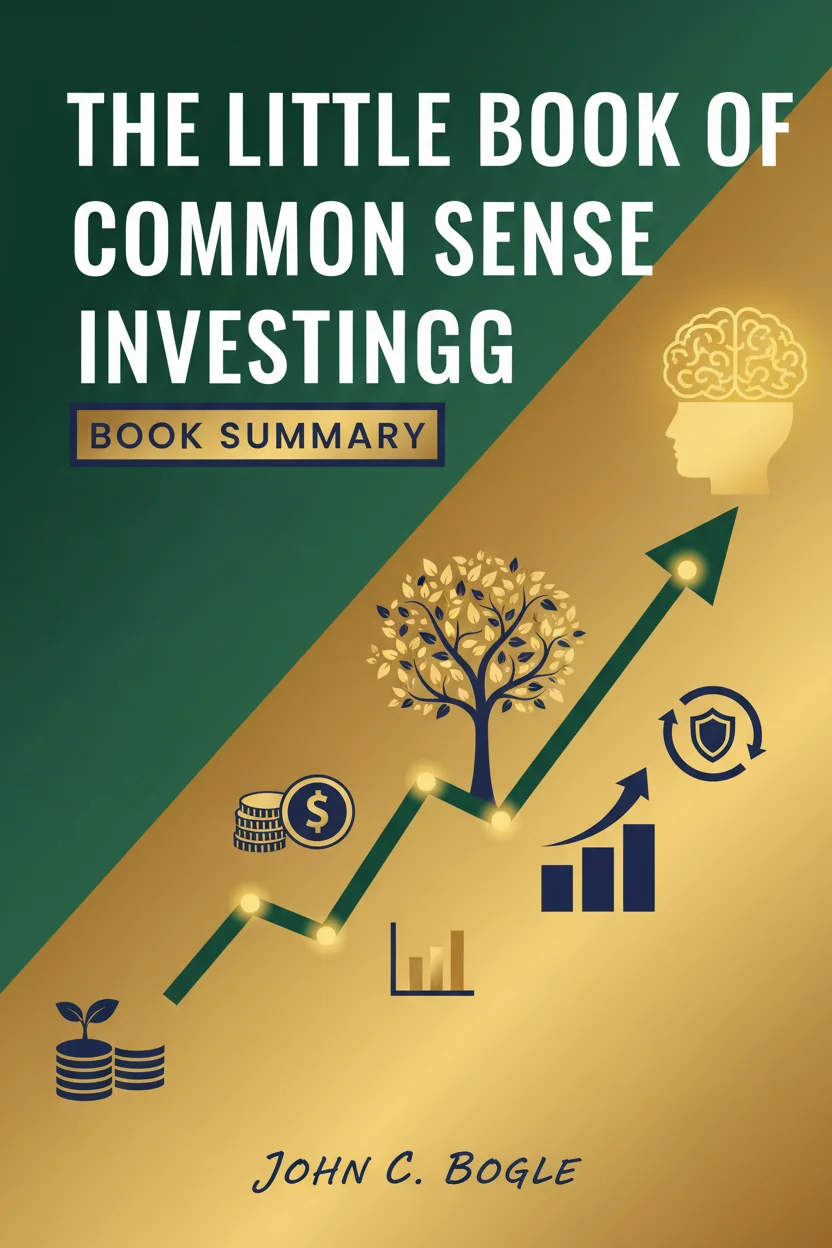
Et si le secret de l'investissement ne résidait pas dans la recherche de la prochaine action miracle ou dans le timing du marché, mais simplement dans l'achat et la conservation de l'ensemble du marché au coût le plus bas possible ? John C. Bogle, fondateur de Vanguard et créateur du premier fonds commun de placement indiciel, défend cette thèse dans « Le Petit Livre de l'Investissement Sensé ». Cet ouvrage influent prône la simplicité radicale des fonds indiciels face à la sélection active de titres. L'approche de Bogle, appuyée par des décennies de données, démontre pourquoi la plupart des investisseurs ont tout intérêt à posséder le marché plutôt qu'à essayer de le surclasser. Ce résumé de 5 minutes synthétise sa sagesse pour bâtir un patrimoine grâce à des fonds diversifiés et peu coûteux — une stratégie qui a révolutionné l'investissement pour des millions de particuliers.
L'idée principale
"La stratégie gagnante consiste à détenir l'ensemble du marché boursier via un fonds indiciel à bas coût et à le conserver indéfiniment. En renonçant à vouloir battre le marché, vous vous assurez d'obtenir son rendement global, surpassant ainsi la majorité des investisseurs qui tentent de faire mieux."
Aperçus clés
The Cost Matters Hypothesis
Investors as a group must earn the market return minus costs. Every dollar paid in fees is a dollar lost from returns. Over time, these costs compound devastatingly. The lowest-cost funds have a structural advantage.
The average actively managed fund charges 1%+ annually. Over 50 years, that fee difference can consume 40% of your wealth. You're paying fund managers to underperform the index.
Reversion to the Mean
Funds that beat the market in one period typically underperform in the next. Past performance doesn't predict future returns. The winners change constantly - but the losers are predictable: high-cost funds.
Of funds in the top quartile over five years, only about 25% stay there in the next five years. Picking past winners is no better than random selection - and costs more.
The Relentless Rules of Humble Arithmetic
Before costs, the stock market's return is divided among all investors. After costs, the stock market's return minus costs is divided among all investors. Costs must be subtracted from returns, not created from nowhere.
If the market returns 8% and you pay 2% in fees, you get 6%. If the market returns 8% and you pay 0.1%, you get 7.9%. The difference compounds over decades into enormous sums.
The Index Fund
The index fund is a simple, elegant solution. By owning the whole market, you guarantee the market return. No stock selection, no market timing, no manager risk. The only variables are your savings rate and costs.
Bogle founded the first index fund in 1976. Skeptics called it 'un-American.' Forty years later, index funds hold over $10 trillion. The idea won because the math was irrefutable.
Détail des chapitres
The Central Problem
The stock market's returns belong to all investors as a group. But costs reduce those returns. Higher costs mean lower returns. This is arithmetic, not opinion. The fund industry wants you to believe that paying more gets you more. The evidence says the opposite.
The Evidence
Over 15 years, more than 90% of actively managed funds underperform their benchmark index. The winners change each period, making them impossible to identify in advance. The only consistent predictor of returns is cost: low-cost funds outperform high-cost funds.
The Solution
Buy a total market index fund and hold it forever. You'll own everything: large and small companies, growth and value stocks, every sector. You're not betting on which part of the market will win - you own it all.
Stay the Course
The hardest part isn't buying the right fund - it's holding through market crashes. When markets drop 40%, you'll want to sell. Don't. The market has always recovered. Time in the market beats timing the market.
The Bogle Legacy
Bogle didn't invent this wisdom - he just had the courage to act on it. By founding Vanguard and the first index fund, he gave ordinary investors access to a strategy previously available only to the largest institutions. His impact on investor wealth is measured in hundreds of billions of dollars.
Passer à l'action
Étapes pratiques à mettre en œuvre dès aujourd'hui :
-
Move your portfolio to low-cost index funds - total stock market and total bond market
-
Check the expense ratio of every fund you own - anything above 0.20% should be questioned
-
Stop trying to pick winning funds or time the market - the evidence shows it doesn't work
-
Focus on what you can control: savings rate, asset allocation, costs, and staying the course
Résumé écrit par
Software Engineer & Writer
Software engineer with a passion for distilling complex ideas into actionable insights. Writes about finance, investment, entrepreneurship, and technology.
Voir tous les résumés →Avis
Pas encore d'avis. Soyez le premier à partager vos impressions !