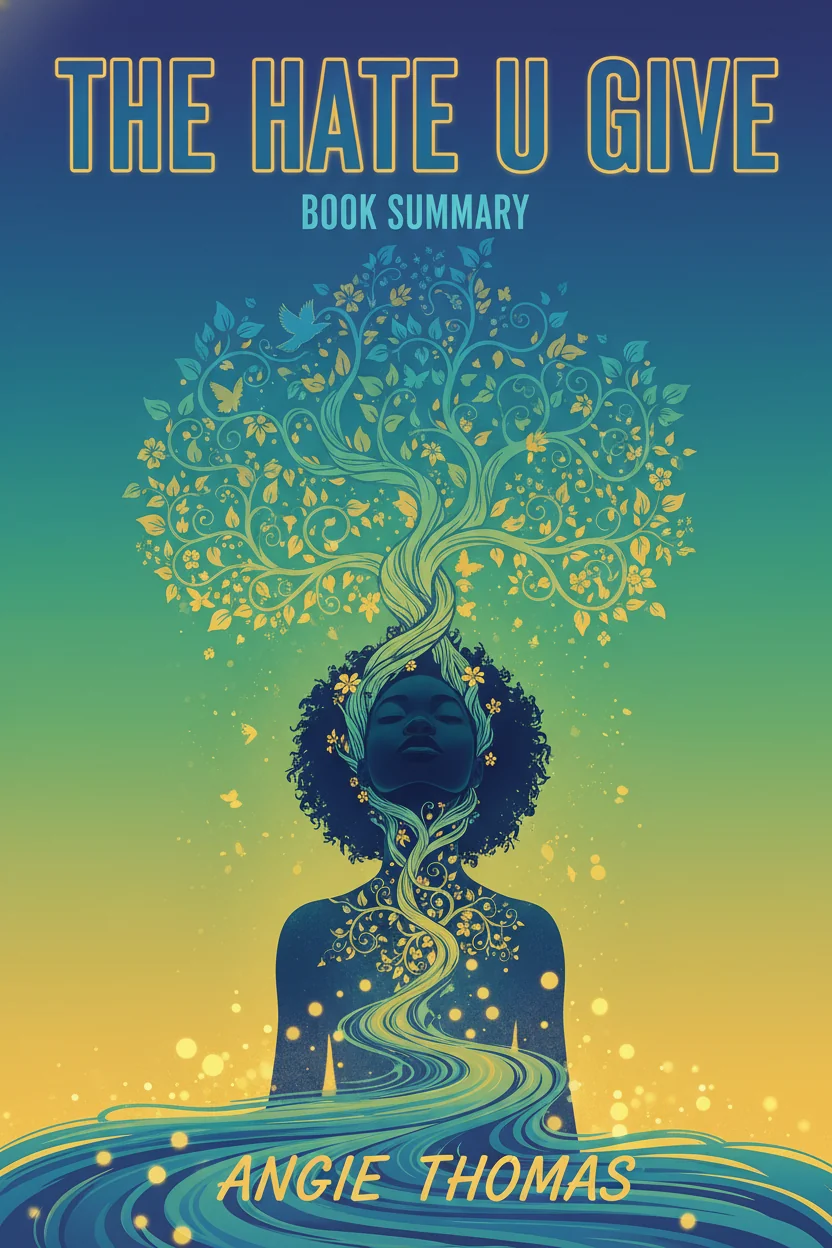
ザ・ヘイト・ユー・ギヴ (The Hate U Give)
による Alex Ng
アンジー・トーマス著『ザ・ヘイト・ユー・ギヴ』は、人種的不正とアクティビズムを力強く描いた小説です。2つの異なる世界で葛藤しながら生きる黒人ティーンエイジャーのスターが、非武装の友人が警官に射殺される現場を目撃し、正義を求める活動へと身を投じる姿が描かれています。
核心的なアイデア
"不当な現実に直面し、声を上げることは恐ろしいことかもしれません。しかし、沈黙は私たちを傷つける構造を永続させます。たとえ声が震えていても、権力に対して真実を語ることは、単なる制度の変更に留まらず、人々の意識をも変えうる抵抗の行為なのです。"
重要な洞察
Code-Switching
Starr lives two lives: 'Williamson Starr' at her mostly white prep school and 'Garden Heights Starr' in her Black neighborhood. This exhausting performance reveals how marginalized people must constantly adapt to survive in different spaces.
At Williamson, Starr avoids 'sounding too Black.' In Garden Heights, she can't seem 'too Williamson.' The shooting forces her to choose which Starr to be - and ultimately to integrate both.
The Power of Narrative
Khalil's story is told in media as 'thug killed by cop.' Starr knows the truth: a frightened kid with a hairbrush. Who controls the narrative determines how society responds to tragedy.
TV shows Khalil's 'gang connections' and suspected drug dealing. Starr knows he sold drugs to help his mother. The media's story justifies his death; Starr's testimony humanizes him.
Systemic vs. Individual Racism
The novel shows racism operating at multiple levels: the cop who assumes danger, the grand jury that won't indict, the media that criminalizes victims, and well-meaning friends who still don't understand.
Officer 115 may or may not be personally racist. It doesn't matter - the system trained him to see Black teenagers as threats. Starr's friend Hailey isn't malicious but is still harmful. Both represent different faces of the same problem.
Speaking Up
Starr's fear of speaking is understandable - witnesses get threatened, and nothing seems to change anyway. But her silence protects the system. Finding her voice becomes an act of self-creation as much as protest.
Starr progresses from hiding her presence at the shooting, to private testimony, to TV interview, to leading protests. Each step terrifies her. Each step also transforms her.
章ごとの解説
The Shooting
Starr Carter witnesses her unarmed childhood friend Khalil shot by a police officer during a traffic stop. The officer saw a hairbrush and assumed it was a gun. Khalil dies in Starr's arms.
Starr must navigate two worlds: Garden Heights, her Black neighborhood where she grew up, and Williamson Prep, her mostly white school. She's been taught to keep these worlds separate.
The Aftermath
Media paints Khalil as a thug and drug dealer, implying he deserved his fate. Only Starr knows the truth - that he sold drugs to help his mother and had just gotten out of gang life. She's the only witness, but speaking up is dangerous.
Finding Her Voice
Starr testifies to a grand jury. When they don't indict the officer, riots break out. Through a TV interview and ultimately leading a protest, Starr finds her voice. She stops code-switching and integrates her two selves.
The Title's Meaning
"The Hate U Give" comes from Tupac: "The Hate U Give Little Infants F***s Everybody" - T.H.U.G.L.I.F.E. The hate society gives to marginalized children comes back around to hurt everyone. Breaking the cycle requires speaking truth, even when it's terrifying.
アクション
今日から実践できるステップ:
-
Examine where you code-switch and what it costs you
-
Question media narratives about marginalized people - whose story is being told?
-
Recognize systemic racism even when individual actors seem well-meaning
-
Find ways to use your voice, starting small if necessary
要約作成者
Software Engineer & Writer
Software engineer with a passion for distilling complex ideas into actionable insights. Writes about finance, investment, entrepreneurship, and technology.
すべての要約を見る →レビュー
レビューはまだありません。最初のレビューを書きましょう!