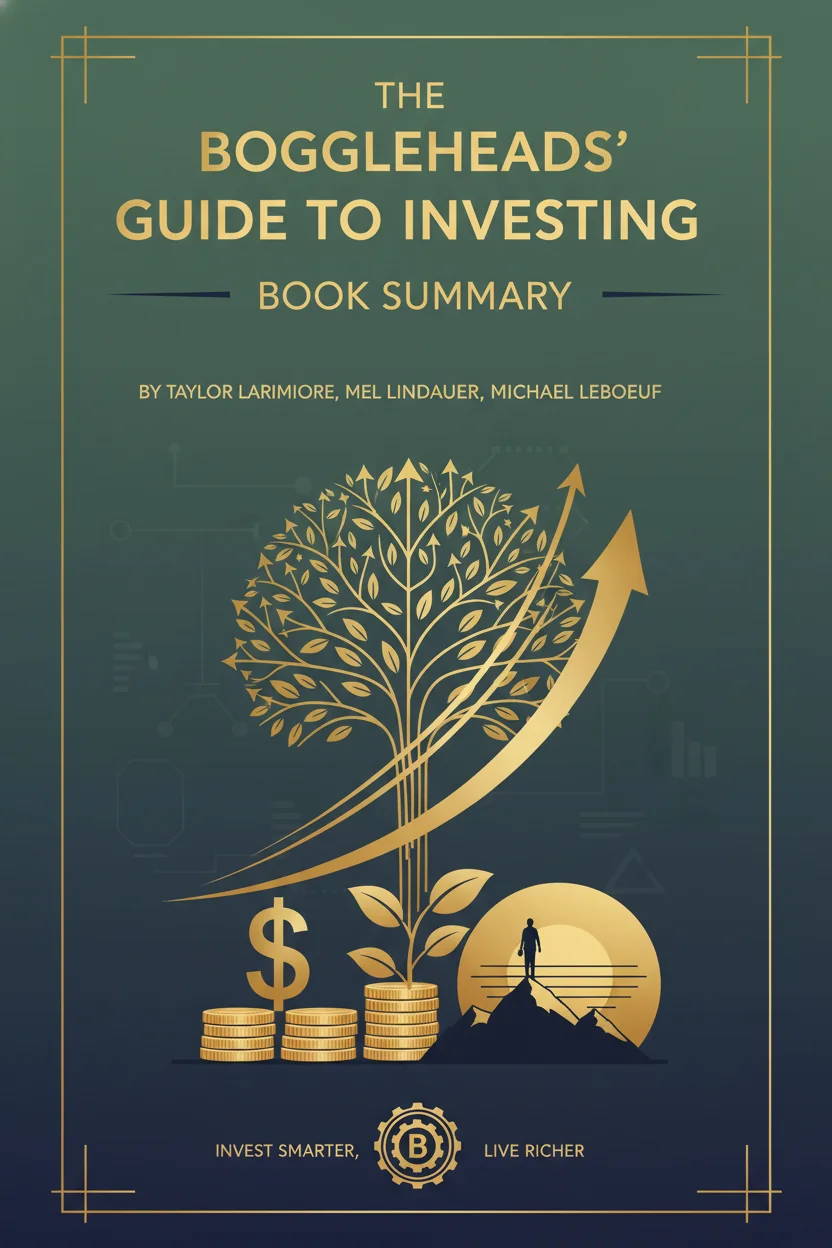
The Bogleheads' Guide to Investing
oleh Alex Ng
Bagaimana jika investasi yang sukses tidak membutuhkan prediksi pasar, keahlian memilih saham, atau strategi yang rumit—melainkan hanya tiga reksa dana indeks sederhana dan disiplin untuk tetap konsisten? ‘The Bogleheads’ Guide to Investing’ menyajikan pendekatan elegan dan sederhana untuk membangun kekayaan melalui investasi reksa dana indeks yang terdiversifikasi dengan biaya rendah. Ditulis oleh Taylor Larimore, Mel Lindauer, dan Michael LeBoeuf—para pemimpin komunitas Bogleheads yang terinspirasi oleh John Bogle—panduan komprehensif ini merangkum kebijaksanaan investasi selama puluhan tahun menjadi strategi praktis yang mudah diikuti. Bogleheads adalah investor ritel yang mencapai kesuksesan finansial dengan mematuhi prinsip sederhana: hidup hemat, berinvestasi sedini dan sesering mungkin pada reksa dana indeks biaya rendah, dan tidak pernah mencoba melakukan 'market timing'. Ringkasan 5 menit ini mengungkap pendekatan teruji mereka dalam membangun kekayaan sekaligus menghindari kesalahan fatal yang sering menjerumuskan banyak investor.
Ide Utama
"Investasi yang sukses itu sederhana, namun tidak mudah. Kuncinya adalah membeli reksa dana indeks biaya rendah yang terdiversifikasi, meminimalkan pajak dan biaya, tetap konsisten meski pasar bergejolak, serta memahami bahwa durasi investasi jauh lebih penting daripada mencoba menebak waktu pasar. Filosofi Boglehead, yang terinspirasi dari pendiri Vanguard, John Bogle, telah membantu jutaan orang meraih kemakmuran."
Wawasan Utama
Nobody Can Beat the Market Consistently
Active fund managers, as a group, underperform index funds after fees. While some managers beat the market, we can't reliably identify them in advance. The solution is to own the whole market through index funds.
Over 15 years, more than 90% of actively managed funds underperform their benchmark index. The few winners change each period - last decade's stars become this decade's laggards.
Costs Matter Enormously
Every dollar paid in fees is a dollar not compounding for you. Over a lifetime, a 1% fee difference can cost you 25% of your final portfolio. Minimize expense ratios, trading costs, and taxes.
A $10,000 investment over 40 years at 8% return: with 0.1% fees = $210,000. With 1% fees = $154,000. That 0.9% difference cost $56,000 - more than 5x the original investment.
Stay the Course
The market will crash. It will soar. Both extremes tempt you to abandon your strategy. Selling during crashes and buying during bubbles is how investors underperform. The discipline to stay invested matters more than picking the right fund.
Missing just the 10 best days in the market over a 20-year period can cut your returns in half. Those best days often come right after the worst days - when most people have sold.
Asset Allocation Trumps Security Selection
How you divide your money between stocks, bonds, and cash matters more than which specific securities you choose within those categories. Get your allocation right for your risk tolerance and time horizon.
A young investor might hold 80% stocks/20% bonds. A retiree might reverse that. The exact funds matter less than matching your allocation to your situation and sticking with it.
Rincian Bab
Part One: Getting Started
The book establishes foundational principles: save early and often, spend less than you earn, and understand the power of compound interest. It introduces John Bogle's insight that most investors are better off buying the entire market through index funds rather than trying to pick winners.
Part Two: Investing
The case for indexing: After fees and taxes, index funds beat most actively managed funds. This isn't opinion - it's mathematics. You can't control returns, but you can control costs.
Asset allocation: Decide what percentage goes to stocks, bonds, and cash based on your time horizon and risk tolerance. Your allocation matters more than which specific funds you choose.
Diversification: Don't put all your eggs in one basket. Own domestic and international stocks, various bond types, and perhaps a small real estate allocation.
Part Three: Protecting Your Wealth
Tax efficiency: Use tax-advantaged accounts (401k, IRA) fully. Place tax-inefficient investments (bonds, REITs) in tax-advantaged accounts and tax-efficient investments (stock index funds) in taxable accounts.
Staying the course: The market will test your resolve. Write an investment policy statement when calm and follow it when panicked. Market timing is a fool's game.
Part Four: Special Topics
The book covers retirement planning, Social Security optimization, estate planning, and selecting financial advisors. Throughout, the themes remain: keep it simple, keep costs low, and don't try to outsmart the market.
Ambil Tindakan
Langkah praktis yang bisa Anda terapkan hari ini:
-
Move your investments to low-cost index funds (expense ratios under 0.20%)
-
Determine your asset allocation based on time horizon and risk tolerance, not market predictions
-
Write down your investment policy and commit to following it through market cycles
-
Review your investments only periodically - checking daily encourages harmful tinkering
Ringkasan Ditulis Oleh
Software Engineer & Writer
Software engineer with a passion for distilling complex ideas into actionable insights. Writes about finance, investment, entrepreneurship, and technology.
Lihat semua ringkasan →Ulasan
Belum ada ulasan. Jadilah yang pertama berbagi pemikiran Anda!