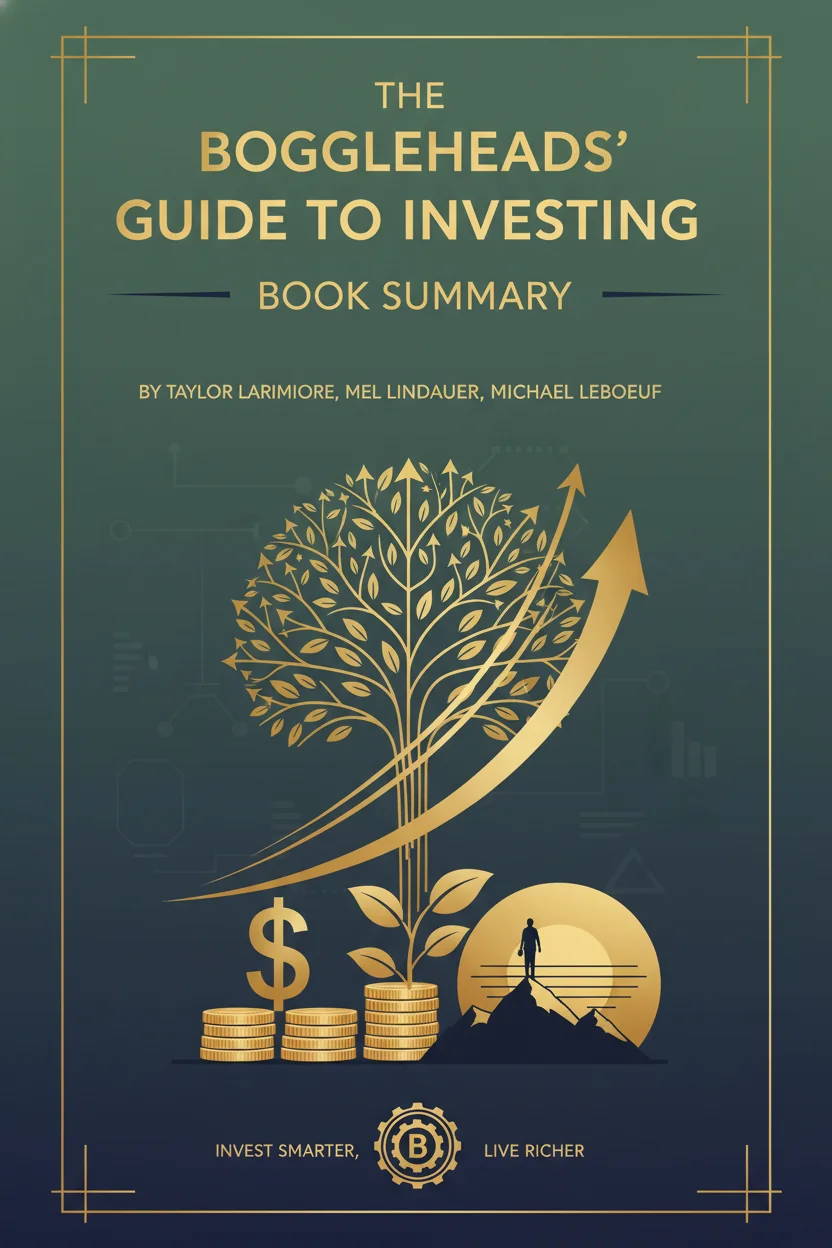
Le guide d'investissement des Bogleheads
par Alex Ng
Et si réussir en bourse ne demandait ni prévisions complexes, ni talent pour choisir des actions, ni stratégies sophistiquées, mais simplement trois fonds indiciels et une discipline de fer ? « Le guide d'investissement des Bogleheads » présente cette approche d'une simplicité élégante pour bâtir un patrimoine grâce aux fonds indiciels diversifiés et peu coûteux. Rédigé par Taylor Larimore, Mel Lindauer et Michael LeBoeuf — figures de proue de la communauté Bogleheads — ce guide complet synthétise des décennies de sagesse financière en stratégies concrètes et accessibles. Les Bogleheads sont des investisseurs particuliers qui ont prospéré en suivant des principes rigoureux : vivre en dessous de ses moyens, investir tôt et régulièrement, et ne jamais tenter de temporiser le marché. Ce résumé de 5 minutes vous dévoile leur méthode éprouvée pour accumuler des richesses tout en évitant les erreurs coûteuses qui piègent la majorité des investisseurs.
L'idée principale
"L'investissement réussi est simple, mais demande de la discipline. La clé réside dans l'achat de fonds indiciels diversifiés à bas coûts, la minimisation des frais et des impôts, et la persévérance malgré la volatilité des marchés. La philosophie Boglehead, inspirée par le fondateur de Vanguard, John Bogle, a permis à des millions de personnes de s'enrichir en privilégiant la durée de détention plutôt que la tentative de prédire le marché."
Aperçus clés
Nobody Can Beat the Market Consistently
Active fund managers, as a group, underperform index funds after fees. While some managers beat the market, we can't reliably identify them in advance. The solution is to own the whole market through index funds.
Over 15 years, more than 90% of actively managed funds underperform their benchmark index. The few winners change each period - last decade's stars become this decade's laggards.
Costs Matter Enormously
Every dollar paid in fees is a dollar not compounding for you. Over a lifetime, a 1% fee difference can cost you 25% of your final portfolio. Minimize expense ratios, trading costs, and taxes.
A $10,000 investment over 40 years at 8% return: with 0.1% fees = $210,000. With 1% fees = $154,000. That 0.9% difference cost $56,000 - more than 5x the original investment.
Stay the Course
The market will crash. It will soar. Both extremes tempt you to abandon your strategy. Selling during crashes and buying during bubbles is how investors underperform. The discipline to stay invested matters more than picking the right fund.
Missing just the 10 best days in the market over a 20-year period can cut your returns in half. Those best days often come right after the worst days - when most people have sold.
Asset Allocation Trumps Security Selection
How you divide your money between stocks, bonds, and cash matters more than which specific securities you choose within those categories. Get your allocation right for your risk tolerance and time horizon.
A young investor might hold 80% stocks/20% bonds. A retiree might reverse that. The exact funds matter less than matching your allocation to your situation and sticking with it.
Détail des chapitres
Part One: Getting Started
The book establishes foundational principles: save early and often, spend less than you earn, and understand the power of compound interest. It introduces John Bogle's insight that most investors are better off buying the entire market through index funds rather than trying to pick winners.
Part Two: Investing
The case for indexing: After fees and taxes, index funds beat most actively managed funds. This isn't opinion - it's mathematics. You can't control returns, but you can control costs.
Asset allocation: Decide what percentage goes to stocks, bonds, and cash based on your time horizon and risk tolerance. Your allocation matters more than which specific funds you choose.
Diversification: Don't put all your eggs in one basket. Own domestic and international stocks, various bond types, and perhaps a small real estate allocation.
Part Three: Protecting Your Wealth
Tax efficiency: Use tax-advantaged accounts (401k, IRA) fully. Place tax-inefficient investments (bonds, REITs) in tax-advantaged accounts and tax-efficient investments (stock index funds) in taxable accounts.
Staying the course: The market will test your resolve. Write an investment policy statement when calm and follow it when panicked. Market timing is a fool's game.
Part Four: Special Topics
The book covers retirement planning, Social Security optimization, estate planning, and selecting financial advisors. Throughout, the themes remain: keep it simple, keep costs low, and don't try to outsmart the market.
Passer à l'action
Étapes pratiques à mettre en œuvre dès aujourd'hui :
-
Move your investments to low-cost index funds (expense ratios under 0.20%)
-
Determine your asset allocation based on time horizon and risk tolerance, not market predictions
-
Write down your investment policy and commit to following it through market cycles
-
Review your investments only periodically - checking daily encourages harmful tinkering
Résumé écrit par
Software Engineer & Writer
Software engineer with a passion for distilling complex ideas into actionable insights. Writes about finance, investment, entrepreneurship, and technology.
Voir tous les résumés →Avis
Pas encore d'avis. Soyez le premier à partager vos impressions !