Le Rossignol
par Alex Ng
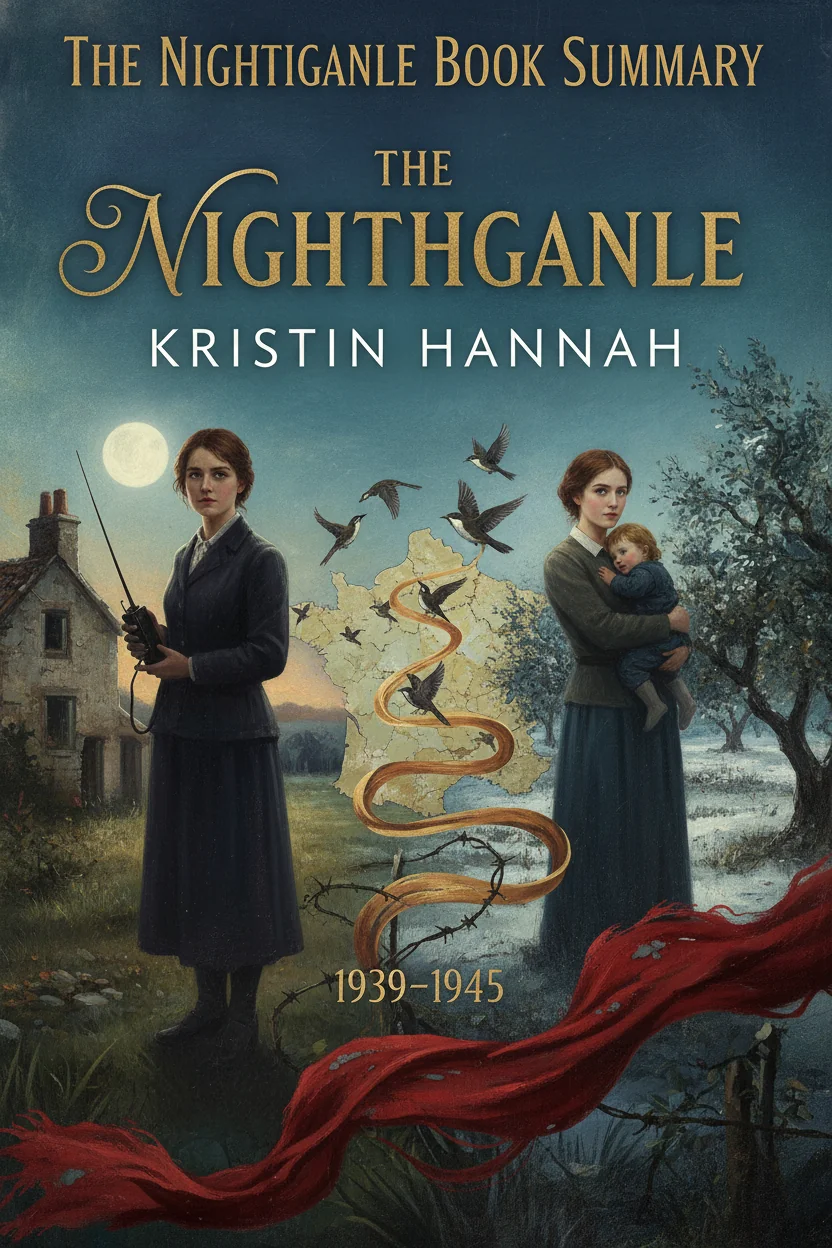
« Le Rossignol » de Kristin Hannah est un roman historique poignant se déroulant dans la France occupée durant la Seconde Guerre mondiale. À travers le destin de deux sœurs, Vianne et Isabelle, l'autrice explore les différentes formes de résistance féminine et la force d'âme face à l'oppression nazie.
L'idée principale
"Face à l'horreur absolue, des gens ordinaires révèlent un courage exceptionnel, tandis que le lien indéfectible entre deux sœurs survit aux déchirements de la guerre."
Aperçus clés
Courage Takes Many Forms
Heroism isn't always dramatic. Sometimes the bravest act is surviving another day, protecting your children, or making small choices that preserve humanity when everything around you has become inhuman.
Vianne's courage is quiet—hiding Jewish children, lying to Nazi officers, enduring brutal circumstances to keep her daughter safe. It's not the resistance fighting but the daily survival that requires equal bravery.
Sister Bonds Transcend Everything
The relationship between sisters is complex, competitive, and often strained—but when tested by extreme circumstances, this bond reveals itself as one of the most powerful forces in human experience.
Vianne and Isabelle spend years misunderstanding each other. Vianne sees Isabelle as reckless; Isabelle sees Vianne as passive. War strips away these judgments, revealing the deep love that was always there beneath the conflict.
Women's War Stories Are Different
History often focuses on battles and male heroism. Women's experiences in war—hiding refugees, protecting children, surviving occupation, resisting in quieter ways—are equally important but rarely told.
The novel highlights how French women created escape networks, forged documents, and hid Allied airmen. These acts of resistance, often dismissed as 'women's work,' saved thousands of lives.
Survival Requires Moral Compromise
In impossible situations, survival often means making choices that haunt you forever. War forces ordinary people into moral complexity where there are no clean answers—only terrible choices between terrible options.
Vianne must decide whether to report suspicious neighbors, how to respond to a Nazi officer living in her home, and ultimately what she's willing to sacrifice to save innocent children.
Love Persists Through Darkness
Even in humanity's darkest moments, love—romantic, familial, sisterly—provides the light that makes survival meaningful. The human capacity for love is indestructible, even when everything else is destroyed.
Isabelle's love for Gaëtan, Vianne's love for her children, and the sisters' love for each other all survive the war's horrors, proving that connection is what makes us most human.
Détail des chapitres
Two Sisters, One War
France, 1939. Vianne Mauriac watches her husband Antoine march off to war, leaving her to care for their daughter Sophie in their home in Carriveau. Practical, quiet, and devoted to her family, Vianne believes that keeping her head down will keep her safe through the German occupation.
Her younger sister Isabelle couldn't be more different. Rebellious, passionate, and eighteen years old, Isabelle has been expelled from countless schools and rejected by their father. When Germany invades Paris, Isabelle refuses to accept defeat and joins the French Resistance.
Vianne's War: Survival and Sacrifice
When a German captain named Wolfgang Beck is billeted in Vianne's home, she faces an impossible situation. She must smile at the enemy, hide her hatred, and protect her daughter—all while maintaining the illusion of compliance. Her resistance is quiet: small acts of defiance, protecting Jewish children, hiding her best friend's son when the deportations begin.
As conditions worsen, Vianne's choices become more desperate. She loses friends, watches her community torn apart, and is forced to commit acts that haunt her for decades. Her survival comes at a terrible psychological cost, and she carries secrets that will shape the rest of her life.
Isabelle's War: The Nightingale
Isabelle falls in love with Gaëtan, a resistance fighter, and is recruited to guide downed Allied airmen over the Pyrenees to safety in Spain. She becomes known as "The Nightingale," saving over 100 pilots through treacherous mountain crossings.
Her work is dangerous and isolating. She can tell no one what she does—not her sister, not her father, not even the men she saves. Each journey risks capture, torture, and death. Yet Isabelle finds purpose in resistance that her peacetime life never provided.
Sisters Reunited
The sisters' paths diverge and reconnect throughout the war. Vianne resents Isabelle's recklessness; Isabelle dismisses Vianne's passivity. Neither understands the other's form of courage until circumstance forces them together.
In a devastating climax, both sisters must sacrifice everything for what they believe in. The war's end doesn't bring relief—only the long process of living with what they've done and lost. Decades later, an elderly Vianne tells their story to her son and granddaughter, finally revealing the secrets she's kept for a lifetime.
Historical Context
The novel is based on the true story of Andrée de Jongh, who created an escape network saving hundreds of Allied servicemen. It also draws on countless accounts of ordinary French women who resisted the occupation in ways large and small—hiding refugees, forging documents, passing information, simply refusing to surrender their humanity.
Hannah spent years researching women's experiences in occupied France, finding stories of courage that never made history books. The Nightingale honors these forgotten heroes while exploring the complex moral landscape of survival under tyranny.
Passer à l'action
Étapes pratiques à mettre en œuvre dès aujourd'hui :
-
Recognize that everyday courage—showing up, protecting those you love, maintaining your humanity—is as heroic as dramatic acts
-
Nurture your relationships with siblings and family now; don't wait for crisis to reveal their importance
-
Listen to women's stories and experiences—history is fuller when we hear all voices, not just the loudest ones
-
Prepare mentally for the reality that difficult times may force impossible choices; moral perfection isn't always achievable
-
Hold onto love as your anchor through hardship; it's often the only thing that makes survival worth having
Résumé écrit par
Software Engineer & Writer
Software engineer with a passion for distilling complex ideas into actionable insights. Writes about finance, investment, entrepreneurship, and technology.
Voir tous les résumés →Avis
Pas encore d'avis. Soyez le premier à partager vos impressions !