Wuthering Heights by Emily Brontë
by Emily Brontë
Narrated by Nelly Dean, the novel follows the destructive bond between Catherine Earnshaw and the foundling Heathcliff. After Catherine chooses social status over Heathcliff by marrying Edgar Linton, Heathcliff returns years later to systematically destroy both the Earnshaw and Linton families through manipulation and revenge.
The Big Idea
"Wuthering Heights is a dark exploration of how obsessive love, when thwarted by social class and trauma, transforms into a generational cycle of revenge that consumes everything in its path."
Key Insights
This Is Not a Romance
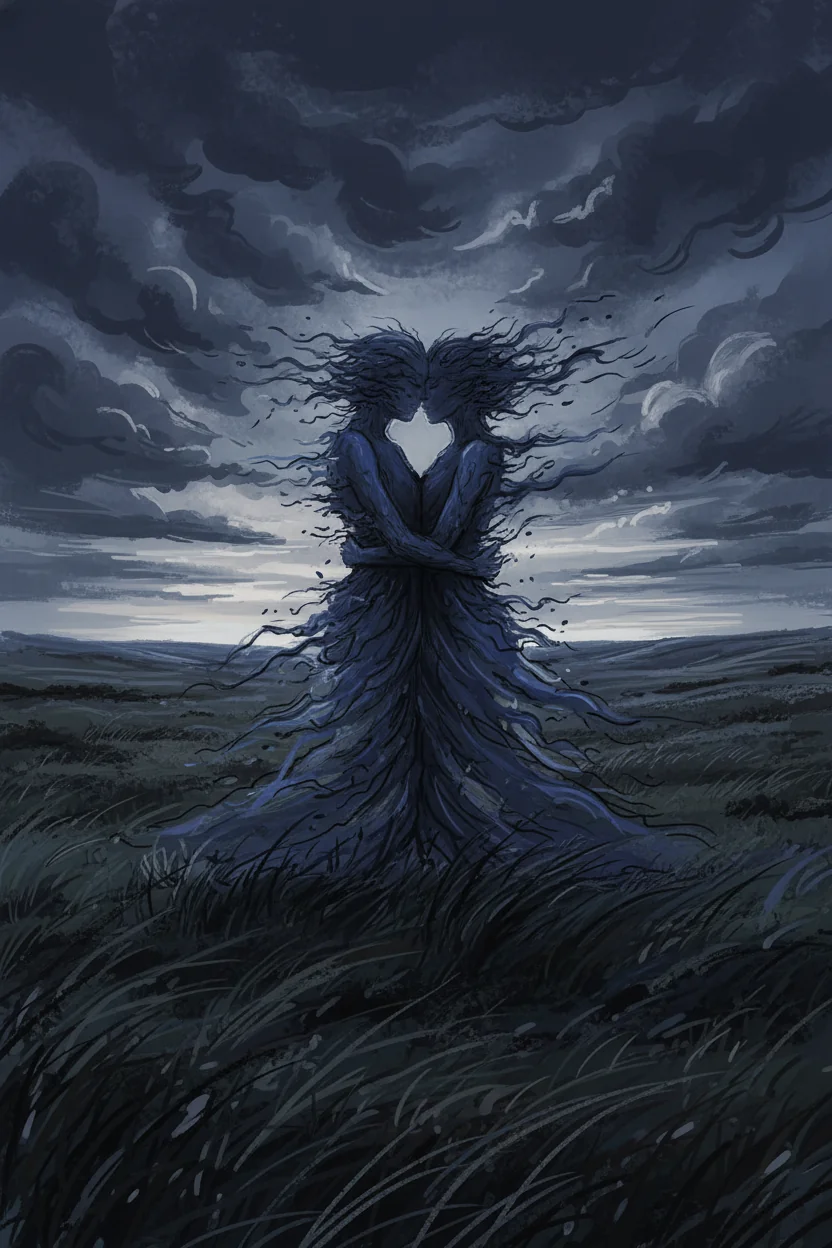
The bond between Heathcliff and Catherine is an obsession mistaken for love. They are mirrors of each other's darkness, and their union is a consuming force rather than a supportive partnership.
Catherine describes her love for Edgar as a 'folly,' while her love for Heathcliff is like the 'eternal rocks beneath.'
Class Is the Real Villain
The tragedy is driven by Heathcliff's status as a nameless, rootless outsider. The social divide is what forces Catherine to betray her own nature for the sake of respectability.
Catherine's admission that it would 'degrade' her to marry Heathcliff is the pivotal moment that triggers the novel's conflict.
Revenge Hollows Out the Avenger
Heathcliff proves that achieving a goal of revenge provides no emotional satisfaction. By the time he wins the estates, he has lost the capacity for joy or peace.
In his final days, Heathcliff admits he has to remind himself to breathe, showing that his victory is empty.
Trauma Travels Across Generations
The children of the first generation are born into a war they did not start, serving as tools for Heathcliff's vengeance until they consciously choose a different path.
Heathcliff forces the marriage of young Cathy and the dying Linton solely to transfer the ownership of Thrushcross Grange.
The Moors Are the True Setting of the Soul
The wild Yorkshire landscape represents the characters' internal states: untamed, fierce, and indifferent to the rules of polite society.
Heathcliff's death occurs with the window open, symbolizing his final return to the wildness of the moors.
Chapter Breakdown
The Yorkshire Moors: A World Built for Tragedy
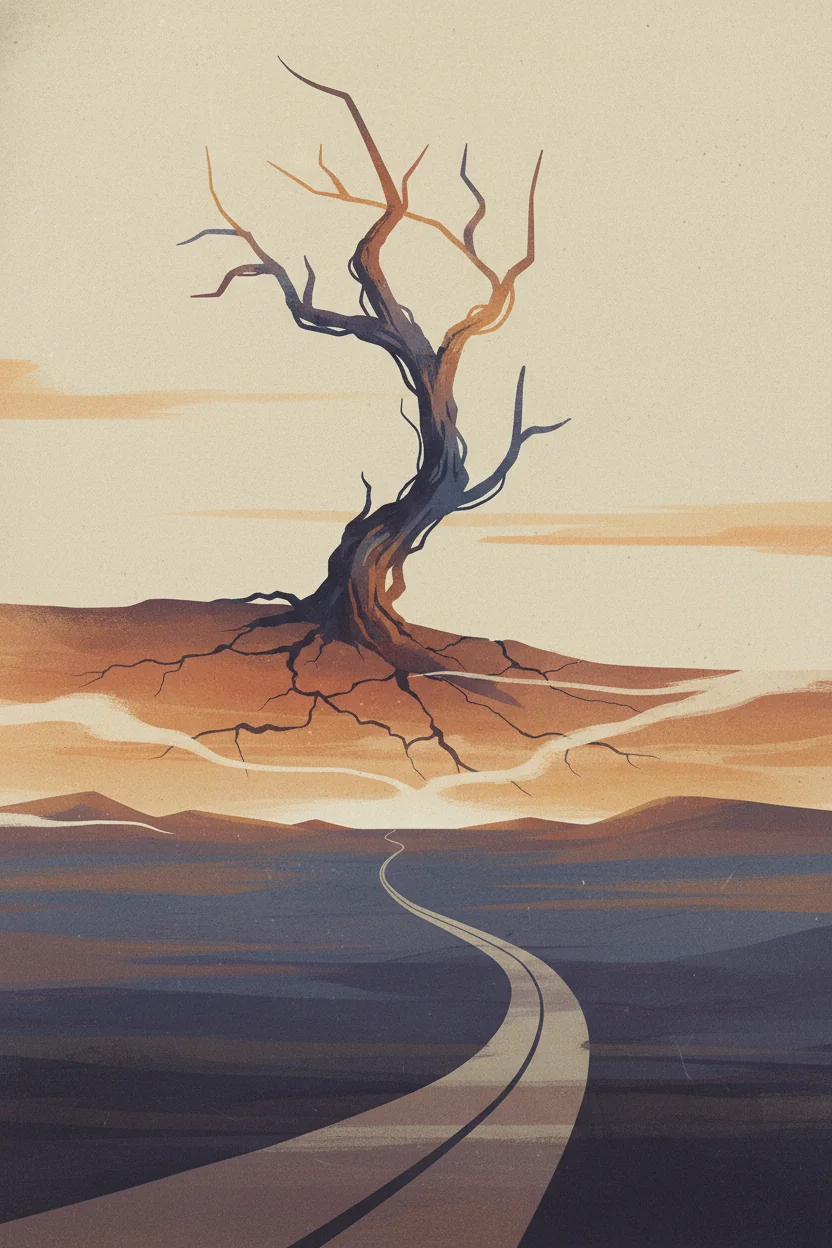
To understand Wuthering Heights, one must first understand its geography. The novel is set in the bleak, wind-swept Yorkshire moors, a landscape that functions less as a backdrop and more as a psychological mirror for the characters. The story revolves around two contrasting estates: Wuthering Heights and Thrushcross Grange. Wuthering Heights is a farmhouse characterized by storm, wind, and raw emotion; it represents the untamed, primitive side of human nature. In contrast, Thrushcross Grange is a symbol of civilization, wealth, and social propriety, with its manicured gardens and refined interiors.
This dichotomy creates a constant tension between nature and nurture, passion and social standing. The gothic atmosphere—marked by ghosts, sudden storms, and isolated dwellings—underscores the feeling of entrapment. The characters are not merely living in the moors; they are consumed by them, mirroring the wild, ungovernable spirits that drive the plot toward inevitable destruction.
Catherine and Heathcliff: Not Love — Obsession
At the heart of the story is the bond between Catherine Earnshaw and the foundling Heathcliff. Brought home by Mr. Earnshaw, Heathcliff is an outsider with no name and no known origin. Catherine and Heathcliff form a connection that transcends typical friendship or romance; it is a symbiotic, obsessive union. Catherine famously declares, "I am Heathcliff," suggesting that they are not two separate people, but two halves of a single soul.
However, this bond is tested by the rigid class structures of the Victorian era. Despite her spiritual connection to Heathcliff, Catherine chooses to marry Edgar Linton, the master of Thrushcross Grange. She does this not because she loves Edgar more, but because marrying him provides her with the social status and respectability she craves. She believes she can use Edgar's money to help elevate Heathcliff, but in doing so, she betrays the only person who truly understands her. This decision creates a devastating schism, leading Heathcliff to vanish into the night, fueling a hatred that will span decades.
Heathcliff's Revenge: A Plan Twenty Years in the Making
Heathcliff returns years later, transformed from a stable boy into a wealthy, sophisticated gentleman, though his heart remains cold and vengeful. His return is not an attempt at reconciliation, but the start of a systematic campaign to destroy the Earnshaw and Linton families. He views his wealth as a weapon to be used against those who once looked down on him.
Heathcliff's revenge is calculated and cruel. He manipulates Hindley Earnshaw, Catherine's brother, into gambling away the Heights, eventually seizing the property for himself. He doesn't stop at financial ruin; he seeks to corrupt the next generation. By marrying Isabella Linton (Edgar's sister) solely to acquire her inheritance and mistreating her, he ensures that the cycle of trauma continues. Heathcliff's goal is to erase the legacy of those who marginalized him, effectively turning the world upside down so that he becomes the master of those who once mastered him.
The Second Generation: Paying for Their Parents' Sins
The tragedy of Wuthering Heights is that it does not end with the original protagonists. The children—young Cathy (daughter of Catherine and Edgar), Linton (son of Heathcliff and Isabella), and Hareton (son of Hindley)—are born into a landscape of inherited hatred. Heathcliff treats these children as pawns in his game of revenge. He forces a marriage between the fragile Linton and the spirited young Cathy to secure legal ownership of Thrushcross Grange.
Young Cathy and Hareton, however, represent the possibility of breaking the cycle. While Heathcliff attempts to keep Hareton illiterate and uncivilized (mirroring his own childhood), Cathy begins to teach him to read. Their burgeoning relationship is based on genuine affection and mutual growth, contrasting sharply with the destructive obsession of their parents. This shift suggests that while trauma can be inherited, it can also be overcome through empathy and education.
What Wuthering Heights Is Really About
Contrary to popular belief, Wuthering Heights is not a romantic love story; it is a study of how obsession and class hatred can hollow out the human soul. The novel explores the concept of social mobility and the psychological damage caused by being an outsider. Heathcliff is both a victim of systemic abuse and a villainous perpetrator of it, making him one of literature's most complex anti-heroes.
The narrative structure further emphasizes this ambiguity. The story is told through a double frame: the outsider Lockwood hears the account from the housekeeper, Nelly Dean. Both narrators are unreliable, filtering the events through their own biases and judgments. Ultimately, the novel suggests that the only peace available to these characters is found in death, as Heathcliff eventually ceases his revenge, longing only to be reunited with Catherine in the wild, timeless expanse of the moors.
Take Action
Practical steps you can implement today:
-
Distinguish between healthy love and obsessive attachment; if a relationship requires the destruction of your identity, it is obsession.
-
Recognize that social ambition pursued at the cost of your core values often creates a psychological wound that never fully heals.
-
Understand that revenge is a retrospective trap; it locks you in the past and prevents you from building a meaningful future.
-
Break generational cycles of trauma by choosing empathy and education over inherited hatred, as seen in the union of Cathy and Hareton.
-
Question the source of information; like Lockwood and Nelly, every narrator has a bias. Always ask who is telling the story and why.
Notable Quotes
"I am Heathcliff — he's always, always in my mind — not as a pleasure, any more than I am always a pleasure to myself — but as my own being."
— Emily Brontë
"He's more myself than I am. Whatever our souls are made of, his and mine are the same."
— Emily Brontë
"If all else perished and he remained, I should still continue to be; and if all else remained, and he were annihilated, the universe would turn to a mighty stranger."
— Emily Brontë
"I have not broken your heart — you have broken it; and in breaking it, you have broken mine."
— Emily Brontë
"Terror made me cruel."
— Emily Brontë
Who Should Read This
This book is essential for readers who want to move beyond the 'romance' stereotype of the story and explore a masterpiece of psychological depth. It is ideal for students of Victorian literature, fans of Gothic fiction, and those interested in the study of unreliable narrators. It will also appeal to anyone drawn to morally complex characters and stories that examine the intersection of class, trauma, and obsession.
Summary Written By
Software Engineer & Writer
Software engineer with a passion for distilling complex ideas into actionable insights. Writes about finance, investment, entrepreneurship, and technology.
View all summaries →Reviews
No reviews yet. Be the first to share your thoughts!