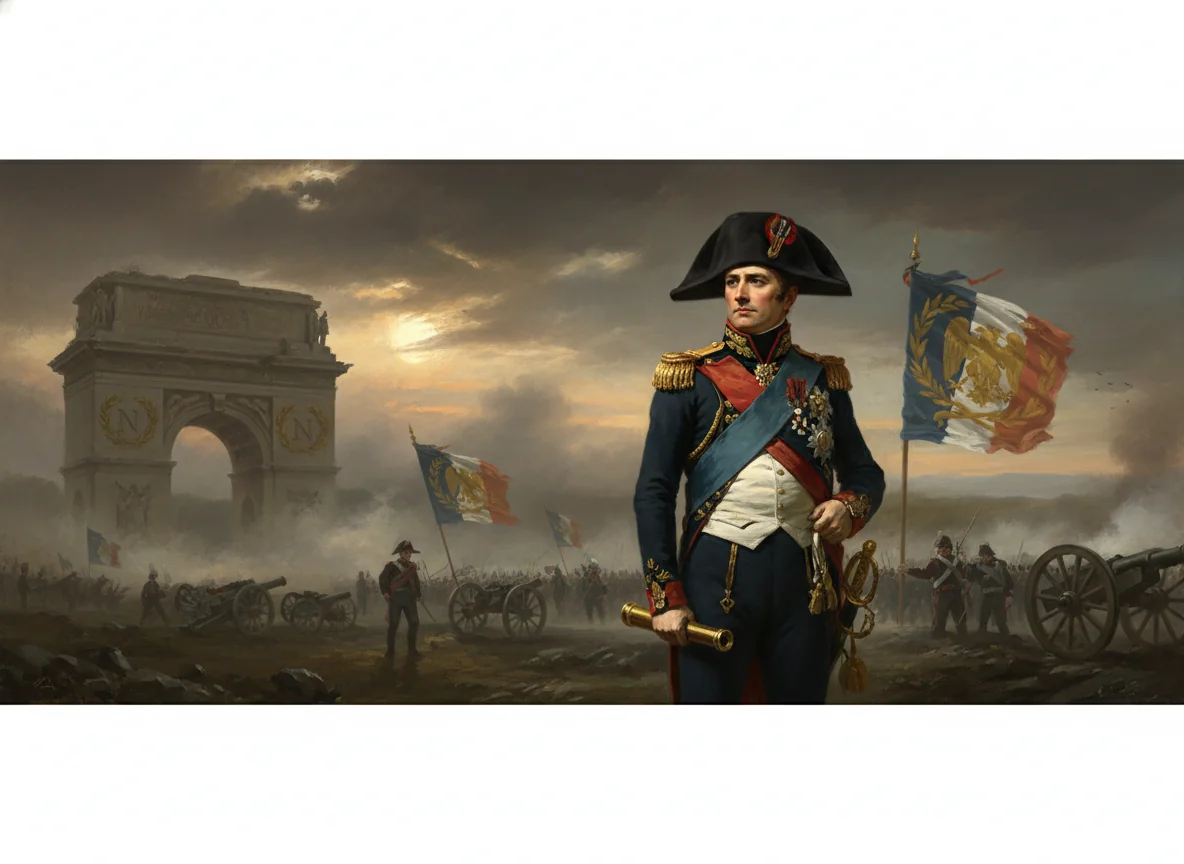
Introduction to Napoleon's Words
Napoleon Bonaparte, one of history's most influential figures, left behind not only a legacy of military conquests and political reforms but also a collection of memorable quotes that continue to inspire and provoke thought to this day. His words reveal insights into leadership, strategy, human nature, and the pursuit of greatness.
Quotes on Determination and Ambition
"Impossible is a word to be found only in the dictionary of fools."
This quintessential Napoleon quote reflects his ambitious drive during the 1790s-1800s. Throughout his meteoric rise from a Corsican artillery officer to Emperor of France, Napoleon repeatedly achieved what others deemed impossible.
"Victory belongs to the most persevering."
This observation came from Napoleon's many campaigns where persistence often proved more valuable than initial advantage. His Italian Campaign of 1796-97 exemplified this principle.
"The word impossible is not in my dictionary."
A variation on his most famous theme, this quote captures Napoleon's refusal to accept limitations that others took for granted.
Quotes on Military Strategy
"In war, the moral is to the physical as three to one."
Napoleon understood that morale and psychological factors often determined victory more than material advantages. This insight informed his approach to inspiring his troops and demoralizing enemies.
"The battlefield is a scene of constant chaos. The winner will be the one who controls that chaos."
His victory at Austerlitz in 1805 demonstrated this principle, as Napoleon masterfully controlled the chaotic battlefield to defeat a larger combined Austrian and Russian force.
"Never interrupt your enemy when he is making a mistake."
This pragmatic advice reflects Napoleon's patient observation of enemy weaknesses before striking decisively.
Quotes on Leadership and Governance
"A leader is a dealer in hope."
Napoleon recognized that leadership fundamentally involves inspiring hope in followers. His ability to motivate exhausted armies to achieve extraordinary feats exemplified this understanding.
"Men are moved by two levers only: fear and self-interest."
This cynical observation informed Napoleon's approach to both military command and political governance.
"The best way to keep one's word is not to give it."
Napoleon's pragmatic approach to diplomacy sometimes involved making promises strategically rather than absolutely.
Quotes on Power and Glory
"Glory is fleeting, but obscurity is forever."
This reflection, likely from his later years, reveals Napoleon's awareness of legacy and his drive to leave an enduring mark on history.
"History is a set of lies agreed upon."
Napoleon understood that historical narratives are shaped by the victors and those who control information.
"From the heights of these pyramids, forty centuries look down on us."
Spoken during his Egyptian Campaign in 1798, this quote shows Napoleon's sense of historical perspective and his ability to inspire troops with grand visions.
Quotes on Public Opinion
"Public opinion is the thermometer a monarch should constantly consult."
Despite his authoritarian tendencies, Napoleon recognized the importance of public support and carefully managed his public image.
"Four hostile newspapers are more to be feared than a thousand bayonets."
Napoleon's respect for—and fear of—public opinion led him to closely control the press during his reign.
Later Reflections
Many of Napoleon's most philosophical observations come from his exile on Saint Helena after 1815, where he had time to reflect on his extraordinary life and eventual downfall. These quotes often carry a more contemplative, sometimes melancholic tone.
"I am the successor, not of Louis XVI, but of Charlemagne."
Napoleon saw himself as continuing a grand tradition of European leadership dating back to the medieval emperor.
"Death is nothing, but to live defeated and inglorious is to die daily."
This quote captures Napoleon's philosophy that a life of action and achievement was preferable to mere survival.
Conclusion
Napoleon's quotes reveal a complex figure: ambitious yet reflective, confident yet aware of fate's fickleness. His words continue to resonate because they address timeless questions about leadership, achievement, and human nature.