The Dawn of Industrialization
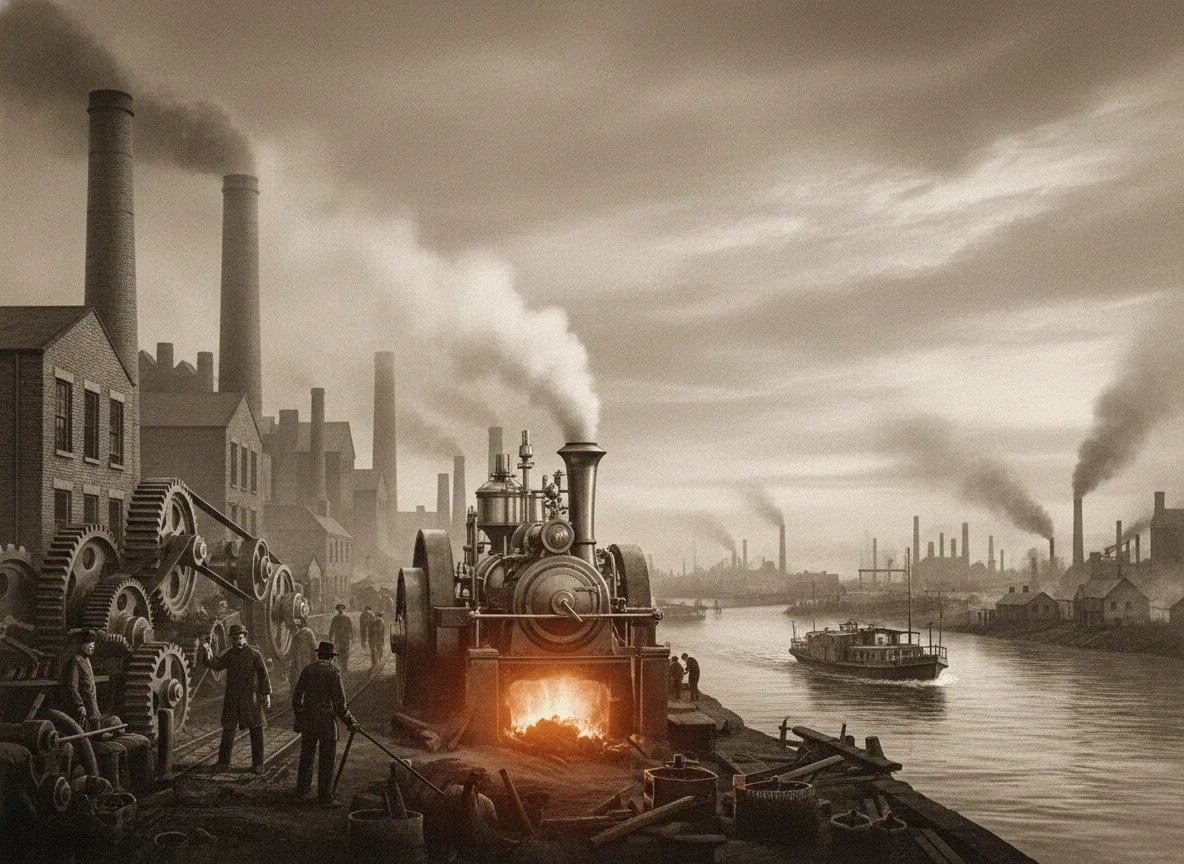
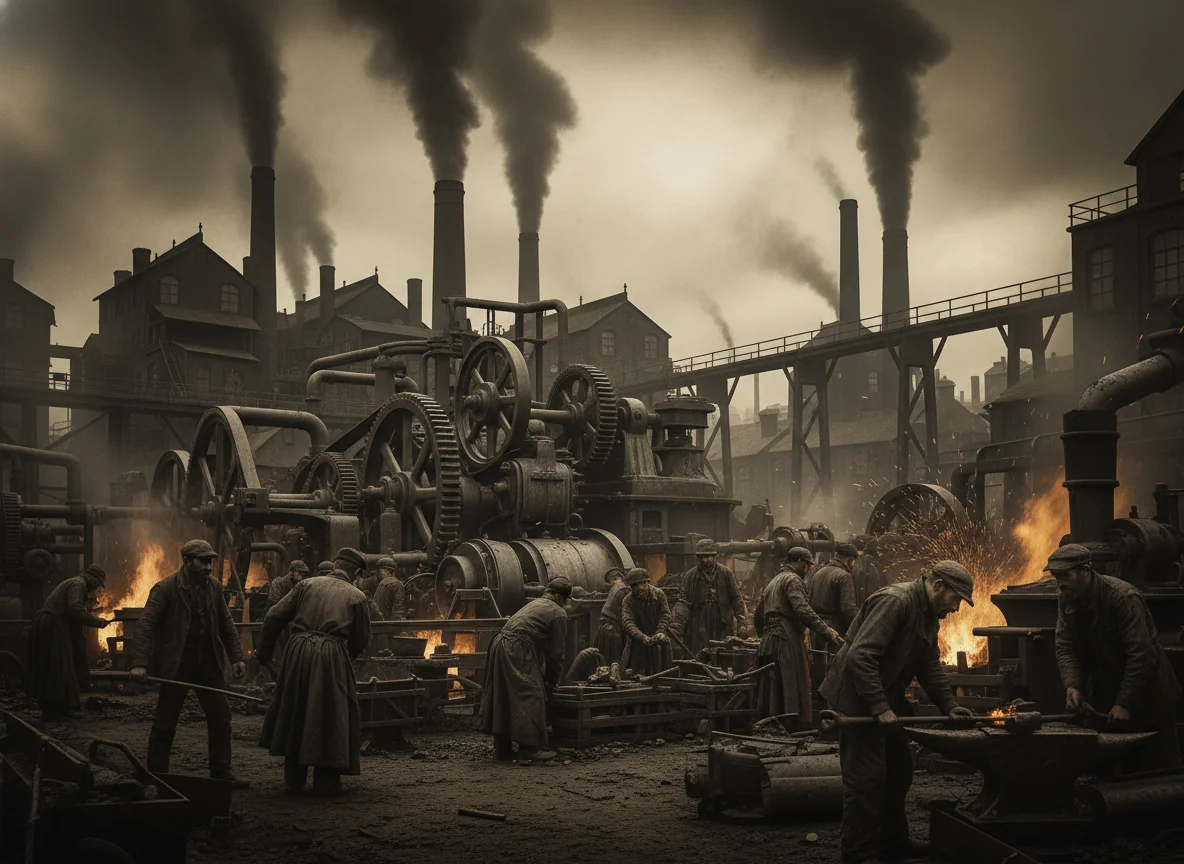
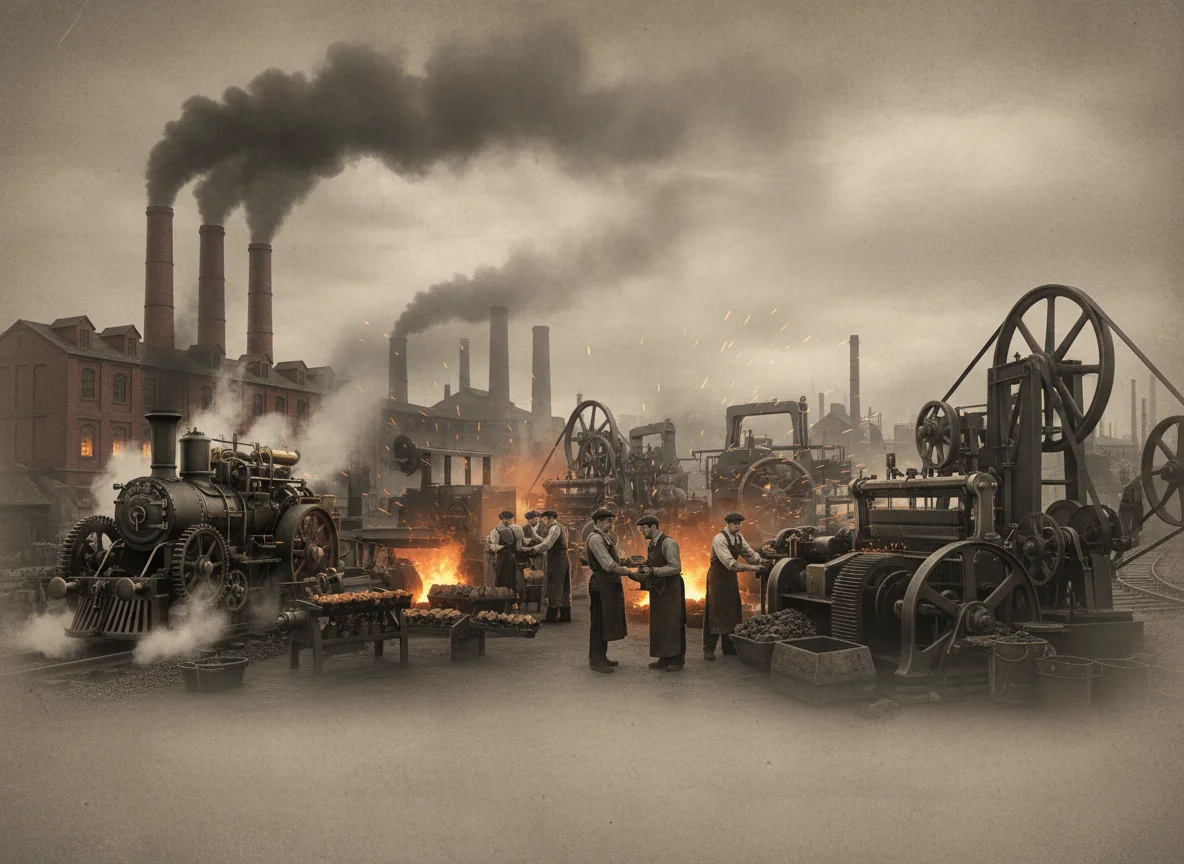
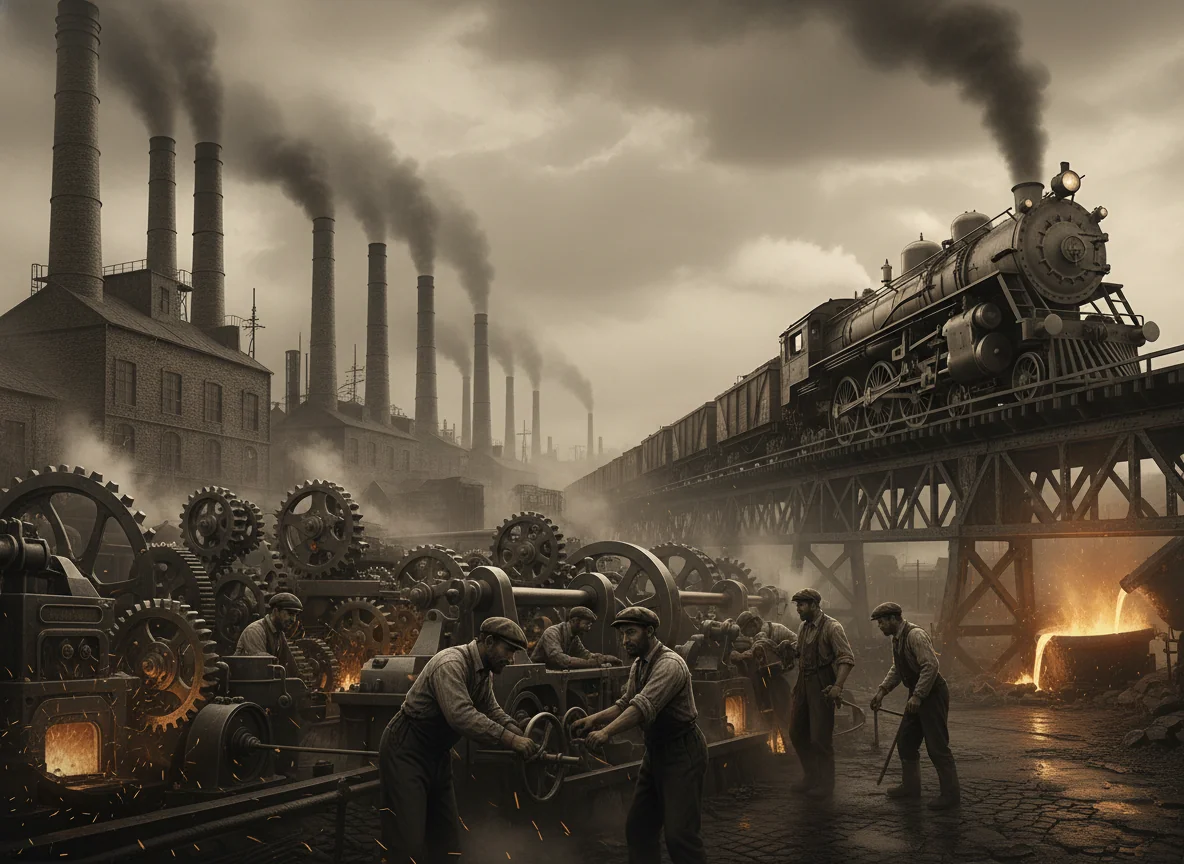
The Industrial Revolution began in Britain in the mid-18th century, gradually spreading across Europe and North America. This timeline traces the major developments that transformed the world.
Early Innovations (1700-1760)
1712: Newcomen's Steam Engine
Thomas Newcomen developed the first practical steam engine for pumping water out of mines. Though inefficient, it demonstrated steam's potential as a power source.
1733: The Flying Shuttle
John Kay invented the flying shuttle, which doubled the speed of weaving and set the stage for further textile innovations.
The Textile Revolution (1760-1790)
1764: Spinning Jenny
James Hargreaves invented the spinning jenny, enabling one worker to operate multiple spindles simultaneously. This dramatically increased yarn production.
1769: Water Frame
Richard Arkwright patented the water frame, a water-powered spinning machine that produced stronger thread than the spinning jenny.
1769: Improved Steam Engine
James Watt patented his improved steam engine with a separate condenser, making steam power practical for a wide range of industrial applications.
1779: Spinning Mule
Samuel Crompton combined features of the spinning jenny and water frame to create the spinning mule, producing fine, strong yarn.
1785: Power Loom
Edmund Cartwright invented the power loom, mechanizing the weaving process and completing the mechanization of textile production.
Iron and Transportation (1790-1830)
1793: Cotton Gin
Eli Whitney invented the cotton gin in America, dramatically increasing cotton production and the demand for textile machinery.
1804: Steam Locomotive
Richard Trevithick demonstrated the first steam locomotive, showing that steam engines could power transportation.
1825: First Public Railway
The Stockton and Darlington Railway opened in England, becoming the first public railway to use steam locomotives.
1830: Liverpool-Manchester Railway
This railway demonstrated the commercial viability of rail transport for both goods and passengers.
The Second Industrial Revolution (1850-1914)
1856: Bessemer Process
Henry Bessemer developed a process for mass-producing steel, making it affordable for construction and manufacturing.
1876: Telephone
Alexander Graham Bell patented the telephone, revolutionizing communication.
1879: Electric Light Bulb
Thomas Edison developed a practical incandescent light bulb, enabling factories to operate around the clock.
1885: Automobile
Karl Benz patented the first practical automobile powered by an internal combustion engine.
Key Inventions Summary
| Year | Invention | Inventor |
|---|---|---|
| 1733 | Flying Shuttle | John Kay |
| 1764 | Spinning Jenny | James Hargreaves |
| 1769 | Water Frame | Richard Arkwright |
| 1769 | Improved Steam Engine | James Watt |
| 1779 | Spinning Mule | Samuel Crompton |
| 1785 | Power Loom | Edmund Cartwright |
| 1804 | Steam Locomotive | Richard Trevithick |
Conclusion
The Industrial Revolution unfolded over more than a century, with each innovation building upon those that came before. These technological advances transformed every aspect of society and laid the foundation for our modern industrial world.