Introduction
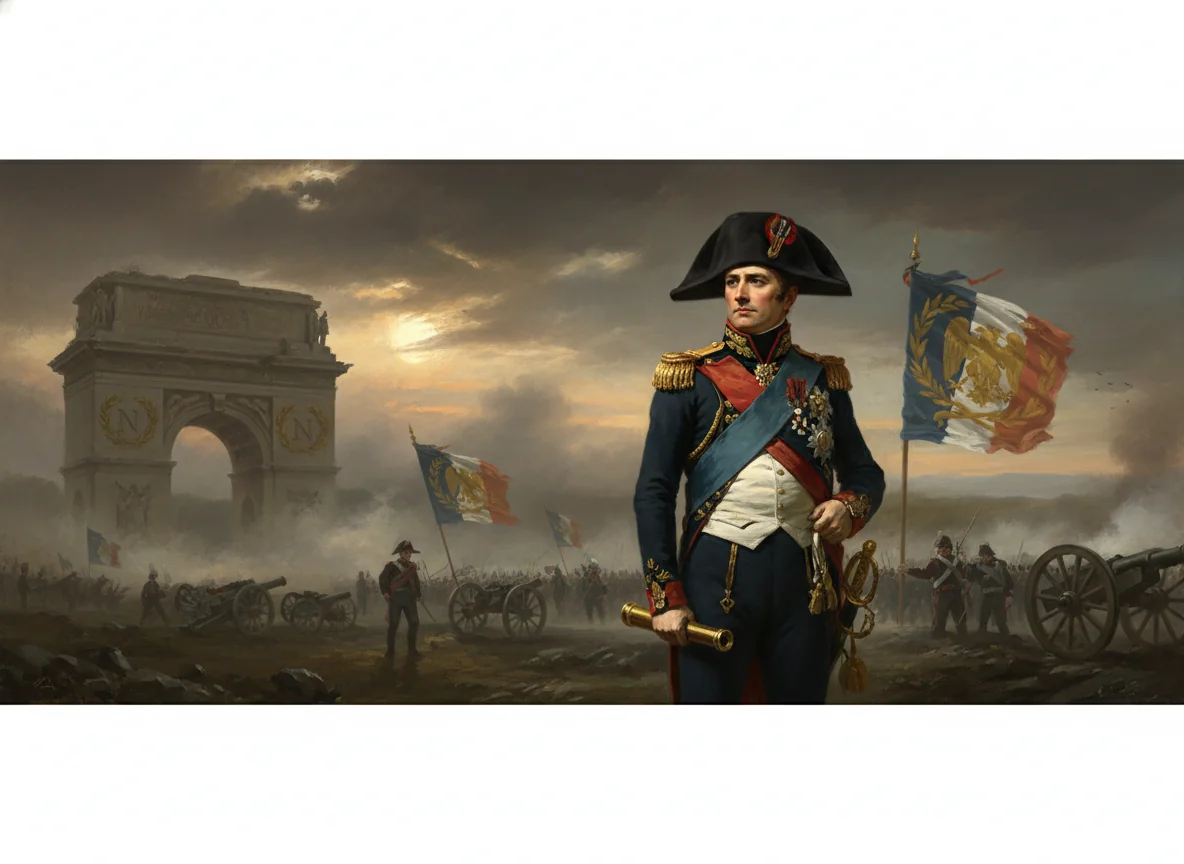
The Battle of Waterloo was more than just a military engagement; it was a turning point that marked the end of one era and the beginning of another in European history. Fought on June 18, 1815, near Waterloo in present-day Belgium, this battle ended Napoleon Bonaparte's rule as Emperor of France and concluded the Napoleonic Wars that had engulfed Europe for over a decade.
Prelude to Battle
Napoleon's Return from Elba
In March 1815, Napoleon escaped from his exile on the island of Elba and landed in France. His return, known as the Hundred Days, saw him rapidly regain power as French soldiers sent to arrest him instead rallied to his cause. Within weeks, Napoleon had reclaimed Paris and reassembled an army.
Formation of the Seventh Coalition
The major European powers—Britain, Prussia, Austria, and Russia—formed the Seventh Coalition to oppose Napoleon's return. They mobilized their armies to converge on France and remove Napoleon from power permanently.
Napoleon's Strategy
Rather than wait for the coalition armies to unite, Napoleon chose to strike first. He marched his army into Belgium, hoping to defeat the British and Prussian forces separately before Austrian and Russian armies could arrive.
The Battle
The Commanders
Three legendary commanders led their forces at Waterloo: Napoleon Bonaparte commanded the French Army of the North; the Duke of Wellington led the Anglo-allied army; and Field Marshal Gebhard Leberecht von Blücher commanded the Prussian army.
Opening Moves
Fighting began around 11 AM on June 18, 1815. Wellington had positioned his army along a ridge near the village of Waterloo, using the terrain to shelter his troops from French artillery. Napoleon launched several attacks against this defensive position.
The Struggle for Hougoumont
The battle opened with a French assault on the Château d'Hougoumont, a farmhouse complex on Wellington's right flank. This engagement consumed French troops and attention throughout the day without achieving a breakthrough.
The Arrival of the Prussians
In mid-afternoon, Prussian forces began arriving on the battlefield's eastern edge. Napoleon had hoped that Marshal Grouchy, pursuing the Prussians after an earlier engagement, would prevent their arrival. Grouchy never came.
The Imperial Guard's Final Charge
As evening approached, Napoleon ordered the Imperial Guard, his most elite troops, to attack the center of Wellington's line. This move, intended as decisive, failed spectacularly. For the first time, the Imperial Guard retreated, breaking French morale across the battlefield.
Aftermath
Napoleon's Abdication and Exile
The defeat at Waterloo ended Napoleon's hopes of regaining his empire. He abdicated four days later and surrendered to the British, who exiled him to the remote island of Saint Helena in the South Atlantic, where he died in 1821.
Casualties
The Battle of Waterloo was extraordinarily bloody. French losses numbered approximately 25,000-26,000 killed and wounded. The Anglo-allied army lost about 15,000, while Prussian casualties reached around 7,000.
The Congress of Vienna
Following Napoleon's final defeat, the Congress of Vienna established a balance-of-power system across Europe that maintained relative peace for nearly a century. National boundaries were redrawn, and mechanisms were created to prevent any single power from dominating the continent.
Historical Significance
End of an Era
Waterloo marked the end of the revolutionary and Napoleonic period that had transformed European politics, society, and warfare since 1789. The old order of monarchies was restored, though it could never fully return to its pre-revolutionary form.
Military Legacy
The battle became one of the most studied military engagements in history. Military academies around the world analyzed its tactics, leadership decisions, and strategic implications for generations.
Cultural Impact
Waterloo entered the cultural lexicon as a synonym for decisive defeat. It has been depicted in countless novels, paintings, and films, most notably in Victor Hugo's "Les Misérables" and the numerous historical accounts of the battle.
Conclusion
The Battle of Waterloo was a pivotal moment that ended Napoleon's extraordinary career and reshaped Europe for the next century. Its legacy extends beyond military history to influence politics, culture, and our understanding of how single events can alter the course of history.