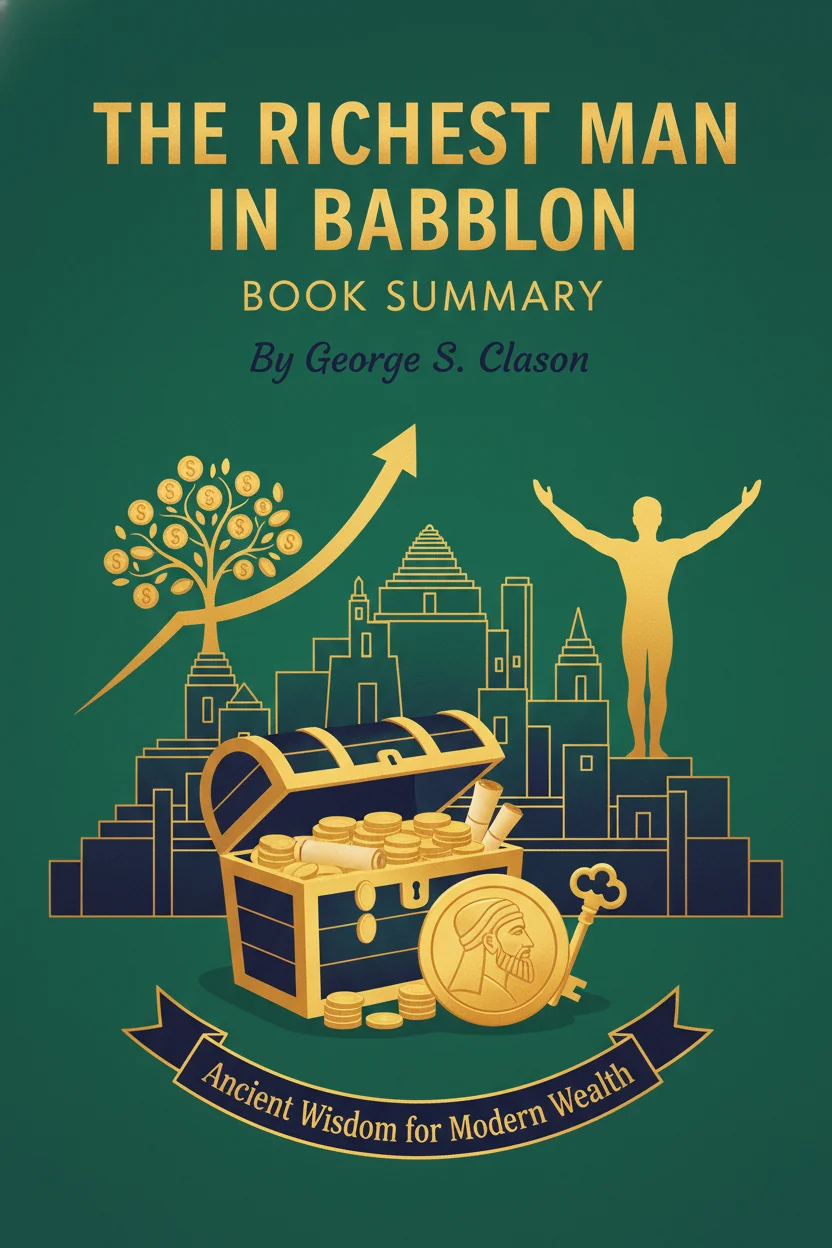
The Richest Man in Babylon
by Alex Ng
In a world of complex financial instruments and ever-changing economic landscapes, could the secrets to wealth lie in ancient parables? George S. Clason’s ‘The Richest Man in Babylon,’ first published in the 1920s, suggests just that. Through a series of captivating stories set in the prosperous ancient city of Babylon, Clason imparts timeless financial principles that are as relevant today as they were thousands of years ago. This 5-minute summary will distill the core teachings, including the ‘Seven Cures for a Lean Purse’ and the ‘Five Laws of Gold,’ offering you a simple yet profound roadmap to financial security and prosperity.
The Big Idea
"The timeless laws of wealth are simple: pay yourself first, live below your means, make your money work for you, and protect what you've built—principles that worked in ancient Babylon and still work today."
Key Insights
Pay Yourself First: Save 10%
Before paying any bills or expenses, set aside at least one-tenth of your income for yourself. This is not optional savings but a non-negotiable wealth-building habit. The money you save is the foundation of all future wealth.
Arkad, the richest man in Babylon, began his journey to wealth by keeping one-tenth of everything he earned. He discovered that he could live on nine-tenths as easily as ten-tenths, and the saved tenth eventually grew into substantial wealth.
Make Your Money Work for You
Saved money must be put to work earning more money. Gold that sits idle earns nothing. Every piece of gold should be like a servant, going out to earn more gold and bring back the profits to multiply your wealth.
The parable of the gold shows that lending money wisely—where it earns returns while the principal remains safe—turns a single coin into a small army of coins, each one laboring to bring back more wealth to its master.
Seek Advice Only from Those Who Are Experts
Never take financial advice from people who aren't successful with money themselves. A brickmaker cannot advise on gems. Seek counsel from those who handle money daily and have proven their wisdom through their own wealth.
When Arkad first saved gold, he trusted a brickmaker's advice about buying rare jewels. He lost everything. Later, he learned to consult only with money lenders and experienced merchants who truly understood investments.
Guard Your Treasure from Loss
The first principle of investment is security of principal. Before seeking returns, ensure you won't lose your capital. Beware of schemes promising impossible returns and investments you don't understand.
Many Babylonians lost their wealth to get-rich-quick schemes and bad investments. The wise preserved their capital first, accepting smaller but certain returns rather than risking principal for uncertain windfalls.
Own Your Own Home
A man who owns his own home has eliminated one of his largest expenses and has built equity instead of paying a landlord. Home ownership provides security and reduces the cost of living, accelerating wealth building.
The Babylonians who rented paid more over time than those who bought. The home owner eventually lived for free while the renter paid forever. Owning property was considered essential to financial independence.
Chapter Breakdown
The Setting: Ancient Babylon
Clason set his financial parables in ancient Babylon because it was one of the wealthiest cities of the ancient world. The Babylonians figured out principles of money that remain true thousands of years later. Their wisdom, told through stories, cuts through modern complexity to reveal simple, eternal truths.
The Seven Cures for a Lean Purse
1. Start thy purse to fattening. Save at least one-tenth of everything you earn. This creates the foundation for all future wealth.
2. Control thy expenditures. Budget your spending. What you call "necessary expenses" will always grow to equal your income unless you resist. Live below your means.
3. Make thy gold multiply. Put your savings to work earning more. Money at rest is opportunity lost.
4. Guard thy treasures from loss. Protect your principal. The first rule of investing is to not lose money. Avoid speculative investments and schemes.
5. Make of thy dwelling a profitable investment. Own your own home. It builds equity and eliminates rent.
6. Ensure a future income. Plan for retirement and the protection of your family. Save for the days when you cannot work.
7. Increase thy ability to earn. Invest in yourself. Develop skills that make you more valuable. The more you learn, the more you can earn.
The Five Laws of Gold
Law I: Gold comes gladly to those who save at least one-tenth of their earnings.
Law II: Gold works diligently for the wise owner who finds profitable employment for it.
Law III: Gold clings to the cautious owner who invests under the advice of wise men.
Law IV: Gold slips away from those who invest in purposes they don't understand.
Law V: Gold flees from those who force it into impossible earnings or follow the advice of tricksters and schemers.
The Story of Arkad
Arkad began as a humble scribe who wondered why some became wealthy while others remained poor. A money lender named Algamish taught him the secret: "A part of all you earn is yours to keep."
Arkad began saving one-tenth and learned to invest it wisely. He made mistakes—losing money to a brickmaker's bad advice about jewels—but learned from each error. Eventually, his gold multiplied so greatly that he became the richest man in Babylon.
When asked his secret, Arkad said it wasn't luck or inheritance: "I learned to make gold work for me. I learned to make my earnings work to earn more. Every gold piece became a slave to earn me more gold pieces."
The Universal Message
The principles of wealth haven't changed in 4,000 years. Spend less than you earn. Save consistently. Invest wisely. Protect your capital. Increase your earning power. These simple rules, followed with discipline, will make anyone wealthy over time.
Take Action
Practical steps you can implement today:
-
Automate saving 10% of your income before you see it—treat it as a non-negotiable bill you pay to yourself
-
Invest your savings where they will compound: index funds, rental property, or other productive assets
-
Before any investment, ask: 'Is my principal secure? Who is giving me this advice, and are they wealthy themselves?'
-
Avoid all get-rich-quick schemes—if it sounds too good to be true, it will cost you your savings
-
Prioritize home ownership as a wealth-building strategy that eliminates your largest expense over time
Summary Written By
Software Engineer & Writer
Software engineer with a passion for distilling complex ideas into actionable insights. Writes about finance, investment, entrepreneurship, and technology.
View all summaries →Reviews
No reviews yet. Be the first to share your thoughts!