The Perks of Being a Wallflower
by Alex Ng
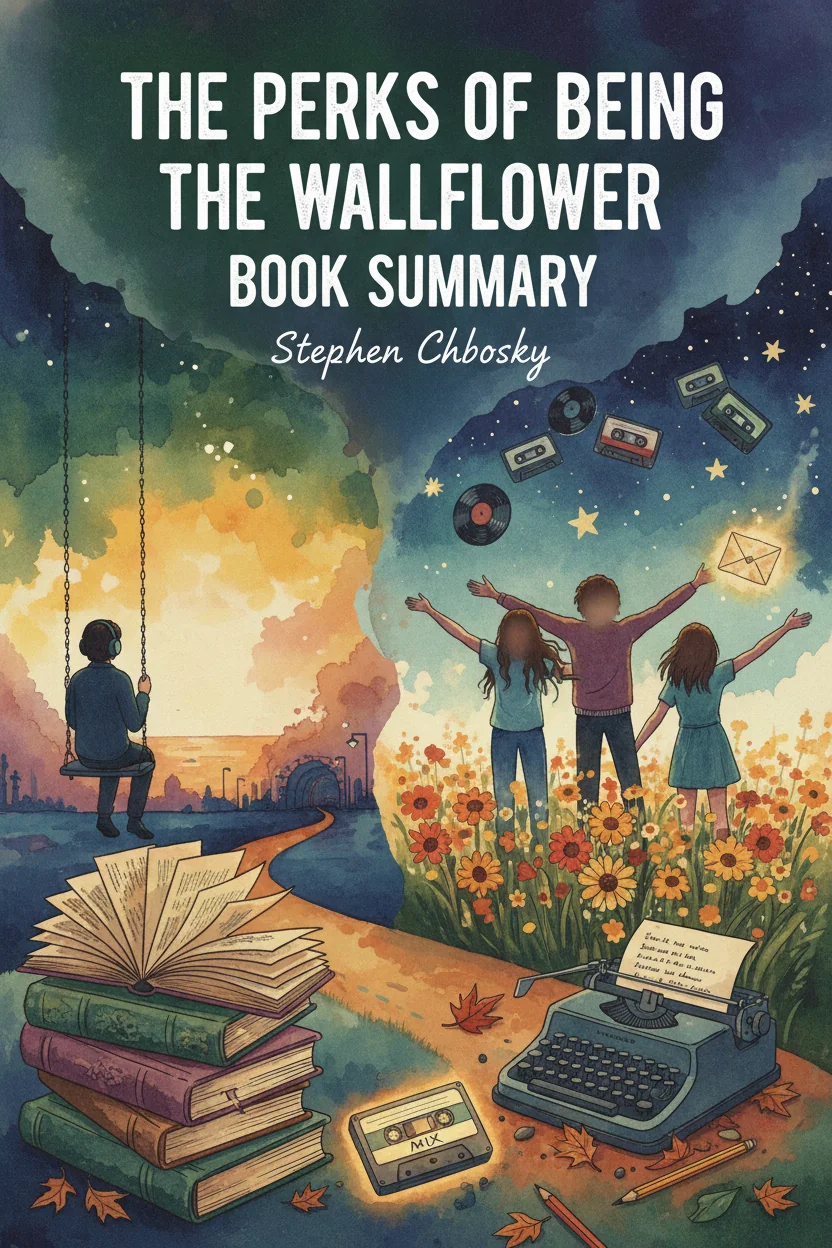
The Perks of Being a Wallflower by Stephen Chbosky is a profound coming-of-age novel, told through the intimate letters of Charlie, a sensitive and introspective teenager. It explores the complexities of adolescence, dealing with themes of mental health, friendship, love, and the journey of self-discovery.
The Big Idea
"Adolescence is a time of profound feeling—the pain, confusion, and beauty of growing up are universal experiences that connect us, and acknowledging our struggles is the first step toward healing."
Key Insights
We Accept the Love We Think We Deserve
People often settle for treatment that matches their self-image. Those who have been hurt may unconsciously seek relationships that confirm their belief that they don't deserve better. Self-worth determines what love we allow into our lives.
Sam dates older, unavailable men who treat her poorly because of childhood trauma. Charlie's English teacher explains that until she believes she deserves good love, she'll keep choosing bad partners.
Participation Is the Antidote to Passivity
Charlie's great flaw is being a 'wallflower'—observing life rather than living it. Growth requires stepping out of the safety of watching and engaging fully with life, even when it's scary and might lead to pain.
Throughout the novel, Charlie transforms from someone who only watches to someone who participates: making friends, standing up to bullies, expressing his feelings, and eventually confronting his past trauma directly.
Mental Health Struggles Are Common and Treatable
The novel normalizes seeking help for emotional problems. Charlie's breakdown and subsequent treatment in a psychiatric hospital isn't portrayed as failure—it's portrayed as necessary healing that allows him to eventually live a fuller life.
When Charlie's repressed memories surface and he has a breakdown, hospitalization and therapy allow him to process his childhood trauma. The book ends with hope, not despair.
Misfits Find Each Other
Feeling different or broken doesn't mean you're alone. The people who feel like outsiders often become the most genuine friends because they understand what it means to not fit the mold.
Charlie, Patrick, and Sam all have painful histories. Rather than making them incompatible, their wounds help them understand each other. Their friendship is built on mutual acceptance of imperfection.
Art and Literature Help Us Process Life
Books, music, and movies provide frameworks for understanding our own experiences. Art connects us to others who have felt what we feel, making us less alone in our struggles.
Charlie's reading list—from 'The Catcher in the Rye' to 'Walden'—provides him language and perspective for his experiences. The mixtape becomes a symbol of emotional connection and growth.
Chapter Breakdown
Charlie's Letters
The novel is structured as a series of letters from Charlie, a fifteen-year-old freshman, to an anonymous "friend." Through these letters, we witness Charlie's first year of high school—his grief over his friend's suicide, his anxiety about fitting in, and his gradual emergence from isolation.
Charlie is intelligent and deeply sensitive, but his defining characteristic is being a "wallflower"—someone who watches rather than participates. His letters are honest, naive, and heartbreaking as he tries to make sense of teenage life.
Finding His People
Charlie's life transforms when he meets Patrick and Sam, step-siblings who are seniors. Despite the age difference, they adopt Charlie into their group of creative misfits. For the first time, Charlie feels like he belongs.
Through them, he experiences Rocky Horror screenings, house parties, first love, and the complicated dynamics of high school relationships. He develops a crush on Sam, though she's dating someone else. Patrick's secret relationship with a closeted football player introduces Charlie to the pain of hidden identities.
The Weight of the Past
Throughout the novel, we learn about Charlie's history: his beloved Aunt Helen died in a car crash on his birthday when he was seven. He's still processing this loss, along with the death of his middle school friend Michael, who died by suicide.
Charlie's emotional reactions seem disproportionate to situations—he cries often, blacks out, and struggles with depression. The reader senses something deeper at work, trauma that Charlie himself doesn't fully understand.
The Revelation
As the school year ends and Sam prepares to leave for college, she and Charlie share an intimate moment. This triggers a devastating flashback: his Aunt Helen, whom he loved desperately, had sexually abused him throughout his childhood.
Charlie's mind had buried this trauma to protect him, but its emergence causes a complete breakdown. He's hospitalized and finally receives the treatment he needs. The novel ends with Charlie beginning his sophomore year, genuinely hopeful for the first time, no longer just watching life but ready to live it.
The Infinite Feeling
The book's most famous passage describes Charlie, Sam, and Patrick driving through a tunnel with music playing, feeling "infinite." This moment captures the intensity of adolescent emotion—the sense that friendship and music and the night sky can make everything feel simultaneously meaningful and overwhelming.
Chbosky captures something true about being young: feelings are bigger, connections are deeper, and both joy and pain can feel like they'll last forever. The novel validates these experiences while gently suggesting that survival is possible, even for those who feel broken.
Take Action
Practical steps you can implement today:
-
Examine whether you're accepting less than you deserve in relationships—and consider what self-worth issues might be driving that pattern
-
Challenge yourself to participate in life rather than observe it; take risks even when they're uncomfortable
-
Seek professional help when struggling emotionally—there's no shame in treatment, only in unnecessary suffering
-
Look for your people among the 'misfits'—genuine connection often comes from those who also feel different
-
Use books, music, and art to process your experiences and connect with the universality of human emotion
Summary Written By
Software Engineer & Writer
Software engineer with a passion for distilling complex ideas into actionable insights. Writes about finance, investment, entrepreneurship, and technology.
View all summaries →Reviews
No reviews yet. Be the first to share your thoughts!