The Hate U Give
by Alex Ng
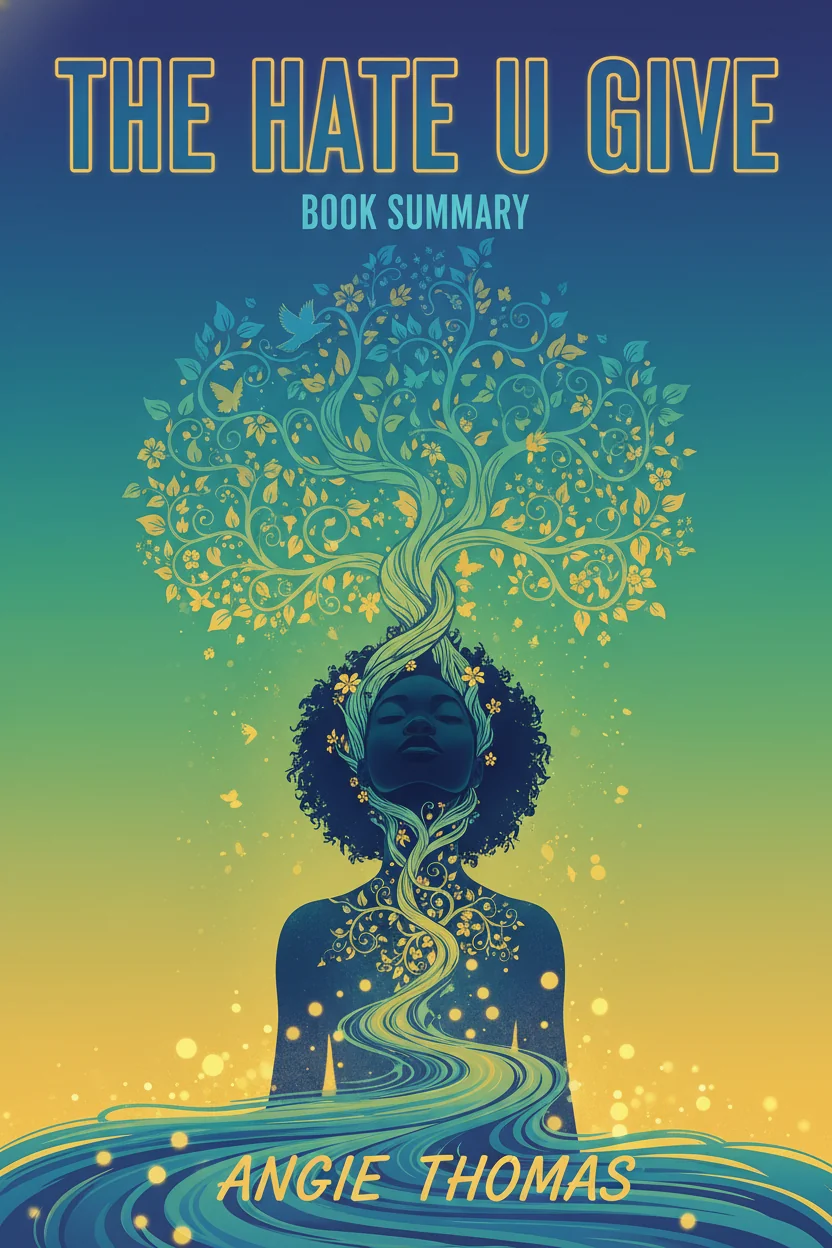
“The Hate U Give” by Angie Thomas is a powerful novel about racial injustice and activism. It follows Starr Carter, a Black teenager, who navigates two worlds and becomes an advocate for justice after witnessing the police shooting of her unarmed friend, Khalil.
The Big Idea
"Finding your voice in the face of injustice is terrifying, but silence perpetuates the systems that hurt us. Speaking truth to power - even when your voice shakes - is an act of resistance that can change not just policy but consciousness."
Key Insights
Code-Switching
Starr lives two lives: 'Williamson Starr' at her mostly white prep school and 'Garden Heights Starr' in her Black neighborhood. This exhausting performance reveals how marginalized people must constantly adapt to survive in different spaces.
At Williamson, Starr avoids 'sounding too Black.' In Garden Heights, she can't seem 'too Williamson.' The shooting forces her to choose which Starr to be - and ultimately to integrate both.
The Power of Narrative
Khalil's story is told in media as 'thug killed by cop.' Starr knows the truth: a frightened kid with a hairbrush. Who controls the narrative determines how society responds to tragedy.
TV shows Khalil's 'gang connections' and suspected drug dealing. Starr knows he sold drugs to help his mother. The media's story justifies his death; Starr's testimony humanizes him.
Systemic vs. Individual Racism
The novel shows racism operating at multiple levels: the cop who assumes danger, the grand jury that won't indict, the media that criminalizes victims, and well-meaning friends who still don't understand.
Officer 115 may or may not be personally racist. It doesn't matter - the system trained him to see Black teenagers as threats. Starr's friend Hailey isn't malicious but is still harmful. Both represent different faces of the same problem.
Speaking Up
Starr's fear of speaking is understandable - witnesses get threatened, and nothing seems to change anyway. But her silence protects the system. Finding her voice becomes an act of self-creation as much as protest.
Starr progresses from hiding her presence at the shooting, to private testimony, to TV interview, to leading protests. Each step terrifies her. Each step also transforms her.
Chapter Breakdown
The Shooting
Starr Carter witnesses her unarmed childhood friend Khalil shot by a police officer during a traffic stop. The officer saw a hairbrush and assumed it was a gun. Khalil dies in Starr's arms.
Starr must navigate two worlds: Garden Heights, her Black neighborhood where she grew up, and Williamson Prep, her mostly white school. She's been taught to keep these worlds separate.
The Aftermath
Media paints Khalil as a thug and drug dealer, implying he deserved his fate. Only Starr knows the truth - that he sold drugs to help his mother and had just gotten out of gang life. She's the only witness, but speaking up is dangerous.
Finding Her Voice
Starr testifies to a grand jury. When they don't indict the officer, riots break out. Through a TV interview and ultimately leading a protest, Starr finds her voice. She stops code-switching and integrates her two selves.
The Title's Meaning
"The Hate U Give" comes from Tupac: "The Hate U Give Little Infants F***s Everybody" - T.H.U.G.L.I.F.E. The hate society gives to marginalized children comes back around to hurt everyone. Breaking the cycle requires speaking truth, even when it's terrifying.
Take Action
Practical steps you can implement today:
-
Examine where you code-switch and what it costs you
-
Question media narratives about marginalized people - whose story is being told?
-
Recognize systemic racism even when individual actors seem well-meaning
-
Find ways to use your voice, starting small if necessary
Summary Written By
Software Engineer & Writer
Software engineer with a passion for distilling complex ideas into actionable insights. Writes about finance, investment, entrepreneurship, and technology.
View all summaries →Reviews
No reviews yet. Be the first to share your thoughts!