The Fault in Our Stars
by Alex Ng
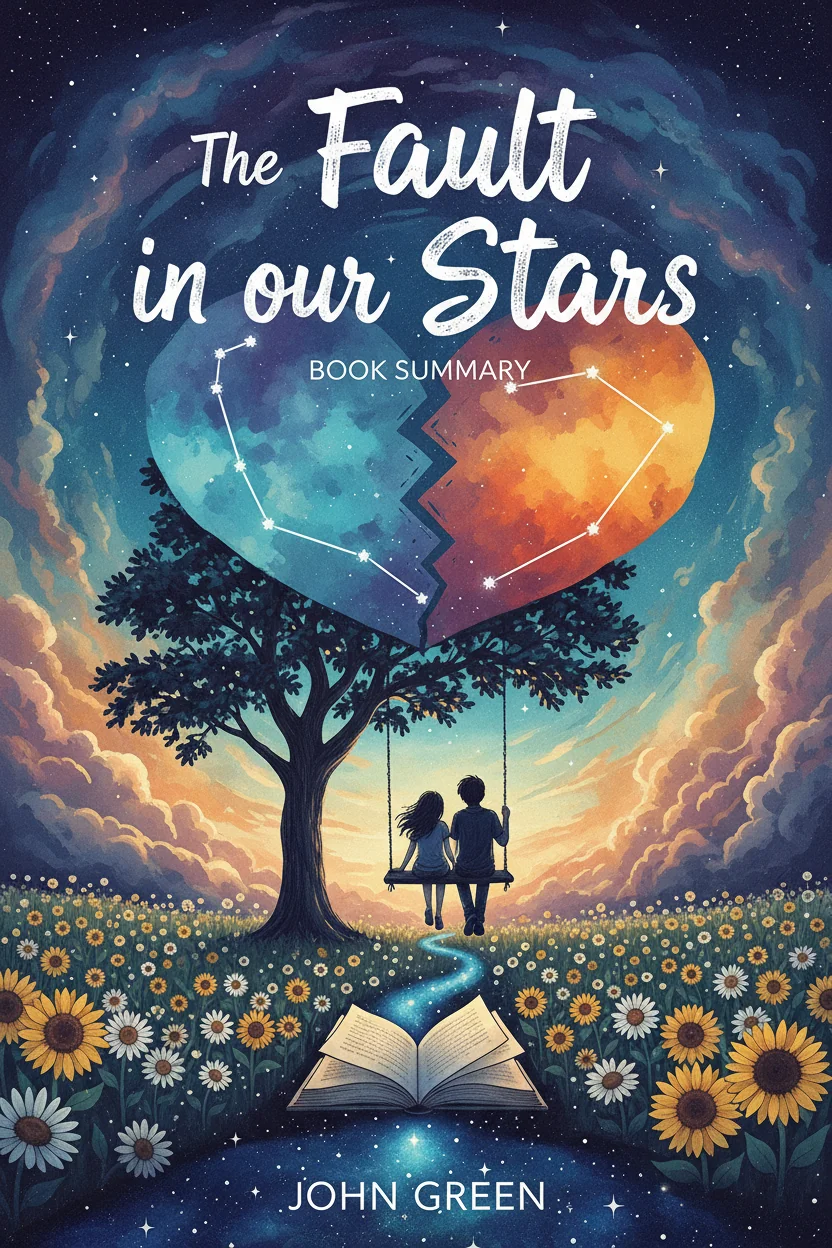
“The Fault in Our Stars” by John Green is a heartrending yet uplifting novel about two teenagers, Hazel and Augustus, who meet in a cancer support group. Their poignant love story, intertwined with themes of mortality, love, and the legacies we leave, profoundly explores the experience of living with illness.
The Big Idea
"Life's meaning isn't measured in years but in the depth of connection and love we experience. A short life fully lived, with eyes open to both beauty and pain, is infinitely richer than a long life unlived."
Key Insights
Refusing to Romanticize Illness
The novel refuses to romanticize cancer or make death beautiful. Hazel is clear-eyed about being a 'grenade' that will hurt those who love her. This honesty about illness makes the love story more real, not less.
Hazel describes herself as a 'side effect' of dying, not a brave warrior. She refuses inspirational cancer clichés. 'That's the thing about pain. It demands to be felt.'
Infinity Within Limits
Some infinities are bigger than other infinities. The time between zero and one contains infinite numbers, just as a short life can contain infinite meaning. Hazel and Gus find their infinity in their limited days together.
Hazel tells Augustus she loves him at his pre-funeral. Their love is complete despite - perhaps because of - its brevity. The finite nature of time makes each moment infinitely valuable.
The Desire to Matter
Augustus fears 'oblivion' - being forgotten after death. He wants his life to mean something. Through his relationship with Hazel, he discovers that mattering to one person might be enough.
Gus's obsession with heroism and legacy gives way to something smaller but perhaps greater: being truly known and loved by one person. Hazel is his audience of one.
Unfinished Stories
Life, unlike fiction, doesn't wrap up neatly. The novel within the novel, 'An Imperial Affliction,' ends mid-sentence. This frustrates but also teaches: we don't get neat endings, and demanding them misses the point.
Hazel's obsession with knowing what happens after the book ends mirrors our discomfort with death's interruption. We must accept stories - lives - that end before we're ready.
Chapter Breakdown
The Meeting
Hazel Grace Lancaster, sixteen and living with terminal thyroid cancer, meets Augustus Waters at a support group. Despite her resistance to connection - she calls herself a 'grenade' who will eventually hurt everyone who loves her - they fall in love. Augustus, in remission from osteosarcoma, is obsessed with living a meaningful life and leaving a mark.
An Imperial Affliction
They bond over Hazel's favorite book, which ends mid-sentence when the narrator dies. Hazel needs to know what happens to the other characters - a need that mirrors her fear of what happens to those she leaves behind. Augustus uses his cancer foundation wish to take Hazel to Amsterdam to meet the author.
Amsterdam
The trip is magical but the author meeting is a disaster - he's a drunk who refuses to answer their questions. Yet in Amsterdam, Hazel and Augustus share their first intimate moments. Augustus reveals his cancer has returned aggressively. Their roles reverse.
The Grenade
As Augustus declines, Hazel must confront being on the other side - the one left behind. At Augustus's pre-funeral (a chance for him to hear eulogies while alive), she tells him she loves him. He dies eight days later.
The Letter
After Augustus's death, Hazel learns he spent his final days writing her a letter via the author in Amsterdam. In it, he tells her that giving his heart to her was his best choice. She ends uncertain of everything except that she's glad she knew him.
Take Action
Practical steps you can implement today:
-
Resist the urge to find meaning in suffering - sometimes pain is just pain, and that's okay
-
Recognize that 'mattering' to even one person is enough - you don't need to change the world
-
Accept that some stories won't have neat endings - embrace the incompleteness of life
-
Be present with people you love - the quality of connection matters more than quantity of time
Summary Written By
Software Engineer & Writer
Software engineer with a passion for distilling complex ideas into actionable insights. Writes about finance, investment, entrepreneurship, and technology.
View all summaries →Reviews
No reviews yet. Be the first to share your thoughts!