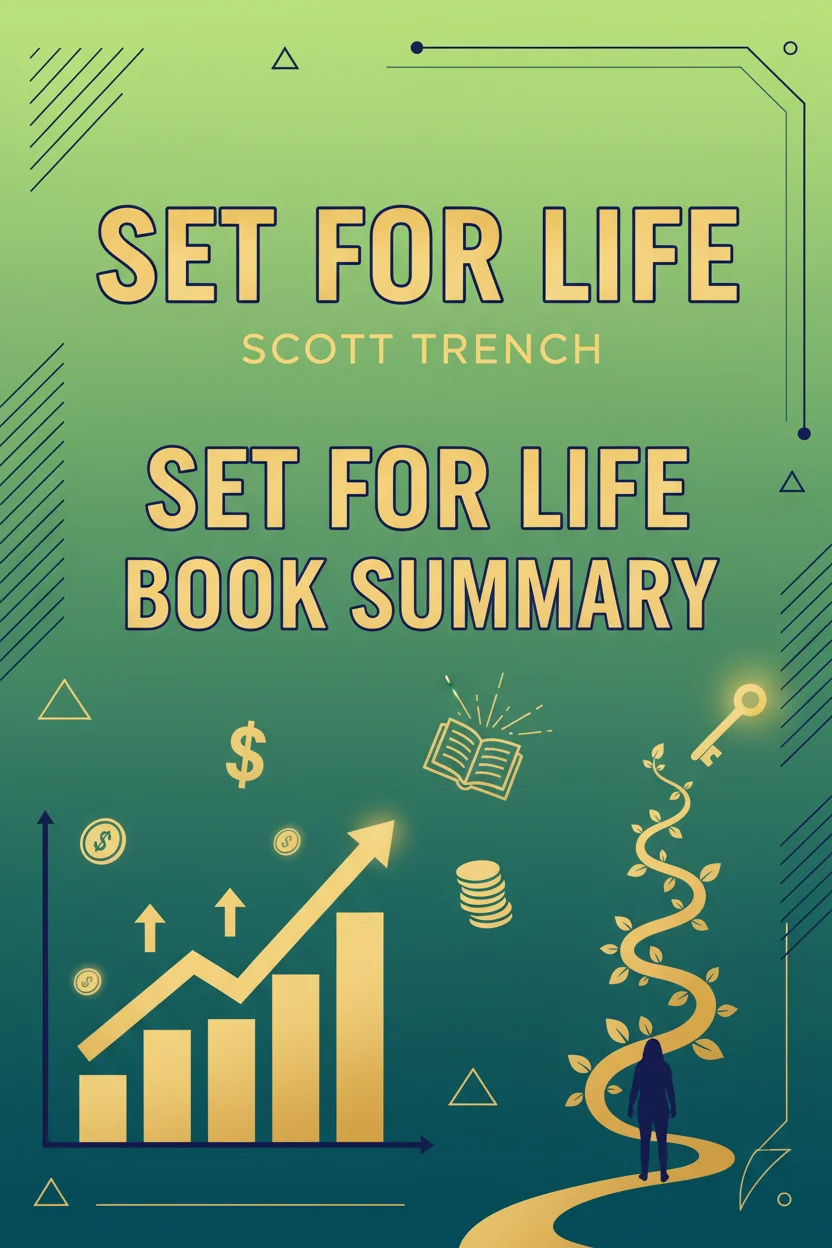
Set for Life
by Alex Ng
Scott Trench’s practical blueprint for achieving financial independence in your 20s and 30s through strategic income and expense optimization.
The Big Idea
"Early financial independence requires making wealth-building your primary goal in your twenties and thirties. The path is simple but demanding: minimize expenses ruthlessly, maximize income aggressively, and invest the difference."
Key Insights
The First $25,000 is the Hardest
The gap between zero and $25,000 in savings is the most important milestone. It provides an emergency fund, creates options, and proves you can do it. After this, compounding and psychology work in your favor.
At zero savings, any setback (job loss, car trouble, medical bill) becomes a crisis. At $25,000, these same events are manageable inconveniences. This changes everything about your risk tolerance and opportunities.
Housing is the Killer
Housing typically consumes 25-40% of income. Optimizing this one expense - through house hacking, roommates, or living with parents - can alone determine whether you become wealthy or struggle forever.
Trench 'house hacked' by buying a duplex, living in one unit, and renting the other. His housing cost dropped to near zero, freeing up thousands monthly for investment.
Income Has No Ceiling
Frugality is necessary but insufficient. You can only cut expenses to a certain point, but income has no limit. Once you've optimized expenses, focus relentlessly on earning more - through raises, job changes, or side hustles.
Trench increased his income dramatically through strategic job changes and starting side businesses. Each increase went directly to investments because his expenses were already optimized.
The Reasonable Asset
Real estate, particularly small multi-family properties, is accessible to regular people in ways that most investments aren't. You can use leverage, live in the property, and directly control your investment.
A duplex or triplex allows you to live in one unit while renting others. This reduces living costs while building equity. FHA loans require only 3.5% down.
Chapter Breakdown
Part 1: Year One - The First $25,000
The journey begins with ruthless expense optimization. Your first $25,000 creates an emergency fund and proves you can do this. Track every dollar. Optimize housing first - it's your biggest expense. Consider house hacking, roommates, or living with family.
At this stage, focus entirely on saving rate, not investment returns. Your job is to create the gap between income and expenses.
Part 2: Years 2-3 - The Income Explosion
Once expenses are optimized, turn to income. Request raises, change jobs, start side hustles. Trench recommends real estate investing or building a side business that can eventually replace your job.
The goal is to reach $100,000 in investable assets. At this level, your money starts working meaningfully for you.
Part 3: The Power of Real Estate
House hacking - buying a multi-unit property, living in one unit, renting the others - is Trench's preferred strategy. It combines reducing living expenses with building equity and generating rental income.
FHA loans allow purchases with 3.5% down, making this accessible to people with limited savings. The goal is to have your tenants pay your mortgage while you build wealth.
Part 4: Reaching Critical Mass
Continue the cycle: optimize expenses, increase income, invest aggressively. As your net worth grows, your investment income becomes significant. Eventually, passive income exceeds expenses - that's financial independence.
Trench emphasizes that this path requires sacrifice in your twenties and thirties but creates freedom for the rest of your life.
Take Action
Practical steps you can implement today:
-
Calculate your current savings rate - if it's under 50%, you have work to do
-
Analyze your housing situation - can you house hack, get a roommate, or downsize?
-
Set a goal to increase your income by 20% within the next year through raises, job changes, or side income
-
Research house hacking opportunities in your area - this single strategy can transform your financial trajectory
Summary Written By
Software Engineer & Writer
Software engineer with a passion for distilling complex ideas into actionable insights. Writes about finance, investment, entrepreneurship, and technology.
View all summaries →Reviews
No reviews yet. Be the first to share your thoughts!