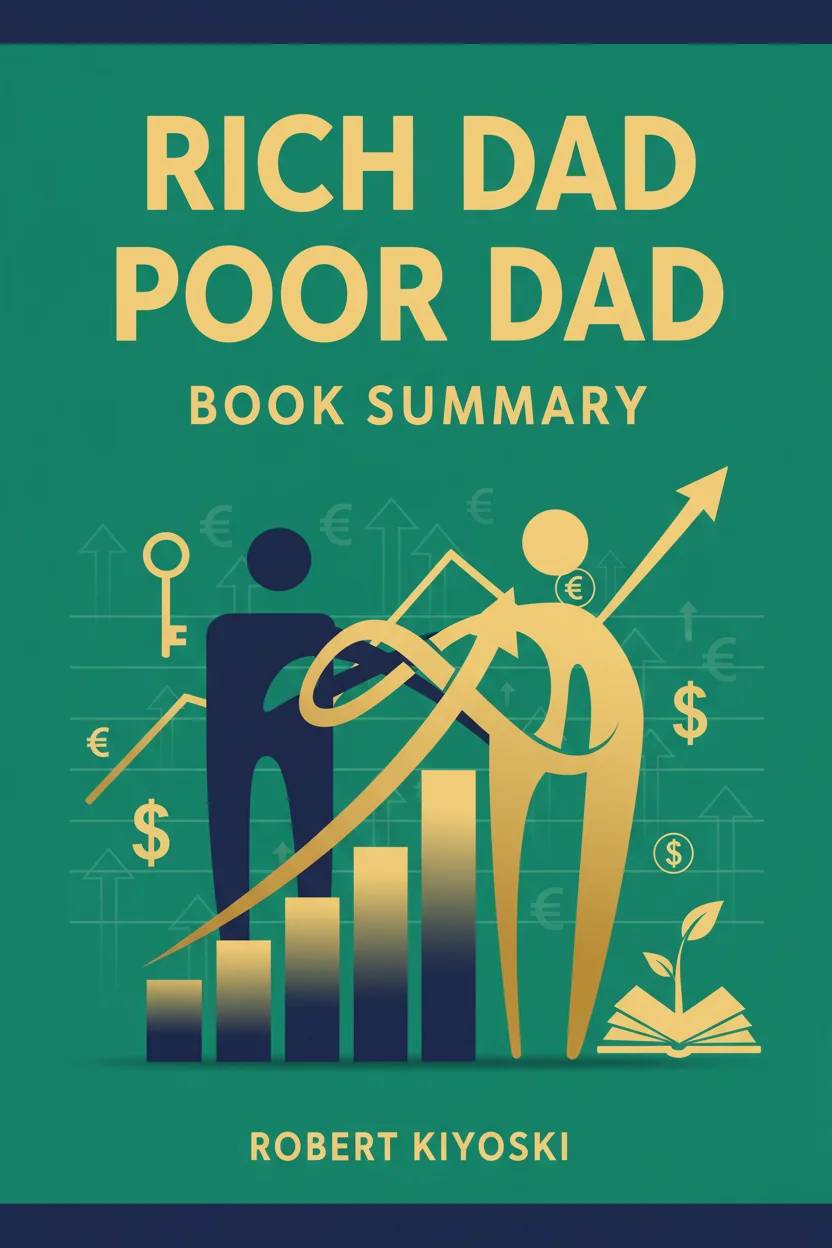
Rich Dad Poor Dad
by Alex Ng
Robert Kiyosaki’s contrasting lessons from two father figures on money, investing, and achieving financial freedom.
The Big Idea
"Financial success comes not from how much you earn but from what you do with what you earn. Assets put money in your pocket; liabilities take it out. Most people confuse the two and stay poor while feeling rich."
Key Insights
Assets vs. Liabilities
Rich people acquire assets (things that generate income). Poor and middle-class people acquire liabilities (things that cost money) while thinking they're assets. Your house, car, and gadgets are liabilities, not assets.
Your home costs you mortgage payments, property taxes, maintenance, and insurance. It only becomes an asset when you sell it for a profit or rent it out. Until then, it's a liability.
The Cash Flow Quadrant
There are four ways to earn money: Employee (trade time for money), Self-Employed (own a job), Business Owner (systems work for you), and Investor (money works for you). Most people stay in E or S. Wealth comes from B and I.
A doctor who must show up to earn money is self-employed, not a business owner. A business owner has systems that generate money whether they're present or not.
Work to Learn, Not to Earn
Most people work for money. The rich work to learn. When choosing jobs, especially early in your career, prioritize the skills you'll gain over the salary you'll receive.
Kiyosaki worked for Xerox not for the salary but to learn sales - a skill he knew he needed. After mastering it, he moved on. The salary was secondary to the education.
Mind Your Own Business
Your profession is how you earn money today. Your business is your column of assets. While working your profession, build your business on the side - the assets that will eventually generate income without your labor.
Keep your day job but spend evenings building investments, starting side businesses, or acquiring income-producing real estate. Eventually, your 'business' can replace your 'profession.'
Chapter Breakdown
Lesson 1: The Rich Don't Work for Money
Kiyosaki had two fathers: his biological father (poor dad) who believed in education and job security, and his friend's father (rich dad) who believed in financial education and building assets. Poor dad worked for money; rich dad made money work for him.
The first lesson: the poor and middle class work for money, while the rich have money work for them.
Lesson 2: Financial Literacy
The most important distinction is between assets and liabilities. Assets generate income; liabilities generate expenses. Rich people buy assets. Poor people have expenses. The middle class buys liabilities thinking they're assets.
Your house is a liability (it costs money). Rental properties are assets (they generate money). Understand the difference.
Lesson 3: Mind Your Own Business
Your profession is what you do for others. Your business is what you build for yourself - your column of assets. Don't spend your life enriching others while neglecting your own wealth-building.
Keep your day job but build your asset column on the side: real estate, stocks, bonds, businesses, intellectual property.
Lesson 4: Taxes and Corporations
The rich use legal structures to minimize taxes and protect assets. Corporations can pay expenses before taxes; employees pay taxes before expenses. Understanding tax law and corporate structures creates significant advantages.
Lesson 5: The Rich Invent Money
Financial intelligence creates opportunities invisible to others. Where most see problems, the financially educated see opportunities. This isn't about working harder but about seeing better.
Lesson 6: Work to Learn, Not to Earn
Rich dad encouraged learning a little about a lot rather than specializing narrowly. Sales, marketing, communication, negotiation, investment, and leadership skills compound over a lifetime. Most schools teach none of these.
Take Action
Practical steps you can implement today:
-
List everything you 'own' and classify it honestly: does it put money in your pocket (asset) or take money out (liability)?
-
Before your next major purchase, ask: will this generate income or cost money? Can I afford the liability?
-
Start building a column of assets - even small investments count. Make acquiring assets a monthly habit
-
Choose your next job based on what you'll learn, not just what you'll earn
Summary Written By
Software Engineer & Writer
Software engineer with a passion for distilling complex ideas into actionable insights. Writes about finance, investment, entrepreneurship, and technology.
View all summaries →Reviews
No reviews yet. Be the first to share your thoughts!