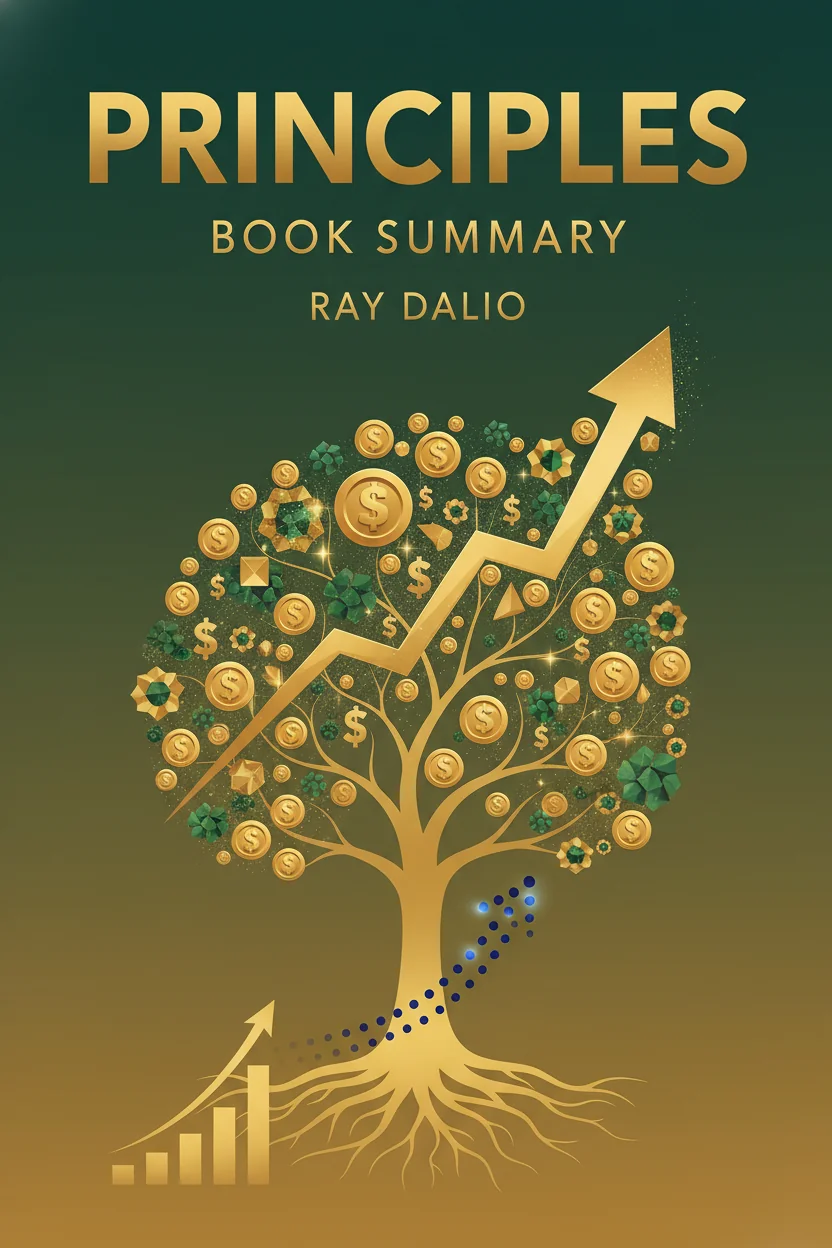
Principles
by Alex Ng
Ray Dalio’s fundamental principles for success in life, work, and building extraordinary organizations.
The Big Idea
"Success comes from developing clear principles for decision-making, then applying them systematically. By treating life like a machine and constantly debugging your own thinking, you can achieve almost anything."
Key Insights
Radical Truth and Radical Transparency
Most organizations fail because people can't be honest with each other. Dalio advocates for complete transparency and the ability to challenge anyone's ideas, regardless of hierarchy.
At Bridgewater, meetings are recorded. Anyone can challenge anyone. This creates short-term discomfort but long-term trust and better decisions.
Pain + Reflection = Progress
Mistakes and failures are data. When you feel pain, you should view it as a signal to examine what went wrong and update your approach. Most people avoid this reflection.
Dalio nearly bankrupted his company in 1982 by making wrong predictions. Instead of quitting, he studied his mistakes systematically and developed his principle-based approach.
Believability-Weighted Decision Making
Not all opinions are equally valuable. Weight ideas by the track record and reasoning ability of the person offering them. An expert's view should count more than a novice's.
In Bridgewater meetings, everyone rates the believability of each participant on different topics. Decisions are made by weighing views accordingly, not by majority vote.
Understand Your Machine
View yourself and your organization as machines producing outcomes. When outcomes aren't what you want, diagnose whether the problem is the machine's design or the people operating it.
When an investment fails, Dalio asks: Was the thesis wrong (design problem), or was execution flawed (people problem)? Different problems require different fixes.
Chapter Breakdown
Part I: Where I'm Coming From
Dalio shares his journey from middle-class kid to founder of the world's largest hedge fund. The crucial turning point was 1982, when his confident prediction of a depression proved wrong, nearly bankrupting Bridgewater. This failure forced him to develop a systematic, principles-based approach to decision-making.
Part II: Life Principles
Embrace Reality: Face harsh truths. Don't let emotions cloud your perception of reality.
Pain + Reflection = Progress: When something hurts, don't run from it - analyze it. Every failure is data about what to improve.
Radical Open-Mindedness: Your biggest blind spot is not knowing what you don't know. Actively seek out disagreement from thoughtful people.
Understand People Are Wired Differently: Different brain types see the world differently. This isn't right or wrong - it's just different. Build teams that complement rather than duplicate.
Part III: Work Principles
Culture: Create an "idea meritocracy" where the best ideas win regardless of source. This requires radical truth and radical transparency.
People: The most important decision is who to put in what role. Match people to jobs based on their proven abilities, not their claims.
Building and Evolving: Treat your organization as a machine. When it's not producing the results you want, diagnose whether the problem is design or people, then fix it.
Part IV: The Algorithm
Dalio describes how Bridgewater has systematized its principles into algorithms that guide decisions. This includes "believability-weighted decision making" - weighting opinions by the track record of the person holding them.
The goal is to make decision-making more systematic and less dependent on any individual's biases or blind spots.
Take Action
Practical steps you can implement today:
-
Write down your principles for decision-making in different situations, then apply them consistently
-
After every failure or setback, conduct a systematic review: What happened? Why? What principle applies?
-
Create systems for honest feedback - rate ideas by their merit, not by who proposed them
-
Regularly assess whether problems stem from bad systems or bad execution
Summary Written By
Software Engineer & Writer
Software engineer with a passion for distilling complex ideas into actionable insights. Writes about finance, investment, entrepreneurship, and technology.
View all summaries →Reviews
No reviews yet. Be the first to share your thoughts!