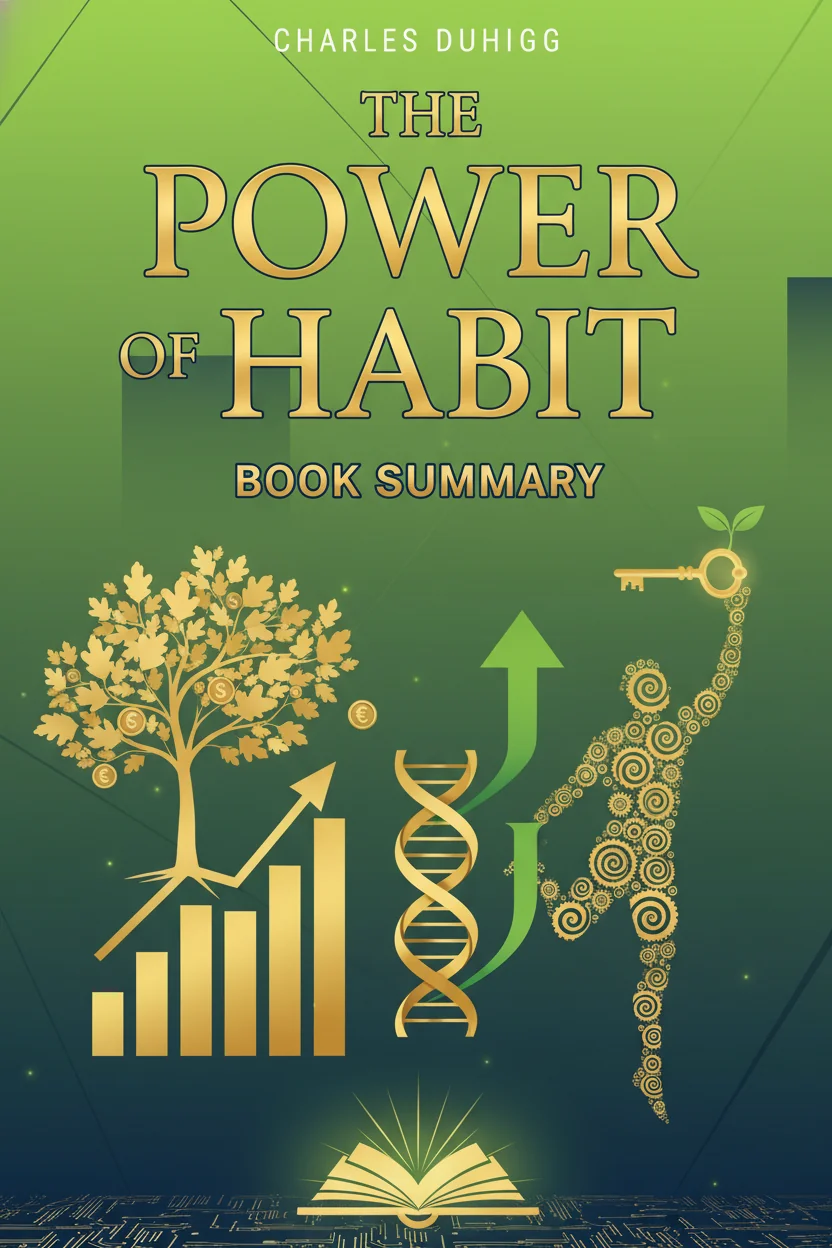
The Power of Habit
by Alex Ng
Charles Duhigg’s exploration of the neurological basis of habits and how to harness their power for personal and organizational transformation.
The Big Idea
"Habits are neurological loops that can be reprogrammed—by identifying the cue, routine, and reward, you can change almost any behavior and transform your life, organizations, and society."
Key Insights
The Habit Loop: Cue, Routine, Reward
Every habit follows the same neurological loop: a cue triggers the routine, which delivers a reward. Understanding this loop is the key to changing habits. You can't eliminate habits, but you can reprogram them by keeping the cue and reward while changing the routine.
If you stress-eat cookies every afternoon (cue: stress, routine: eating cookies, reward: distraction), you can change the routine while keeping the cue and reward—walk around the block instead, which also provides distraction from stress.
Keystone Habits Create Chain Reactions
Some habits matter more than others because they start chain reactions that change other behaviors. Identifying and changing keystone habits can transform entire areas of your life without consciously addressing every individual habit.
Exercise is a keystone habit. People who start working out often also start eating better, sleeping better, using credit cards less, and becoming more productive at work—even though they weren't trying to change those behaviors.
Willpower Is a Muscle That Fatigues
Self-control is a limited resource that gets depleted throughout the day. You can strengthen willpower through practice, but you must also design your environment to reduce the willpower demands you face.
Students who exercised willpower on one task performed worse on subsequent self-control tasks. But those who practiced willpower exercises over time (like maintaining good posture) showed improved self-control across all areas of life.
Belief Is Essential for Lasting Change
Habit change requires believing change is possible. This is why group support (like AA meetings) is so powerful—seeing others who've changed makes your own change feel achievable. Crisis can also spark belief that old patterns must die.
Alcoholics Anonymous works partly because being surrounded by others who've quit drinking makes participants believe they can too. The support group provides evidence that change is possible.
Organizations Have Habits Too
Companies and institutions have organizational habits that determine how they function. These can be intentionally designed or emerge from politics and history. Changing organizational habits often requires a crisis that makes old patterns untenable.
After a deadly fire, King's Cross Station finally changed entrenched departmental habits that had allowed safety to fall through the cracks. The crisis made previously impossible change suddenly necessary.
Chapter Breakdown
The Habit Loop
At MIT, researchers discovered that habits reside in the basal ganglia, a primitive part of the brain. When a behavior becomes habitual, the brain essentially goes on autopilot, conserving mental energy for other tasks.
Every habit follows a three-step loop:
- Cue: A trigger that tells your brain to enter automatic mode
- Routine: The behavior itself (physical, mental, or emotional)
- Reward: The benefit your brain gets, which helps encode the habit
To change a habit, you must keep the old cue and deliver the old reward but insert a new routine. This is the Golden Rule of habit change.
The Craving Brain
Habits create neurological cravings. Once you've created a habit loop, your brain begins anticipating the reward when it encounters the cue—before the routine even begins. This anticipation is what makes habits so powerful and so difficult to break.
Claude Hopkins made Pepsodent toothpaste successful by creating a craving. The tingle from the mint made people feel like their mouth was clean. Without that sensation, the toothbrushing habit wouldn't have stuck. Cravings drive the habit loop.
Keystone Habits
Not all habits are equal. Some habits—"keystone habits"—have the power to start a chain reaction, changing other habits as they move through an organization or a life.
When Alcoa's new CEO, Paul O'Neill, focused obsessively on worker safety, it transformed the entire company. Safety required better communication, better processes, and better training—which improved everything else too. Alcoa became one of the best-performing stocks in the Dow.
For individuals, exercise often functions as a keystone habit. It leads to better eating, improved mood, increased productivity, and reduced smoking—even when people aren't consciously trying to change those behaviors.
Willpower: The Most Important Habit
Willpower is the single most important keystone habit for individual success. It's more predictive of academic performance than IQ. But willpower is finite—it depletes throughout the day as you use it.
The good news: willpower is like a muscle that can be strengthened with exercise. Small willpower exercises (like maintaining posture or tracking spending) strengthen overall self-control. And you can preserve willpower by planning for challenges in advance.
Organizational Habits
Companies have organizational habits—often unwritten rules that emerge from thousands of independent decisions. These determine how work actually gets done, often regardless of official policies.
Changing organizational habits typically requires a crisis. The London Underground's safety problems persisted for decades because entrenched departmental habits prevented anyone from taking responsibility. Only after a deadly fire did the organization change. Wise leaders create (or leverage) crises to remake problematic habits.
Social Movements and Habit
Social movements start through the habits of friendship and close ties. They grow through the habits of community and weak ties. And they endure through new habits that create fresh identities and ownership.
The Montgomery Bus Boycott succeeded because Rosa Parks had dense networks of friends across many social circles, the black community's weak ties created solidarity, and the church created new habits of participation and identity.
Take Action
Practical steps you can implement today:
-
Identify the cue, routine, and reward for a habit you want to change—then experiment with different routines while keeping the same cue and reward
-
Find your keystone habit: one change that might cascade into improvements across multiple areas of your life
-
Preserve your willpower for important decisions by automating routine choices and reducing temptations in your environment
-
Join or create a group for accountability when changing difficult habits—belief in change comes from seeing others succeed
-
Create implementation intentions: specific plans for what you'll do when faced with your habit cue
Summary Written By
Software Engineer & Writer
Software engineer with a passion for distilling complex ideas into actionable insights. Writes about finance, investment, entrepreneurship, and technology.
View all summaries →Reviews
No reviews yet. Be the first to share your thoughts!