Out of My Mind
by Alex Ng
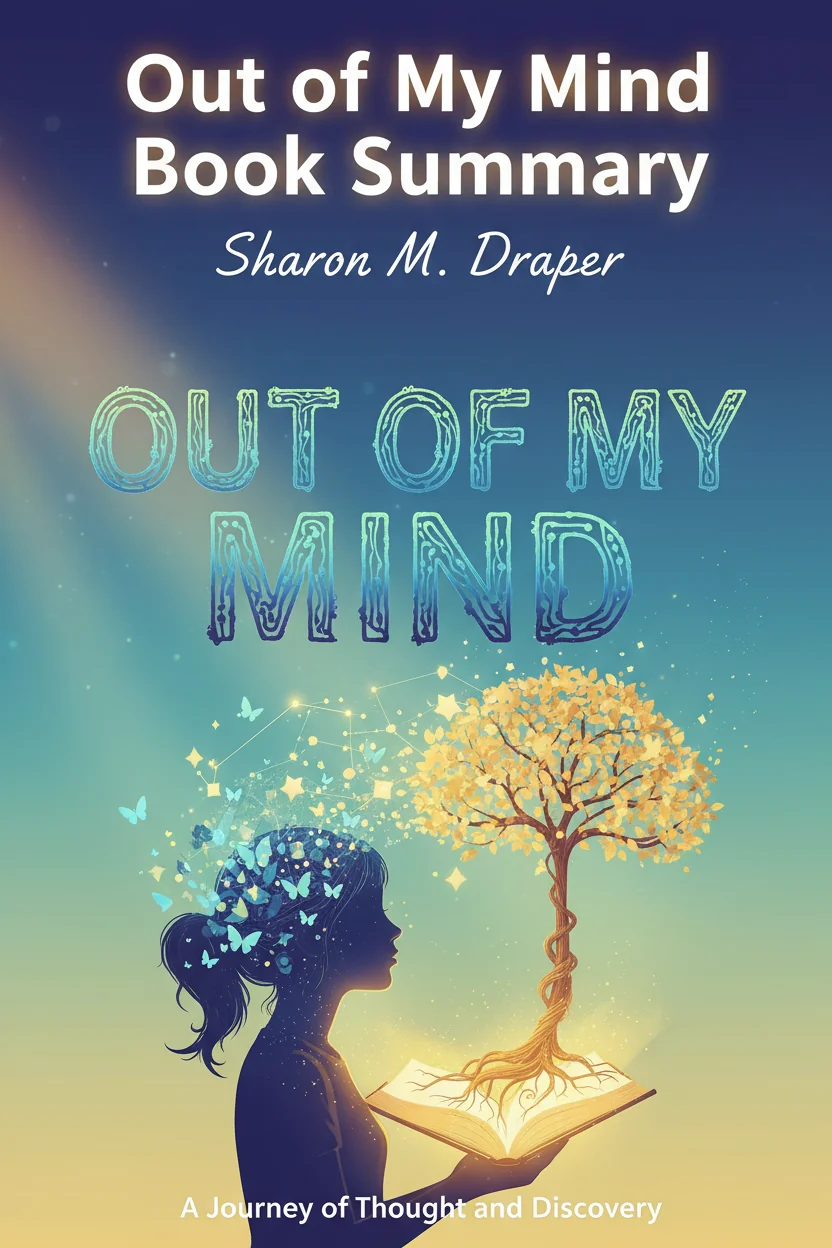
“Out of My Mind” by Sharon M. Draper is a poignant narrative that explores the life of Melody Brooks, a young girl with cerebral palsy. Despite her physical limitations and inability to speak, Melody’s extraordinary intellect and determination challenge societal perceptions of disability.
The Big Idea
"Being unable to speak doesn't mean having nothing to say. The biggest disability is being underestimated, and intelligence exists far beyond our ability to measure or express it conventionally."
Key Insights
The Mind Behind the Body
Melody has cerebral palsy and cannot speak, walk, or control her movements. But inside her uncooperative body lives a brilliant, observant, witty mind that absorbs and remembers everything.
Melody remembers every conversation she's ever heard, every fact from every TV show. She understands complex emotions and wordplay. She just can't show it.
The Cruelty of Assumptions
People consistently assume that because Melody can't communicate normally, she can't understand normally either. They talk about her in front of her, exclude her from opportunities, and underestimate her at every turn.
Teachers send Melody to a separate room for 'special' education that teaches her colors she learned before age two. Her intelligence is wasted because no one thinks to look for it.
Technology as Liberation
When Melody gets a communication device (Medi-Talker), her world opens up. Technology becomes the bridge between her internal world and the external world that has excluded her.
With her Medi-Talker, Melody can finally answer questions in class, make jokes, and show her knowledge. She qualifies for the quiz team - shocking everyone who underestimated her.
Partial Acceptance is Not Acceptance
Even when Melody proves herself, true inclusion remains elusive. Her teammates tolerate her presence but abandon her when she becomes inconvenient - revealing the shallowness of their acceptance.
When the quiz team's flight is rescheduled, they leave for the competition without Melody, not even telling her about the change. Her success doesn't guarantee belonging.
Chapter Breakdown
Part One: Trapped
Melody Brooks has cerebral palsy. She cannot walk, talk, feed herself, or control her body. But she is brilliant - she remembers everything she hears or reads. The tragedy is that no one knows.
She watches life from her wheelchair, absorbing information from TV, conversations, and her environment. She understands everything but cannot respond. People assume she's intellectually disabled because she can't communicate.
Part Two: Special Education
Melody spends years in special education classes that teach her almost nothing. While she could handle algebra, teachers review colors and shapes. The system has no way to discover what she's capable of.
Her parents and Mrs. V (a neighbor who believes in her) try to find ways for her to communicate. Picture boards help, but they're slow and limiting. Melody can only point to predetermined images, not express her full thoughts.
Part Three: The Medi-Talker
Everything changes when Melody gets a Medi-Talker - a computerized communication device she can operate with her thumb. Suddenly she can form sentences, tell jokes, and show her intelligence.
The school is forced to include her in regular classes. She qualifies for the quiz team, stunning everyone by knowing more answers than her teammates. For the first time, people see her real self.
Part Four: The Betrayal
The quiz team makes it to nationals in Washington, D.C. But when the flight is rescheduled due to weather, Melody's teammates don't tell her. They fly to the competition without her.
They claim it was a misunderstanding, but the message is clear: when including Melody became inconvenient, they excluded her without a second thought. Their acceptance was conditional all along.
Part Five: Moving Forward
Melody is devastated but resilient. She realizes that her value doesn't depend on others' recognition. She has family who love her, a voice (through her device), and a future that's more open than ever before. The world may not be ready for her, but she's ready for the world.
Take Action
Practical steps you can implement today:
-
Never assume that someone's inability to communicate reflects their ability to understand
-
Consider what accommodations might help people in your life participate more fully
-
Examine whether your 'inclusion' of different people is genuine or just tolerance
-
Recognize that every person has a rich inner life, regardless of how they can express it
Summary Written By
Software Engineer & Writer
Software engineer with a passion for distilling complex ideas into actionable insights. Writes about finance, investment, entrepreneurship, and technology.
View all summaries →Reviews
No reviews yet. Be the first to share your thoughts!