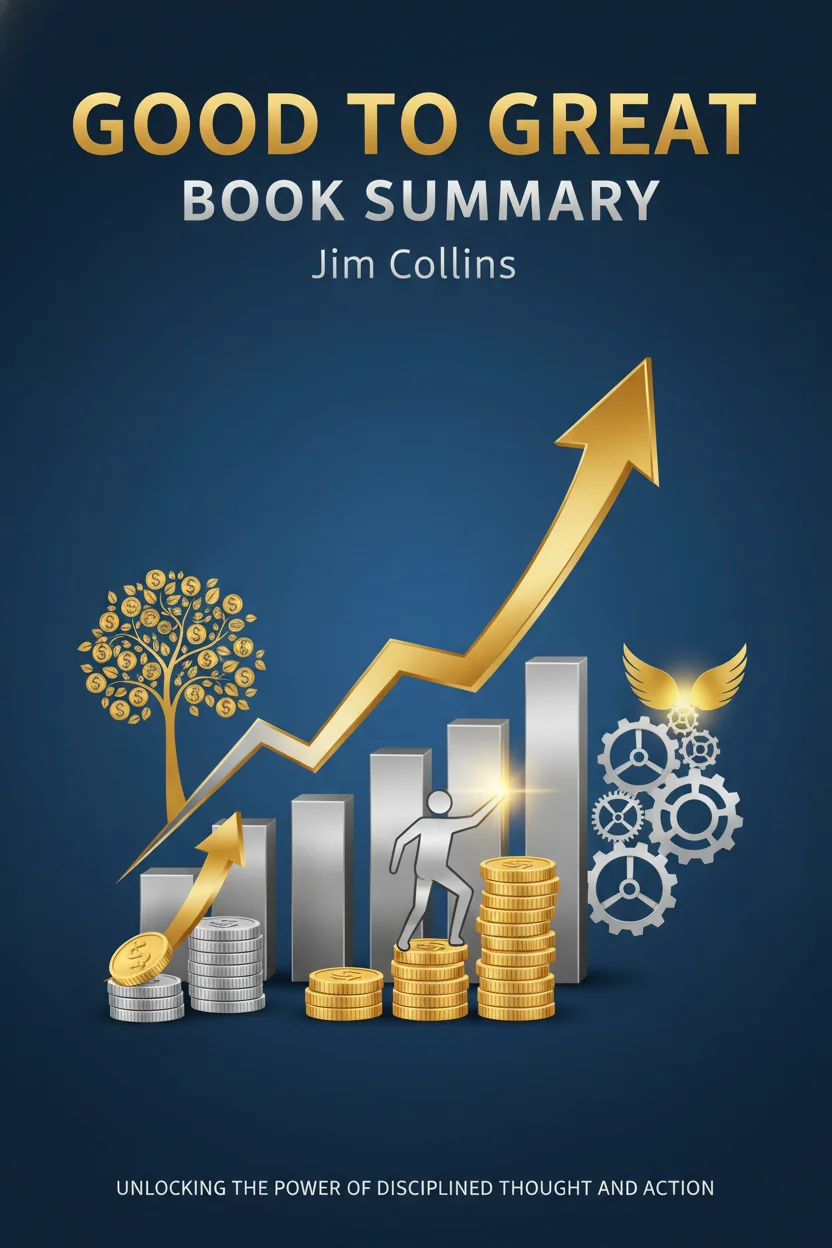
Good to Great
by Alex Ng
Jim Collins’ groundbreaking research identifying the key factors that transform good companies into great ones.
The Big Idea
"Good is the enemy of great—companies that achieve lasting greatness share specific characteristics including Level 5 leadership, getting the right people first, and relentless focus on what they can be best at."
Key Insights
Level 5 Leadership
Great companies are led by Level 5 leaders who combine extreme personal humility with intense professional will. They credit others for success and take personal responsibility for failures.
Darwin Smith of Kimberly-Clark was shy and awkward but made bold decisions that transformed the company. He attributed success to his team, not himself.
First Who, Then What
Great companies first get the right people on the bus (and the wrong people off), then figure out where to drive it. Strategy comes after assembling the right team.
Wells Fargo focused on hiring talented people before deciding on specific strategies. When deregulation changed banking, they adapted quickly because they had great people.
The Hedgehog Concept
Great companies find the intersection of three circles: what you're deeply passionate about, what you can be best in the world at, and what drives your economic engine.
Walgreens realized they could be the best at convenient drugstores, passionate about customer service, profitable through profit per customer visit—then focused relentlessly on that.
Confront the Brutal Facts
Great companies create a culture where the truth is heard. They maintain unwavering faith that they will prevail, but also discipline to confront the brutal facts of reality.
Kroger faced the fact that conventional supermarkets were dying and completely reinvented their format. A&P clung to the old model and declined.
The Flywheel Effect
Breakthrough transformation doesn't happen with one big push but through consistent effort in a clear direction. Each turn builds on previous work, creating unstoppable momentum.
There was no single moment when Nucor became great. It was thousands of small pushes—in hiring, culture, technology—that eventually created overwhelming momentum.
Chapter Breakdown
The Research
Collins and his team studied 1,435 companies over 40 years, identifying 11 that made the leap from good to great and sustained it for at least 15 years. They compared these companies to similar companies that failed to make the leap.
Key Concepts
Level 5 Leadership
The highest level of leadership combines personal humility with fierce professional will. Level 5 leaders are ambitious—but for the company, not themselves. They set up successors for success.
First Who, Then What
Great leaders start by getting the right people on the bus, the wrong people off the bus, and the right people in the right seats. Only then do they figure out where to drive it.
The Stockdale Paradox
Named after Admiral Jim Stockdale, this is the ability to maintain unwavering faith that you will prevail in the end, while simultaneously confronting the most brutal facts of your current reality.
The Hedgehog Concept
Find the intersection of three circles:
- What you are deeply passionate about
- What you can be the best in the world at
- What drives your economic engine
Culture of Discipline
Great companies build a culture of disciplined people who engage in disciplined thought and take disciplined action. They hire self-disciplined people who don't need to be managed.
Technology Accelerators
Good-to-great companies use technology as an accelerator of momentum, not a creator of it. They avoid technology fads and only adopt tools that directly support their Hedgehog Concept.
The Flywheel and the Doom Loop
Breakthrough looks like a sudden transformation but is actually the result of cumulative effort. The doom loop is the opposite: reactive lurching, restructuring, and failed programs.
Take Action
Practical steps you can implement today:
-
Develop Level 5 leadership: personal humility + professional will
-
Focus on getting the right people before deciding strategy
-
Apply the Hedgehog Concept to find your sweet spot
-
Create a culture where brutal facts can be confronted
-
Build momentum through consistent effort (the flywheel)
-
Avoid the 'doom loop' of reactive lurching from strategy to strategy
Who Should Read This
Business leaders who want to transform their organizations. Entrepreneurs building companies for the long term. Managers studying what separates great companies from good ones. Anyone interested in organizational excellence and leadership.
Summary Written By
Software Engineer & Writer
Software engineer with a passion for distilling complex ideas into actionable insights. Writes about finance, investment, entrepreneurship, and technology.
View all summaries →Reviews
No reviews yet. Be the first to share your thoughts!