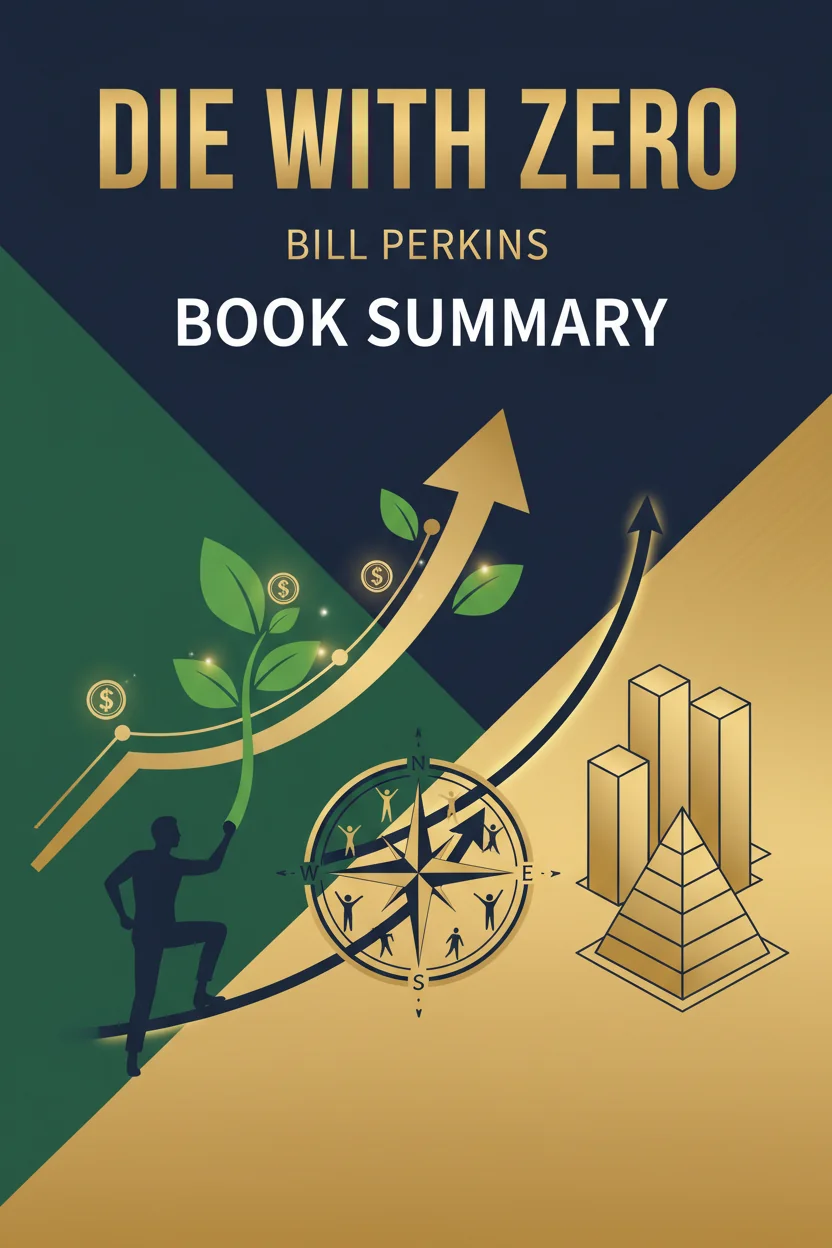
Die with Zero
by Alex Ng
Bill Perkins’ revolutionary approach to balancing saving for the future with enjoying life in the present.
The Big Idea
"Maximize your life experiences, not your bank account—because you can't take money with you, and the best time for certain experiences is often earlier than you think."
Key Insights
Your Life Is the Sum of Your Experiences
At the end of your life, you won't measure success by your net worth but by the richness of your experiences and memories. Money is just a means to create experiences.
A 90-year-old rarely regrets not having more money; they regret not taking that trip, not spending more time with loved ones, not pursuing their dreams.
The Memory Dividend
Experiences give returns forever through memories. Unlike material goods that depreciate, memories often appreciate—becoming more valuable as you reflect on them over time.
A family vacation when your kids are young creates decades of shared memories and stories. That same money saved for retirement can't buy those moments back.
Time-Bucket Your Life
Divide your life into 5-10 year buckets and plan experiences appropriate for each. Some experiences have expiration dates—you can't do everything at any age.
Backpacking through Europe is a 20s experience. A safari might be perfect in your 50s. Don't postpone age-appropriate experiences hoping to 'do it later.'
Don't Die with Too Much
Dying with millions in the bank means you worked more than necessary, experienced less than possible, or both. Aim to die with zero (or close to it).
If you retire with $2M and die with $1.5M, you either over-saved or under-lived. That $1.5M represents years of experiences you could have had.
Give Money While You're Alive
If you want to help your children or charity, give while you're alive to see the impact. An inheritance at 60 does less good than support at 30.
Helping your child buy a house at 30 has more impact than leaving them money when they're 60 and you're gone.
Chapter Breakdown
The Core Philosophy
Most financial advice focuses on saving and accumulating wealth. Perkins flips this: the goal isn't to maximize wealth but to maximize life experiences. Money is a tool for living, not a score to be maximized at death.
Key Concepts
The Memory Dividend
Experiences don't just happen once—they pay dividends through memories for the rest of your life. The earlier you invest in experiences, the more time you have to enjoy those memory dividends.
Time-Bucketing
Not all experiences can happen at any age. Physical activities, travel with young children, certain career risks—these have optimal windows. Plan your life experiences into 5-10 year buckets.
The Survival Threshold
Calculate the minimum amount you need to survive. Once you're above this (and have basic insurance), you can start optimizing for experiences rather than continued accumulation.
The Three Balances
- Health: You need health to enjoy experiences. Don't wait until you're too old or sick.
- Time: Time is finite and non-renewable. Every day saved for "later" is one less day to spend.
- Money: Money without health or time is nearly worthless for experiences.
Giving While Living
If you plan to leave money to children or charity, give it while you're alive. Your 30-year-old child can use $50,000 more effectively than your 60-year-old child receiving an inheritance. Plus, you get to see the impact.
The Die With Zero Challenge
The ideal is to spend your last dollar on your last day. While impossible to time perfectly, the mindset shift is powerful: don't die with significant wealth unused.
Take Action
Practical steps you can implement today:
-
Create a 'time bucket' list—experiences you want by decade of life
-
Calculate your 'net worth peak'—when you should start spending down
-
Give money to children/causes when it will have the most impact, not after you die
-
Invest in experiences while you're healthy enough to enjoy them fully
-
Audit your spending: are you over-saving at the expense of living?
-
Plan for a meaningful retirement, not just a funded one
Who Should Read This
Anyone saving aggressively but not living fully. People approaching retirement who worry about 'running out of money.' Parents who want to help their children while they're still alive. Anyone who feels they're working too hard for a future that may never come.
Summary Written By
Software Engineer & Writer
Software engineer with a passion for distilling complex ideas into actionable insights. Writes about finance, investment, entrepreneurship, and technology.
View all summaries →Reviews
No reviews yet. Be the first to share your thoughts!