What Was the Industrial Revolution?
The Industrial Revolution was a period of major industrialization and innovation that took place during the late 1700s and early 1800s. Beginning in Great Britain, it eventually spread to other parts of the world, fundamentally changing how people lived and worked.
A New Era of Production
Before the Industrial Revolution, most people lived in rural areas and made their living through farming. Manufacturing was done by hand in homes or small workshops. The Industrial Revolution changed all of this by introducing machine-based manufacturing in factories.
Key Characteristics
Mechanization
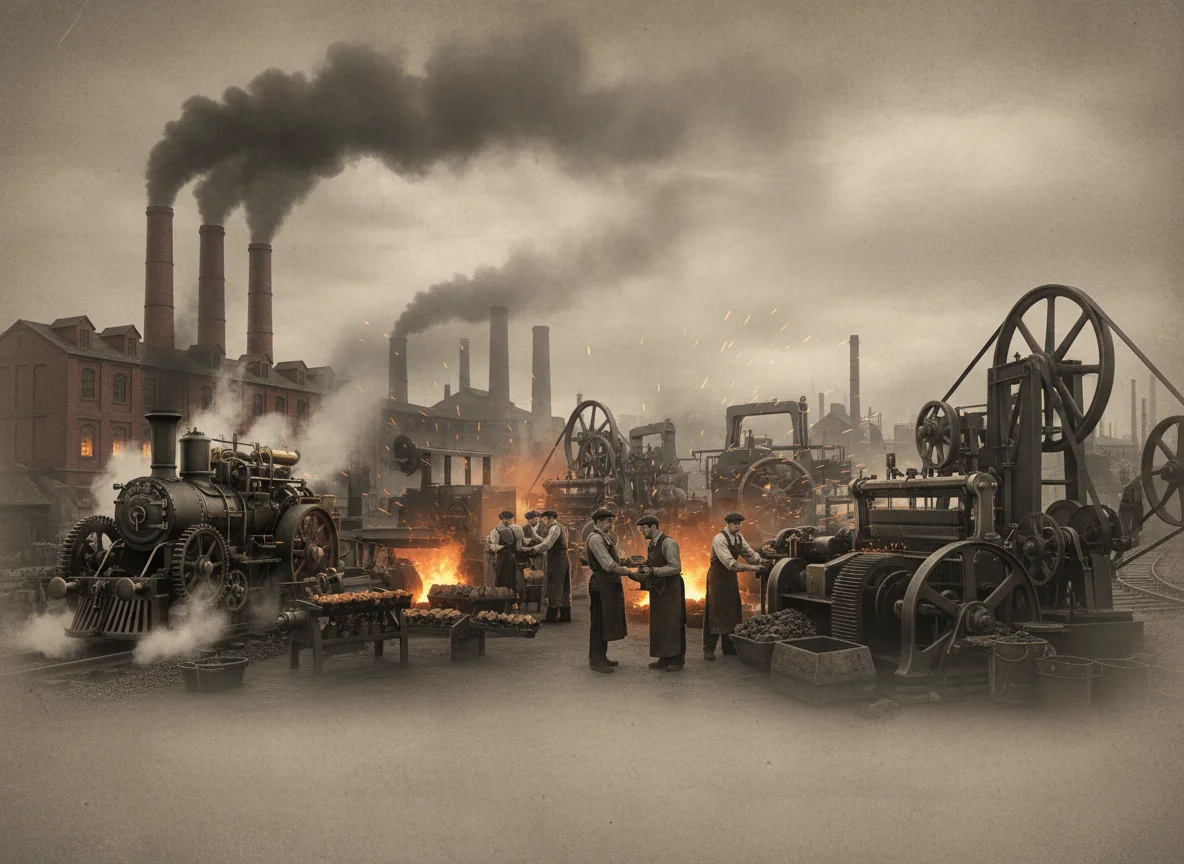
The replacement of human and animal labor with machines was central to the Industrial Revolution. Water and steam power drove machinery that could work faster and longer than any human.
Factory System
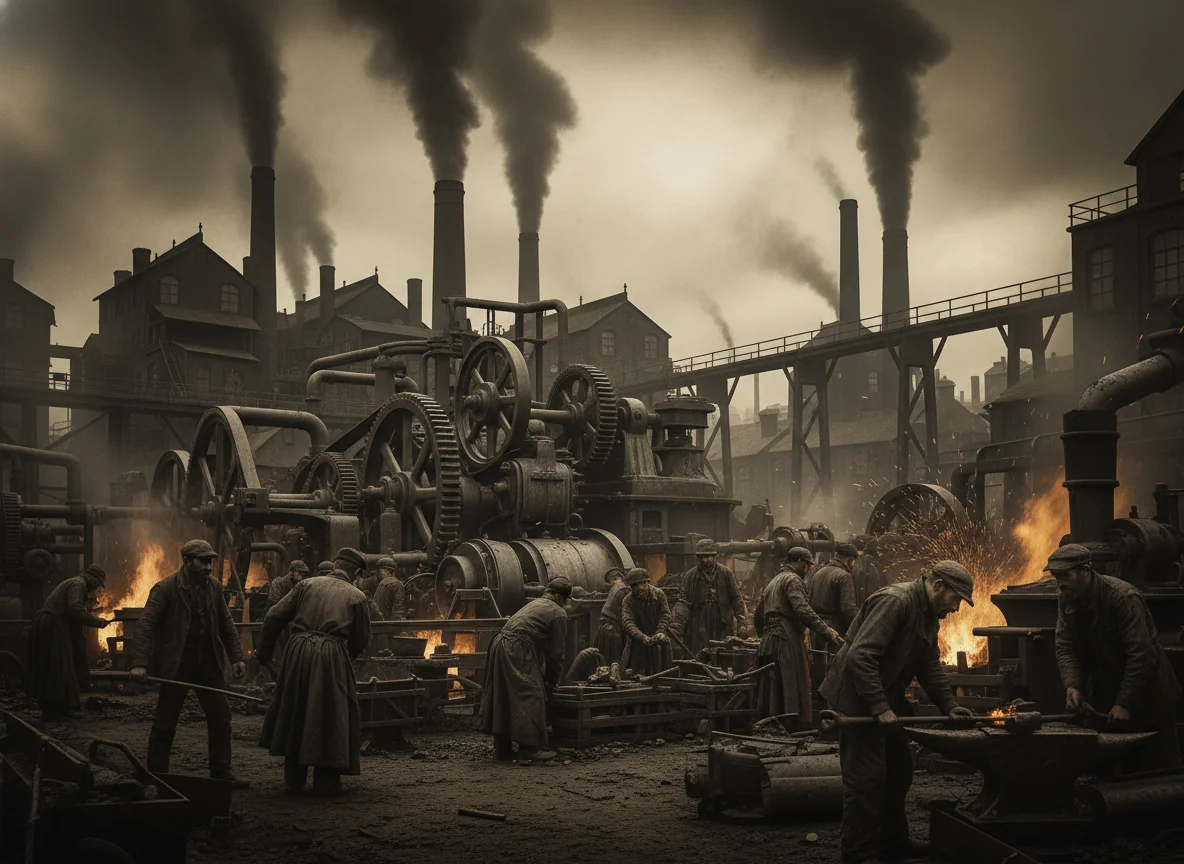
Production moved from homes and small workshops to large factories. These facilities brought together workers, machines, and raw materials under one roof, enabling mass production.
Urbanization
As factories grew, cities expanded to house workers. This rapid urbanization created both opportunities and challenges, from new jobs to overcrowded living conditions.
Major Innovations
Steam Power
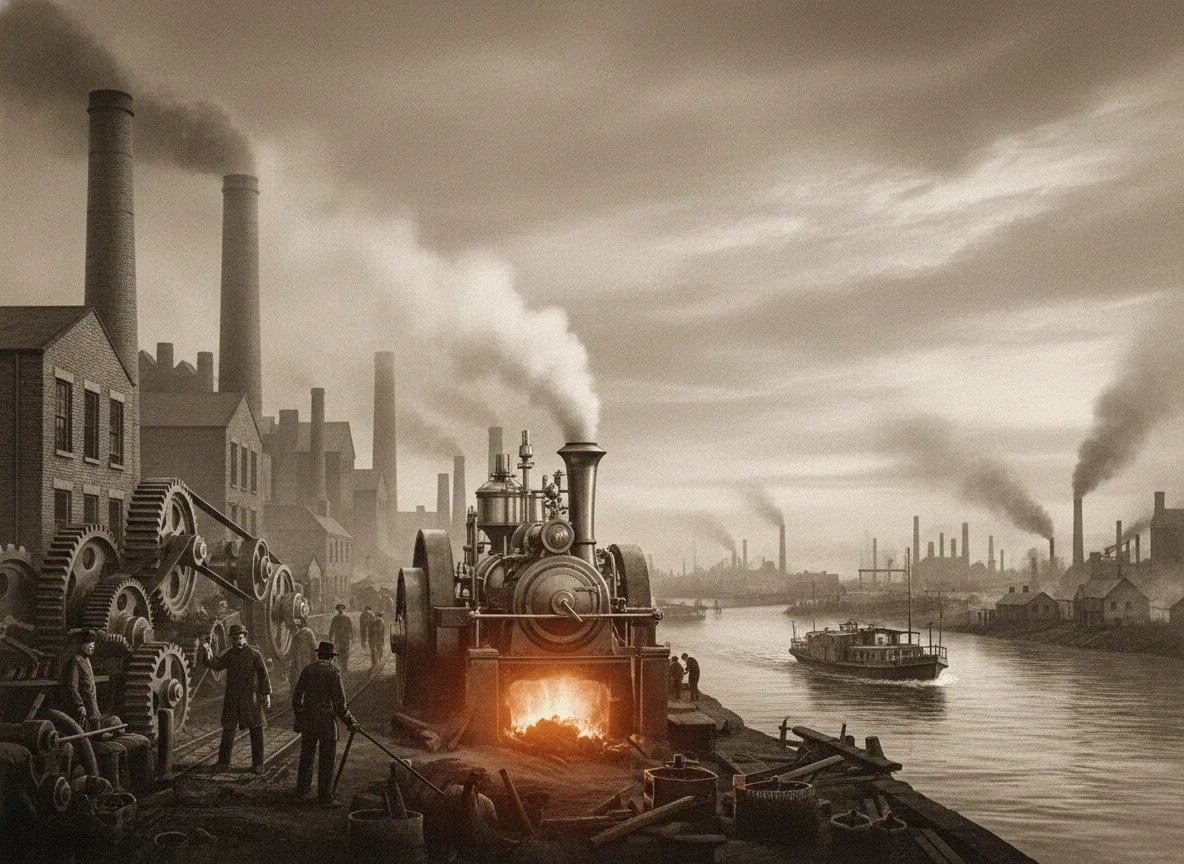
The steam engine, improved by James Watt in the 1760s, became the driving force of the Industrial Revolution. It powered factories, locomotives, and ships, revolutionizing both production and transportation.
Textile Industry
The textile industry led the way in mechanization. Inventions like the spinning jenny, water frame, and power loom transformed cloth production from a cottage industry to factory-based manufacturing.
Iron and Steel
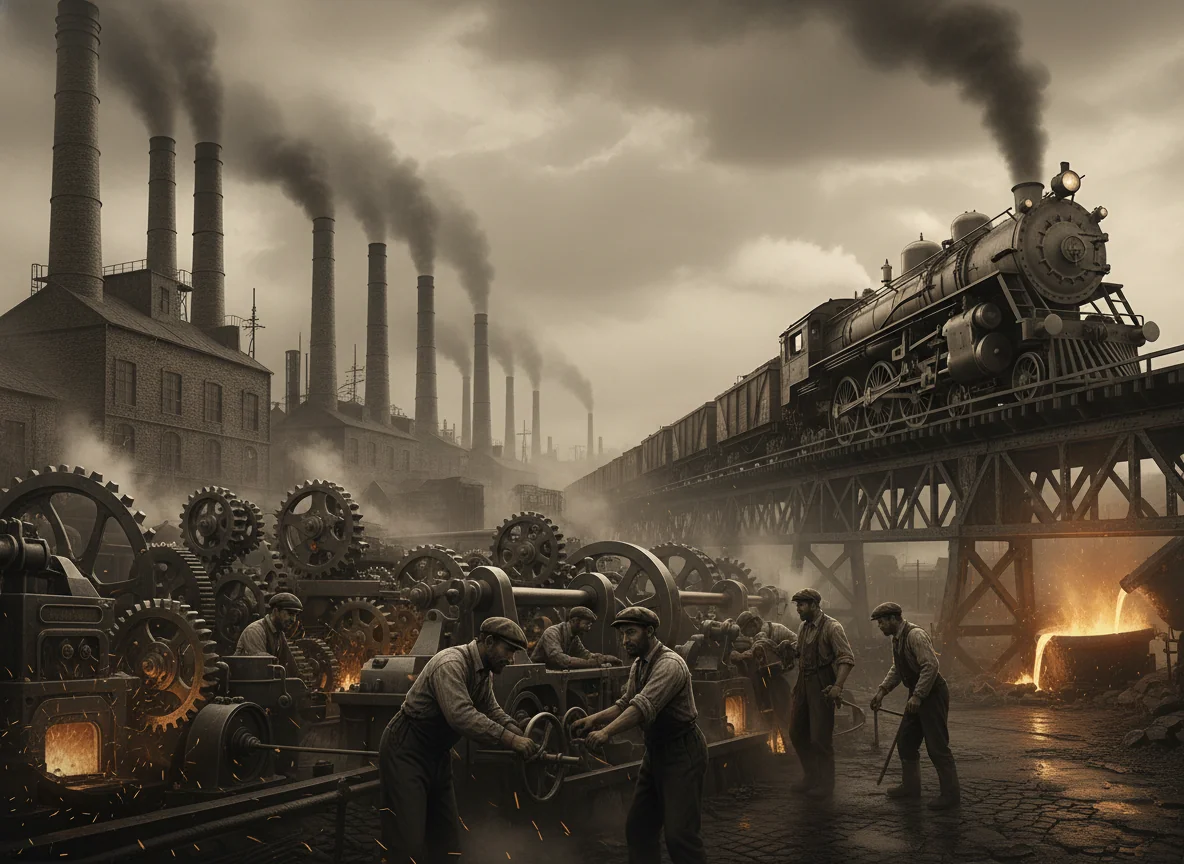
New techniques for producing iron and steel made these materials cheaper and more abundant. They became essential for building machines, railways, bridges, and buildings.
Economic Impact
The Industrial Revolution transformed economies from agricultural to industrial bases. New forms of business organization emerged, including corporations and joint-stock companies. Banking and finance grew to support industrial ventures.
Social Changes
Society was reorganized around industrial production. A new working class emerged, distinct from farmers and craftsmen. A middle class of managers, merchants, and professionals also grew. Traditional social hierarchies based on land ownership began to shift.
The Fourth Industrial Revolution
Today, we are experiencing what many call the Fourth Industrial Revolution, characterized by digital technology, artificial intelligence, and automation. Like the original Industrial Revolution, these changes are transforming how we work and live.
Legacy
The Industrial Revolution's effects continue to shape our world. It established the foundations of modern economies, created the urban environments most people now live in, and set in motion technological progress that continues today.