The Advent of the Industrial Revolution
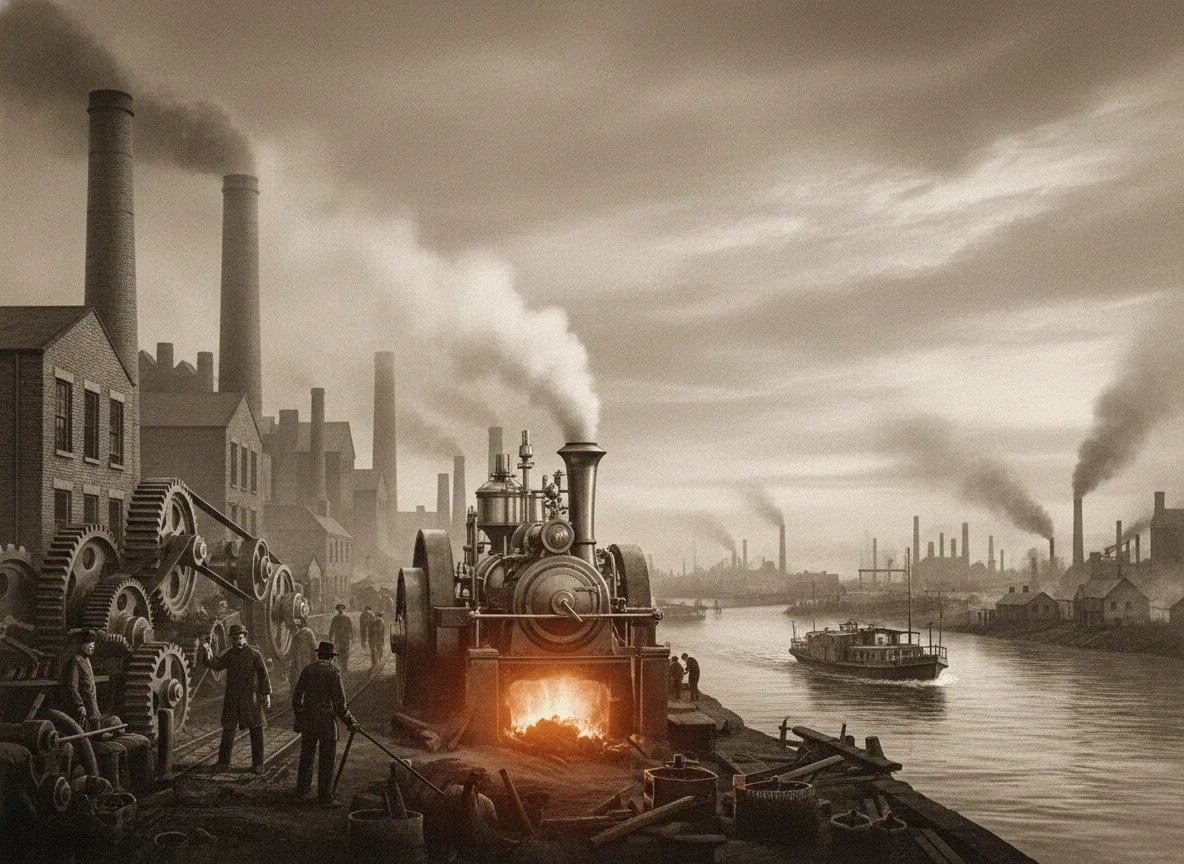
The Industrial Revolution originated in 18th-century Britain, characterized by rapid advancements in technology, changes in society, and transformation in economic structures. This period fundamentally altered how people lived, worked, and interacted with their environment.
Technological Breakthroughs
From Hand Tools to Machinery
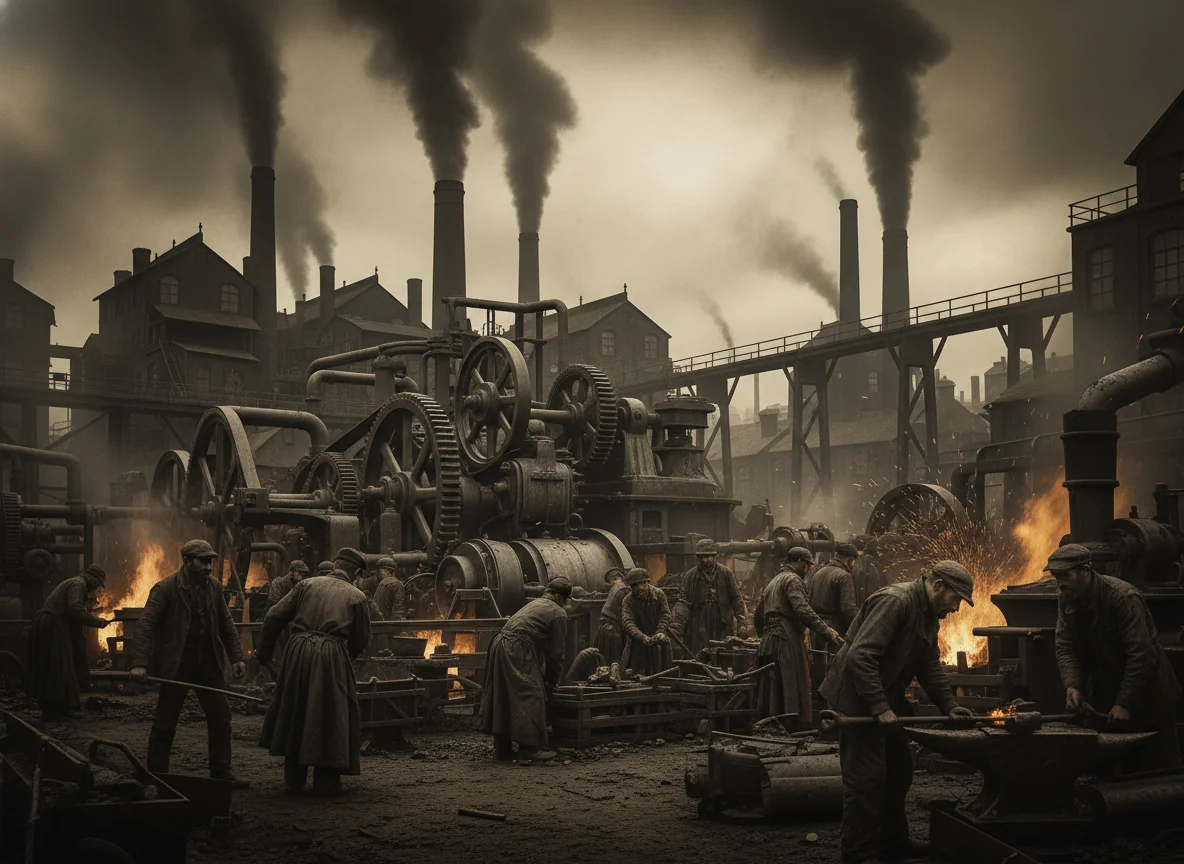
Hand tools were replaced by power-driven machinery, dramatically increasing production capacity. Factories equipped with new machines could produce goods faster and cheaper than traditional methods allowed.
Transportation Revolution
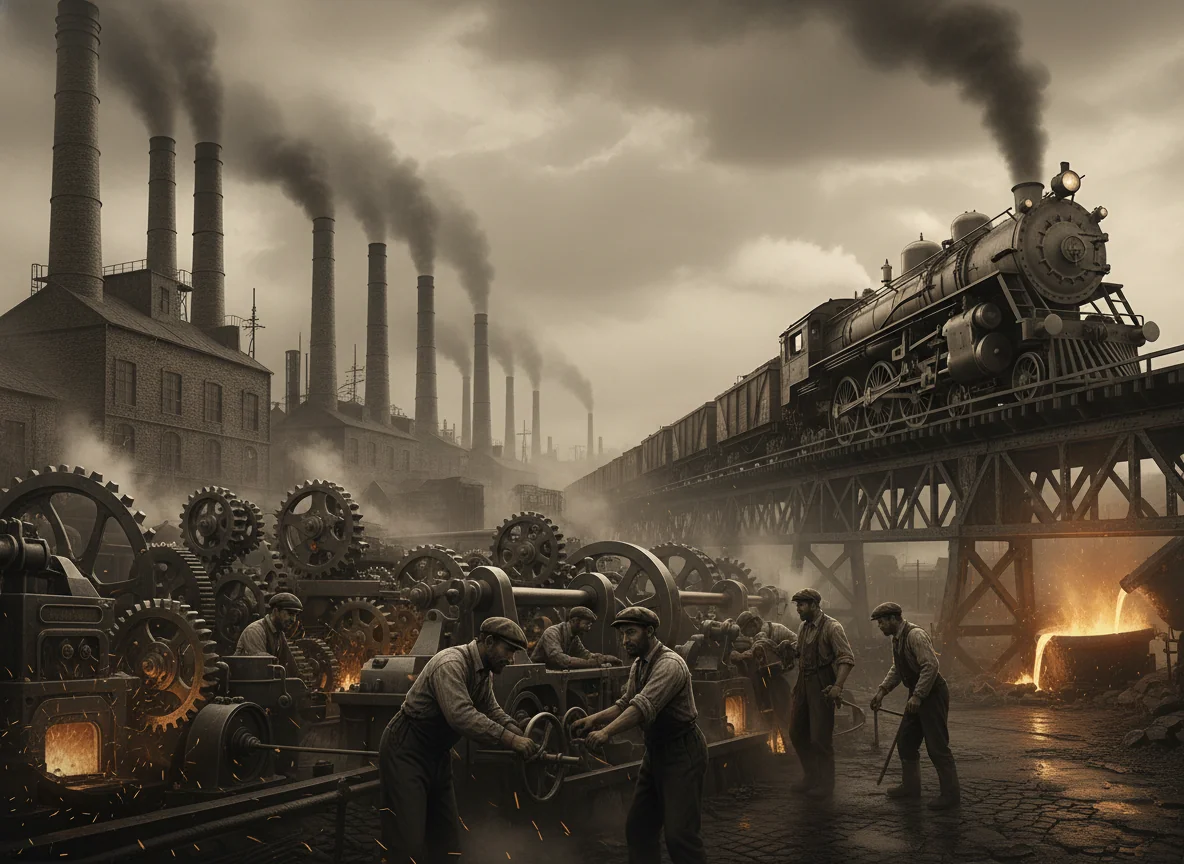
Steamships, railroads, and canals revolutionized transportation. Steam engines powered locomotives and steamboats, enabling goods and people to travel faster and farther than ever before. Railways became a leading industry, connecting cities and enabling commerce on an unprecedented scale.
Agricultural Innovations
New agricultural technologies including seed drills and improved crop rotation methods increased food production. These advances freed workers from farms to join the industrial workforce in cities.
Production Transformation
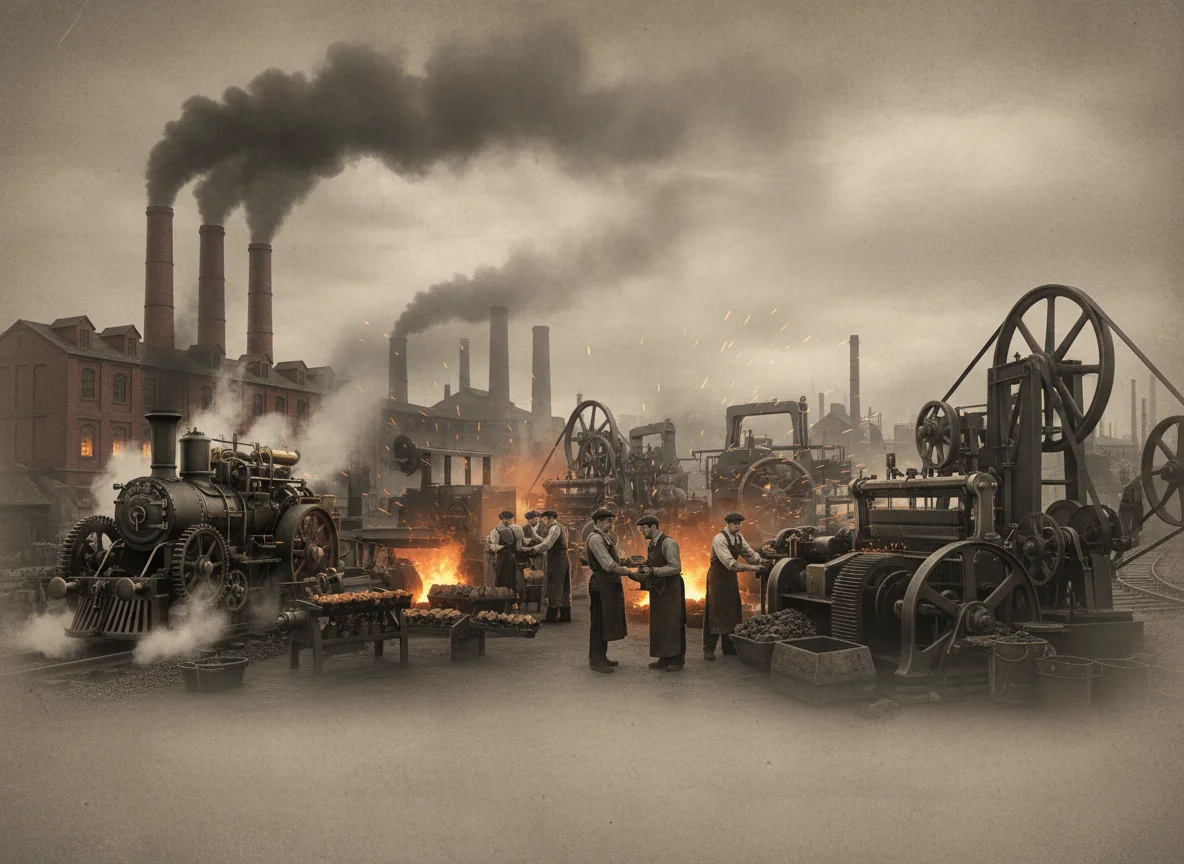
The shift toward mechanization and mass manufacturing changed how goods were made. Factories produced items faster and cheaper than handmade goods, making products more accessible to ordinary people. Standardization of parts enabled efficient production and repair of machinery.
Demographic Changes and Urbanization
Massive rural-to-urban migration transformed society. In the UK, urbanization grew from one-fifth of the population living in cities in 1801 to three-quarters by 1901. Cities expanded rapidly, creating new challenges in housing, sanitation, and public health.
Economic Transformation
Rise of Factory System
The factory system concentrated workers and machinery in single locations. This arrangement increased efficiency but also created new labor relations between owners and workers.
Growth of Capitalism
Industrial capitalism flourished as entrepreneurs invested in factories and transportation. Banks and financial institutions grew to fund industrial expansion. New wealth concentrated among factory owners while workers earned wages.
Environmental Impact
The Industrial Revolution had significant environmental consequences. Coal burning caused air and water pollution. Deforestation expanded as wood was needed for construction and fuel. Soil degradation and loss of biodiversity resulted from commercial farming practices. These environmental changes would accelerate throughout the industrial era.
Social Reform
The emergence of the working class led to labor movements addressing child labor, working hours, and wages. Reformers advocated for worker protections, eventually leading to legislation limiting exploitation. Education expanded as societies recognized the need for literate workers.
Global Influence
The Industrial Revolution spread beyond Britain throughout Europe and worldwide, reshaping socioeconomic structures globally. Countries that industrialized gained economic and military power, while others struggled to compete. The effects of this transformation continue to influence our world today.