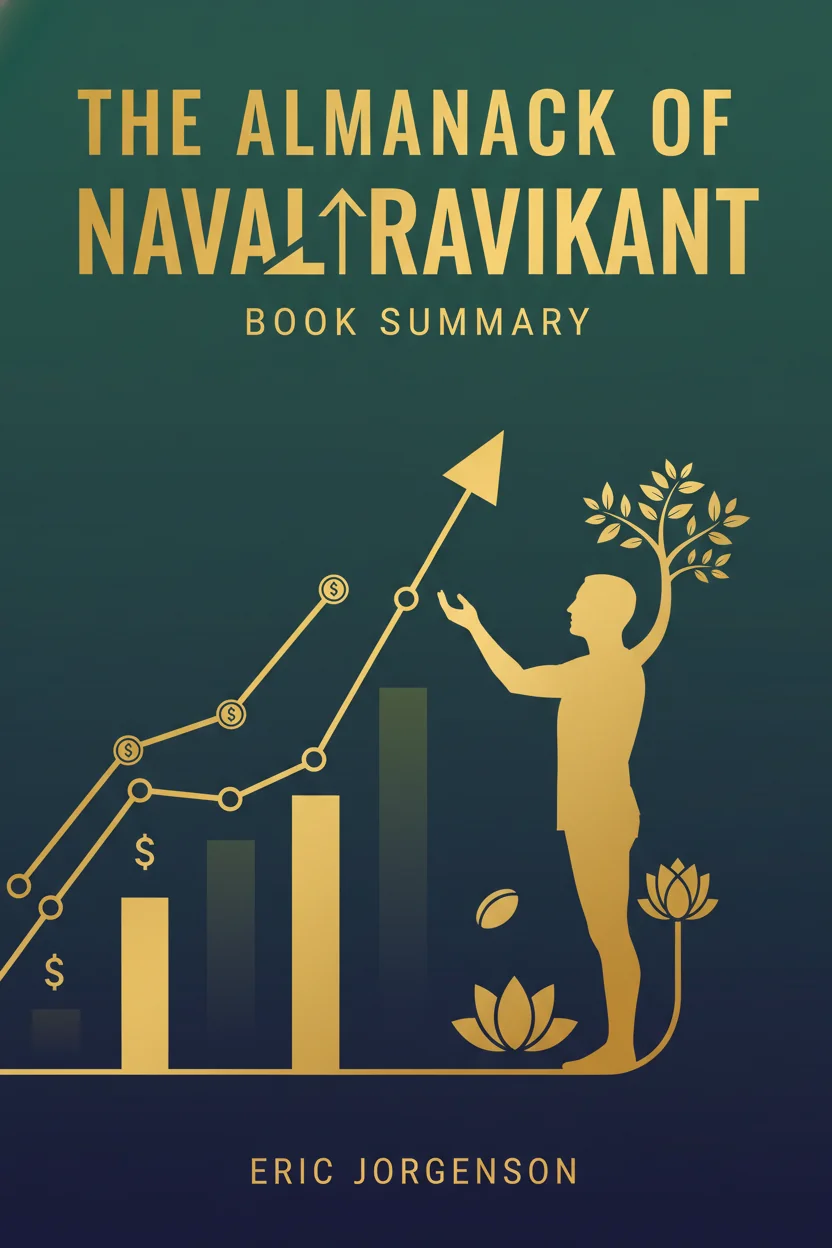
The Almanack of Naval Ravikant
by Alex Ng
Naval Ravikant’s collected wisdom on achieving wealth and happiness through specific knowledge and rational thinking.
The Big Idea
"Wealth and happiness are skills that can be learned. Wealth comes from owning equity in businesses that scale without your time. Happiness comes from accepting the present moment and eliminating the constant wanting that makes us miserable."
Key Insights
Seek Wealth, Not Money or Status
Wealth is assets that earn while you sleep. Money is how we transfer time and wealth. Status is your place in the social hierarchy. Focus on creating wealth through ownership and leverage, not on trading time for money.
A doctor trading hours for dollars is capped by time. A doctor who creates a medical software company can serve millions and earn while sleeping. The second is building wealth.
Specific Knowledge
Specific knowledge is knowledge that cannot be taught but can be learned. It's found by pursuing your genuine curiosity rather than what's trendy. Society can't train for it because it doesn't know what it is until you create it.
Naval's specific knowledge came from his unique combination of programming, investing, and philosophical thinking. No school could have taught this - he developed it through obsessive interest.
Embrace Accountability
You want to be accountable for your actions because accountability creates leverage. Those willing to put their reputation on the line can command premium compensation. The flip side is risk - but risk compounds like returns.
Entrepreneurs sign their name to their companies. If they fail, everyone knows. But if they succeed, they own the upside. Employees trade that upside for safety.
Happiness is Peace in Motion
Happiness isn't excitement or pleasure - those are fleeting. True happiness is the absence of desire, a neutrality where you don't feel like you're lacking anything. It's a skill developed through dropping expectations.
Naval's practice: when he notices anxiety, he asks 'What desire is creating this anxiety?' By dropping the desire, the anxiety dissolves. Happiness is the default state when wanting stops.
Chapter Breakdown
Part I: Wealth
Seek wealth, not money or status. Wealth is having assets that earn while you sleep. Money is how we transfer wealth. Status is your rank in social hierarchy. Ignore status games - they're zero-sum.
Build or buy equity. You won't get rich renting out your time. Ownership is the path to wealth. Even a small amount of equity in something that works is better than a salary.
Develop specific knowledge. Specific knowledge is knowledge you can't be trained for. It's found by pursuing your genuine curiosity. Build it through apprenticeship, not school.
Use leverage. Labor, capital, code, and media are forms of leverage. Labor and capital require permission. Code and media don't - they're the new leverage available to everyone.
Part II: Happiness
Happiness is peace in motion. It's not about achievement or pleasure. It's about being present and content in the moment. Desire is the root of suffering.
Happiness is a skill. It can be developed through awareness, acceptance, and dropping expectations. Every desire you drop makes you happier.
The mind is a prison. Most suffering comes from thoughts - about past regrets or future anxieties. Learning to quiet the mind through meditation or other practices increases peace.
Part III: Philosophy
Be a long-term player. In games with long-term stakes, compound interest works its magic. In relationships, business, and learning - play long-term games.
Read voraciously. Reading is the ultimate skill multiplier. Read philosophy, science, mathematics - the foundations. Avoid news and fiction that don't teach lasting principles.
Live authentically. Imitation is exhausting. Being yourself takes no effort. Find what you're genuinely curious about and pursue it relentlessly.
Take Action
Practical steps you can implement today:
-
Ask yourself: how much of my income comes from owning versus renting out my time? Shift toward ownership
-
Identify your unique combination of skills and interests - this is your specific knowledge. Double down on it
-
Start building your reputation by putting your name on your work publicly - embrace accountability
-
When you feel unhappy, identify the desire causing it. Ask: is this desire serving me or making me miserable?
Summary Written By
Software Engineer & Writer
Software engineer with a passion for distilling complex ideas into actionable insights. Writes about finance, investment, entrepreneurship, and technology.
View all summaries →Reviews
No reviews yet. Be the first to share your thoughts!